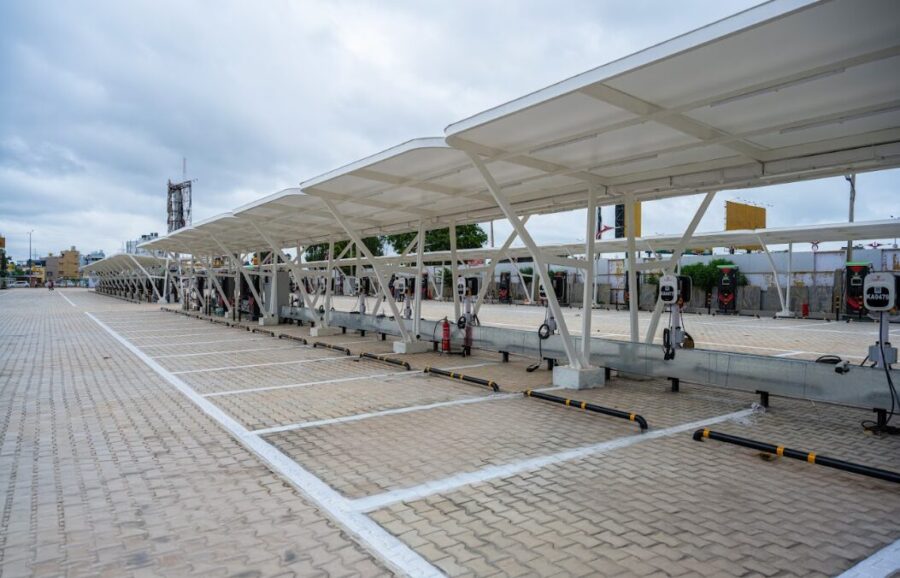
Bangalore is set to anchor a new chapter in India’s electric mobility journey with plans for a dedicated Electric Vehicle city on the city’s periphery, signalling a strategic shift in how urban regions support clean manufacturing and climate-aligned growth. The proposed Bengaluru EV City, spread across about 100 acres within a two-hour radius of the capital, is designed to consolidate innovation, testing and skills development in one integrated location.
According to senior state officials, the project is being positioned not as an industrial estate in the conventional sense, but as a shared ecosystem that lowers entry barriers for manufacturers and technology firms. The facility is expected to serve original equipment makers alongside smaller suppliers, startups and incubators, enabling them to access common infrastructure without duplicating capital-intensive investments. For a region already grappling with land pressures and fragmented industrial zoning, the model reflects a more compact and efficient approach to urban-industrial planning. A significant portion of the site is earmarked for a comprehensive testing and validation zone. Urban planners and industry experts note that the absence of such facilities has long forced vehicle makers to rely on multiple locations for certification and trials, increasing costs and time to market. By bringing road simulations, gradient testing, fast-charging evaluation and digital security labs under one roof, the Bengaluru EV City could shorten development cycles while improving safety and reliability standards.
The project also includes a proposed centre of excellence focused on electric powertrains and battery systems, alongside a dedicated training academy. This skilling component is critical in a sector where demand for specialised engineers, technicians and software professionals is rising faster than supply. For Bangalore’s workforce, the initiative could translate into more inclusive employment pathways that extend beyond assembly lines into research, testing and systems integration. Karnataka’s broader electric mobility landscape provides the context for this push. With more than seven lakh electric vehicles already on the road dominated by two-wheelers the state has emerged as one of India’s largest EV markets. Analysts point out that such scale creates pressure on cities to move beyond adoption incentives and invest in upstream capabilities such as manufacturing, validation and recycling, which have direct implications for land use, energy demand and environmental performance.
From an urban development perspective, the success of the Bengaluru EV City will depend on how well it integrates with regional transport networks, power infrastructure and water management systems. Experts caution that aligning the project with renewable energy sources and low-impact logistics will be essential if it is to genuinely support zero-carbon ambitions rather than shift emissions elsewhere. As planning moves forward, attention will turn to execution timelines, governance structures and how benefits are distributed across the wider metropolitan region. For Bangalore, the initiative offers an opportunity to demonstrate how climate-conscious industrial growth can coexist with responsible urban expansion provided the focus remains on resilience, accessibility and long-term public value.