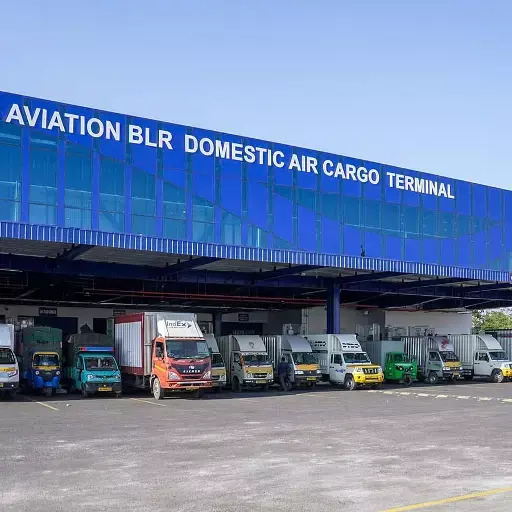
Frankfurt Airport and Kempegowda International Airport Bengaluru have formalised a strategic partnership aimed at enhancing air cargo connectivity between Europe and India, a move set to influence trade flows, urban logistics, and regional supply chains. The agreement, structured as a memorandum of understanding, seeks to streamline regulatory processes, integrate digital solutions, and foster efficiency in high-value and time-sensitive freight operations.
Industry experts highlight that this partnership represents Frankfurt Airport’s first structured cargo collaboration with an Indian hub, signalling a shift in how global logistics networks are aligning with fast-growing urban economies. Analysts note that strengthening such corridors can have a measurable impact on local commerce, particularly for sectors reliant on rapid cross-border transport, such as electronics, pharmaceuticals, and perishable goods. Urban planners point out that enhanced air cargo links do not operate in isolation they ripple through urban infrastructure. Increased freight volumes require coordinated city-level planning, from sustainable road and rail connections to green warehousing and last-mile delivery networks. Officials at both airports emphasised the role of data-driven processes and digital oversight in creating more transparent, efficient, and climate-conscious supply chains.
For Bengaluru, a city already grappling with urban density and logistical bottlenecks, the agreement aligns with broader goals of integrating technology and sustainable infrastructure into airport operations. Ongoing investments in cargo terminals, automated handling systems, and cold-chain capabilities are expected to complement the partnership, potentially positioning the city as a premier air cargo hub in South Asia. Experts also stress that aligning operations with European standards could encourage greater foreign investment, support small and medium enterprises, and facilitate equitable access to global markets. From a broader economic perspective, the timing of the partnership dovetails with the recent India–European Union free trade agreement, which industry analysts predict will accelerate demand for streamlined air freight services. Frankfurt’s role as a gateway to Europe enables faster, more reliable connections for Indian exporters, while also helping European companies access emerging Indian consumer and industrial markets efficiently.
Sustainability and resilience remain core considerations. The partnership emphasises digitalisation, predictive logistics, and operational coordination, all of which reduce unnecessary handling, lower carbon emissions, and support climate-resilient urban trade networks. By fostering innovation and integrated planning across continents, the initiative could serve as a template for other Indian airports seeking to balance growth, environmental responsibility, and equitable urban economic development. As global trade patterns evolve, such collaborative models highlight the intersection of infrastructure, technology, and city-scale planning, underscoring that modern cargo corridors are not just economic lifelines they are key components of sustainable, future-ready urban ecosystems.