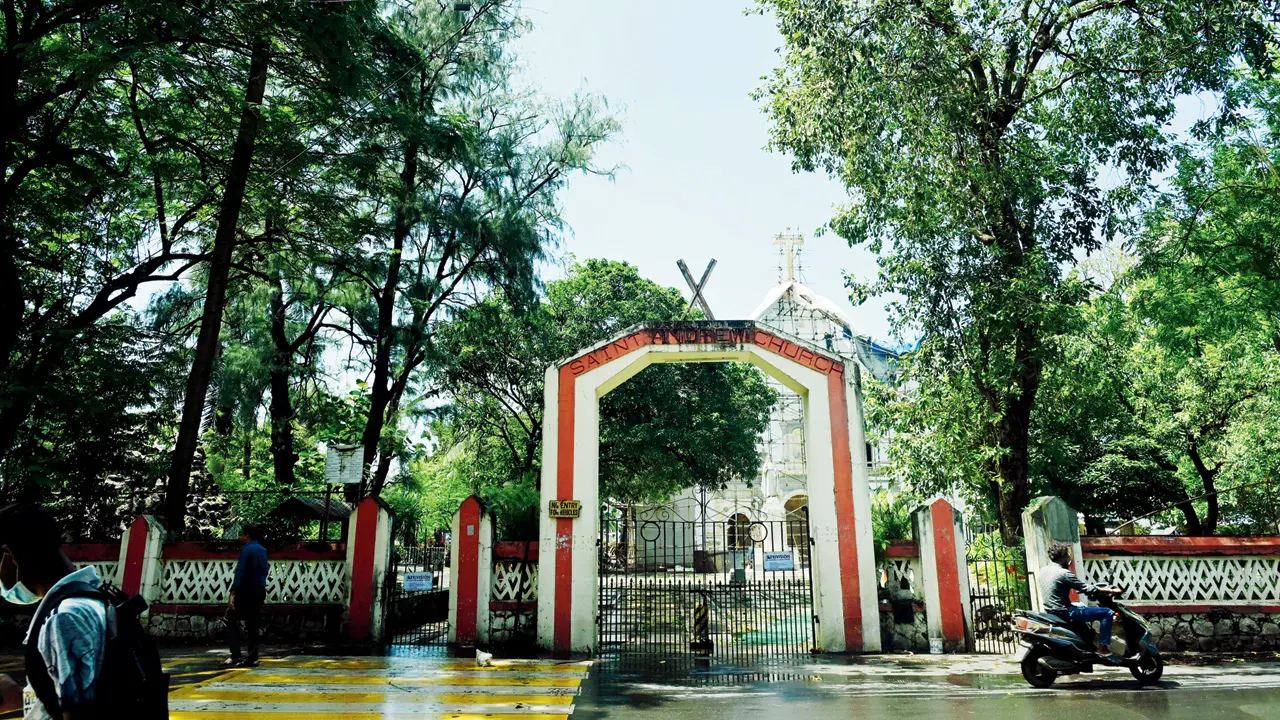
Bandra St Andrews Church 410 Year Heritage Faces Crucial Restoration Phase
Bandra’s 410-year-old St Andrew’s Church, one of Mumbai’s most iconic heritage structures, has entered a decisive phase in its restoration journey. Conservation teams are working against time and rising costs to ensure that the structure, which has withstood centuries of natural disasters and political upheaval, is preserved for generations to come.
The ongoing work, expected to conclude by December 2025, is aimed at retaining the original artistic and architectural integrity of the church.Officials overseeing the project emphasise that the focus is on restoration rather than mere repairs. Unlike past modifications that compromised authenticity, the current approach involves using traditional lime plaster instead of cement on the church’s 5.5-foot-thick walls. Experts explain that such techniques are vital to safeguard the historic character of the building while ensuring durability in a coastal environment.
The restoration has not been without challenges. Costs have escalated significantly, with the project reportedly facing a funding shortfall running into several lakhs. Despite these financial hurdles, the initiative has so far been sustained by contributions from parishioners and well-wishers, including those living beyond the local community. Officials noted that support from the broader public is critical to ensure that both the exterior façade and the delicate interiors including altars damaged by moisture and termites are restored with fidelity to their Portuguese-influenced design.
The church has a long and resilient history dating back to the early 17th century. Records show that its original hermitage existed as early as 1601, and by 1618 it had already survived a cyclone that tore off its roof. Since then, St Andrew’s has endured turbulent colonial transitions, community upheavals, and natural calamities while continuing to serve as a spiritual and cultural anchor for Bandra’s residents. Heritage experts point out that this continuity adds weight to the urgent need for proper restoration rather than patchwork repair.
Beyond heritage value, the project carries a wider social dimension. Preserving historic spaces in a rapidly urbanising city like Mumbai underscores the importance of sustainable urban development one that balances modern expansion with the conservation of cultural legacies. Officials involved in the project also highlight how such initiatives strengthen local identity and inspire civic participation.The restoration team remains confident that public support will bridge the funding gap. Those who wish to contribute can approach the church administration directly, with the option of viewing the ongoing work. For many in the community, the effort represents more than architectural preservation it is a commitment to keeping alive a living piece of history that continues to shape collective memory in Mumbai.