


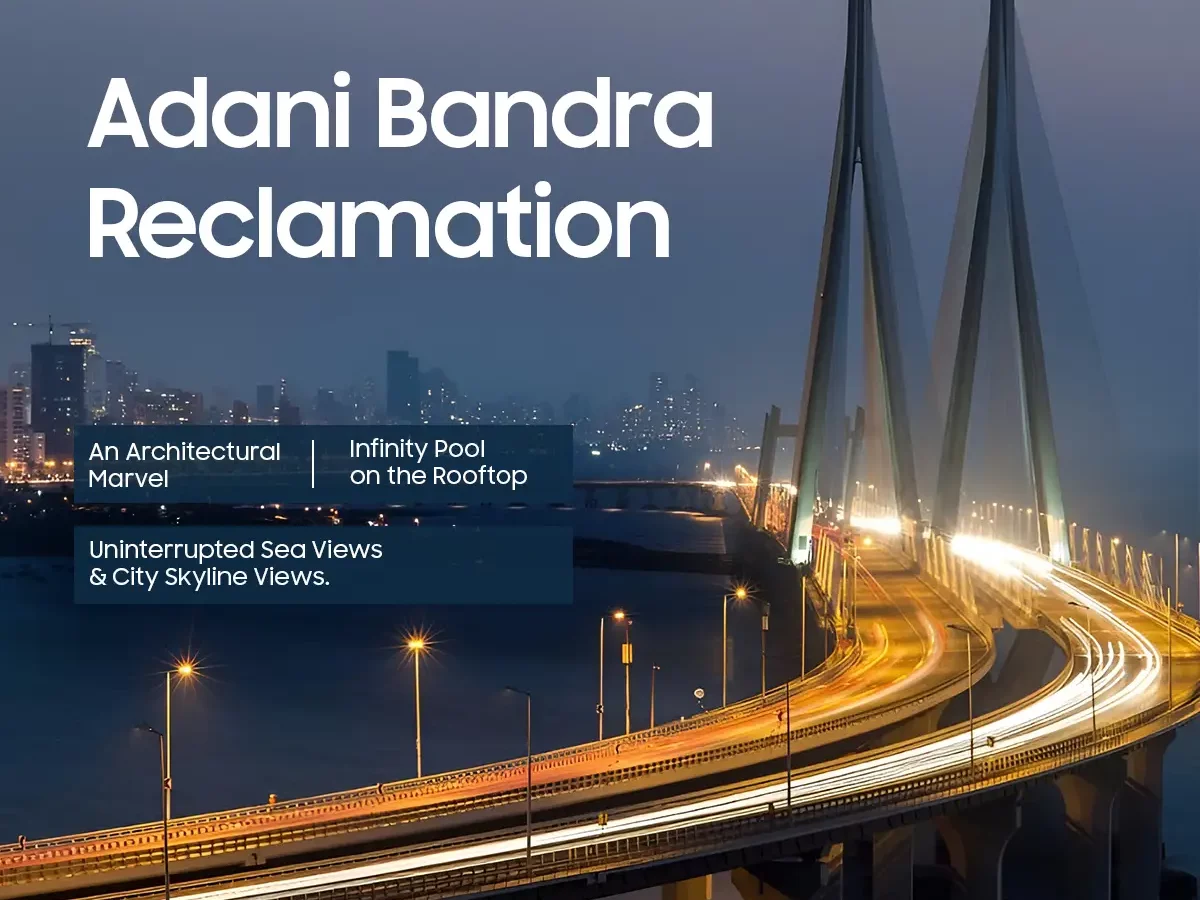
A key state infrastructure agency is preparing to vacate its long-standing headquarters at Bandra Reclamation, marking a pivotal moment in Mumbai’s evolving coastal redevelopment landscape. The relocation will clear the way for large-scale private development on one of the city’s most valuable sea-facing land parcels, signalling a shift in how public land assets are being leveraged to fund infrastructure across Maharashtra.
From next week, the Maharashtra State Road Development Corporation will operate out of a commercial tower in central Mumbai’s Dadar area, where it will remain for several years. Senior officials indicate the move is temporary, intended to facilitate phased redevelopment of the Bandra Reclamation site before the agency eventually returns to a newly constructed headquarters within the same precinct. The transition is significant beyond an office address change. The 22-acre Bandra Reclamation parcel forms part of a wider transformation of Mumbai’s western waterfront, where land scarcity, premium housing demand and infrastructure financing intersect. Industry estimates suggest the site has development potential running into several million square feet, making it among the most commercially attractive government-owned plots released in recent years. The redevelopment rights were awarded following a competitive bidding process that concluded earlier this year, after extended legal scrutiny. Under the agreed structure, the state infrastructure agency will receive a share of future revenues rather than an upfront sale, a model increasingly favoured by governments seeking long-term value capture from urban land. Officials expect the proceeds to support road, bridge and mobility projects across the state.
Urban planners note that the Bandra Reclamation redevelopment reflects a broader trend in Mumbai’s planning framework under Development Control and Promotion Regulations 2034, which encourage mixed-use districts combining residential, commercial and public amenities. The location’s proximity to the Bandra-Worli Sea Link and major business districts has already driven luxury housing prices to among the highest in the city. However, the project also raises important questions about urban balance. Coastal developments of this scale can intensify pressure on transport networks, public access to the waterfront and environmental resilience. Experts argue that integrating climate-sensitive design, open spaces and pedestrian connectivity will be critical if Bandra Reclamation redevelopment is to align with Mumbai’s long-term sustainability goals. For the infrastructure agency, the interim move to Dadar presents operational challenges. Officials privately acknowledge concerns around space efficiency and coordination during the transition period. Yet they also point to the strategic rationale: monetising underutilised land assets to reinvest in public infrastructure rather than retaining low-density administrative use in high-value zones.
As Mumbai continues to reimagine its coastline, the success of this project will be judged not only by financial returns but by how effectively it contributes to a more resilient, inclusive and well-connected city. The coming phases of planning approvals and construction will determine whether Bandra Reclamation redevelopment becomes a template for responsible urban land transformation.
Also Read: India Real Estate Outlook Signals Steady Sustainable Expansion
Bandra Reclamation Redevelopment Reshapes Mumbai Office Geography
