


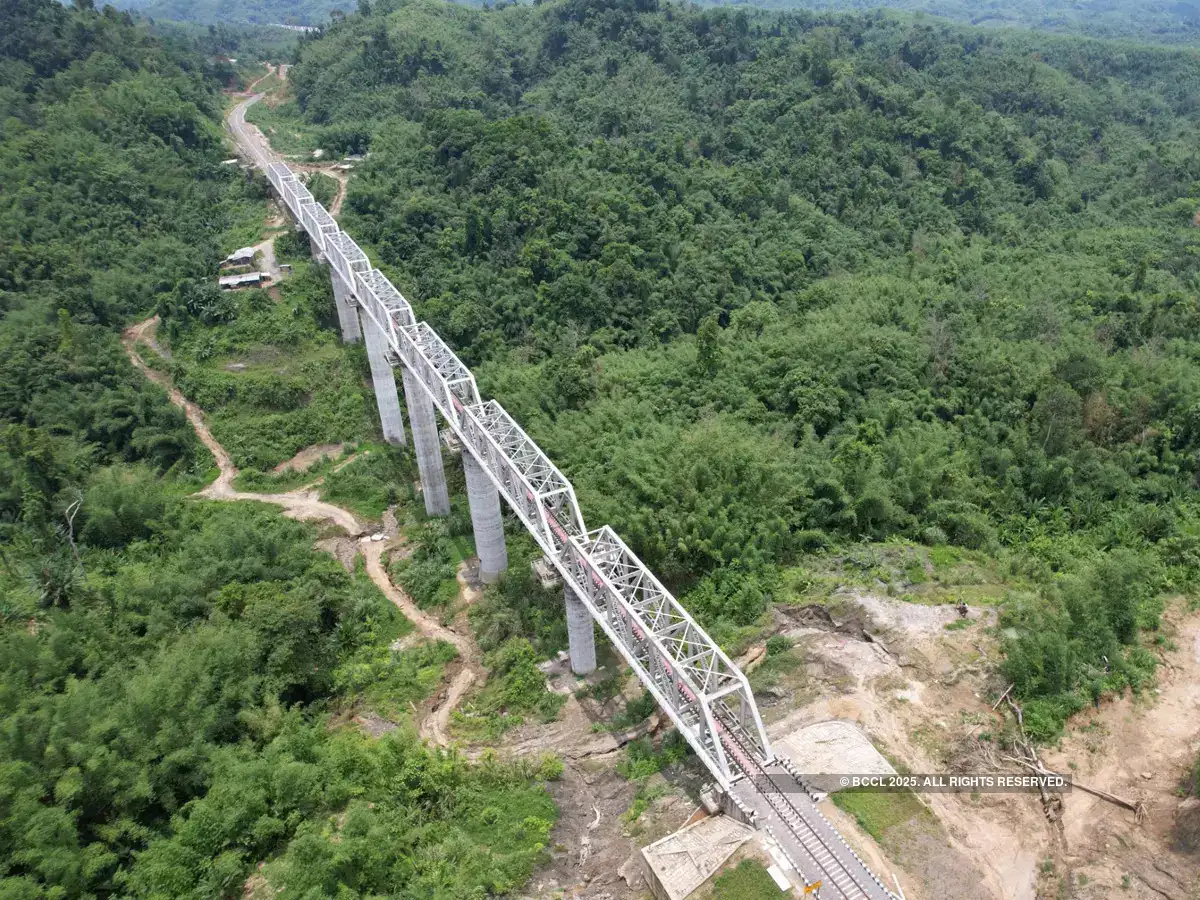
Mizoram is poised for a transformative leap in connectivity with the completion of the Bairabi-Sairang railway line, a monumental engineering achievement set to be inaugurated by Prime Minister Narendra Modi. This 51.38-kilometre rail link is anticipated to be a game-changer for the state’s economic growth and social integration, significantly reducing travel times and logistical challenges. The project underscores a robust commitment to enhancing infrastructure in the Northeast, fostering sustainable development and equitable access for its communities.
The Bairabi-Sairang line directly connects Mizoram’s capital, Aizawl, to the broader Indian railway network, a long-awaited development that overcomes significant geographical hurdles. Previously, rail connectivity extended only to Bairabi, necessitating further travel to Aizawl solely by road—a route frequently plagued by landslides and adverse weather conditions. This new direct link promises to revolutionise passenger travel and cargo movement, providing a reliable, all-weather alternative that is crucial for a region often isolated by its challenging terrain and heavy rainfall.
Chief Engineer Vinod Kumar highlighted the immense difficulties encountered during the project’s construction, describing it as one of Indian Railways’ most challenging undertakings. The region’s heavy monsoon season limits the working window to a mere four months annually, demanding exceptional planning and execution. Despite these formidable obstacles, the project was completed at an approximate cost of ₹5,021.45 crore, featuring an impressive 48 tunnels spanning a combined length of 12,853 metres, and 142 iron bridges meticulously engineered to traverse the undulating landscape. This feat of engineering not only showcases technical prowess but also resilience in the face of natural adversities.
The operationalisation of the Bairabi-Sairang line is set to unlock significant economic opportunities for Mizoram. Reduced travel times between cities like Silchar and Aizawl (from eight hours by road to just three hours by train) and Guwahati to Aizawl (from 14-18 hours by road to approximately 12 hours by rail) will dramatically cut transportation costs and improve the efficiency of supply chains. This enhanced connectivity is expected to significantly boost tourism, allowing more visitors to explore Mizoram’s unique cultural heritage and natural beauty, while also facilitating trade by providing easier access to markets for local produce and goods.
From an environmental perspective, the shift from road-based transport to rail offers substantial benefits. Railways are inherently more energy-efficient and produce fewer carbon emissions per tonne-kilometre or passenger-kilometre compared to road transport. By providing a viable and attractive alternative to road travel, the Bairabi-Sairang line contributes directly to the vision of creating zero net carbon and eco-friendly cities and regions. This infrastructure investment supports a sustainable mobility paradigm, reducing the overall carbon footprint of transportation in the Northeast.
Furthermore, the project embodies principles of equitable development. The establishment of four new railway stations—Hortoki, Kawnpui, Mualkhang, and Sairang—will bring modern infrastructure and connectivity closer to previously underserved communities. This improved access to transportation services is vital for enhancing social mobility, particularly for women and marginalised groups, by providing safer, more reliable, and affordable means of travel for education, healthcare, and economic opportunities. The railway line, therefore, is not just a physical link but a catalyst for fostering gender-neutral and equitable communities, integrating Mizoram more fully into the national fabric while respecting its unique identity.
Also Read: Chennai braces for five‑hour TANGEDCO power outage across 40+ areas
