


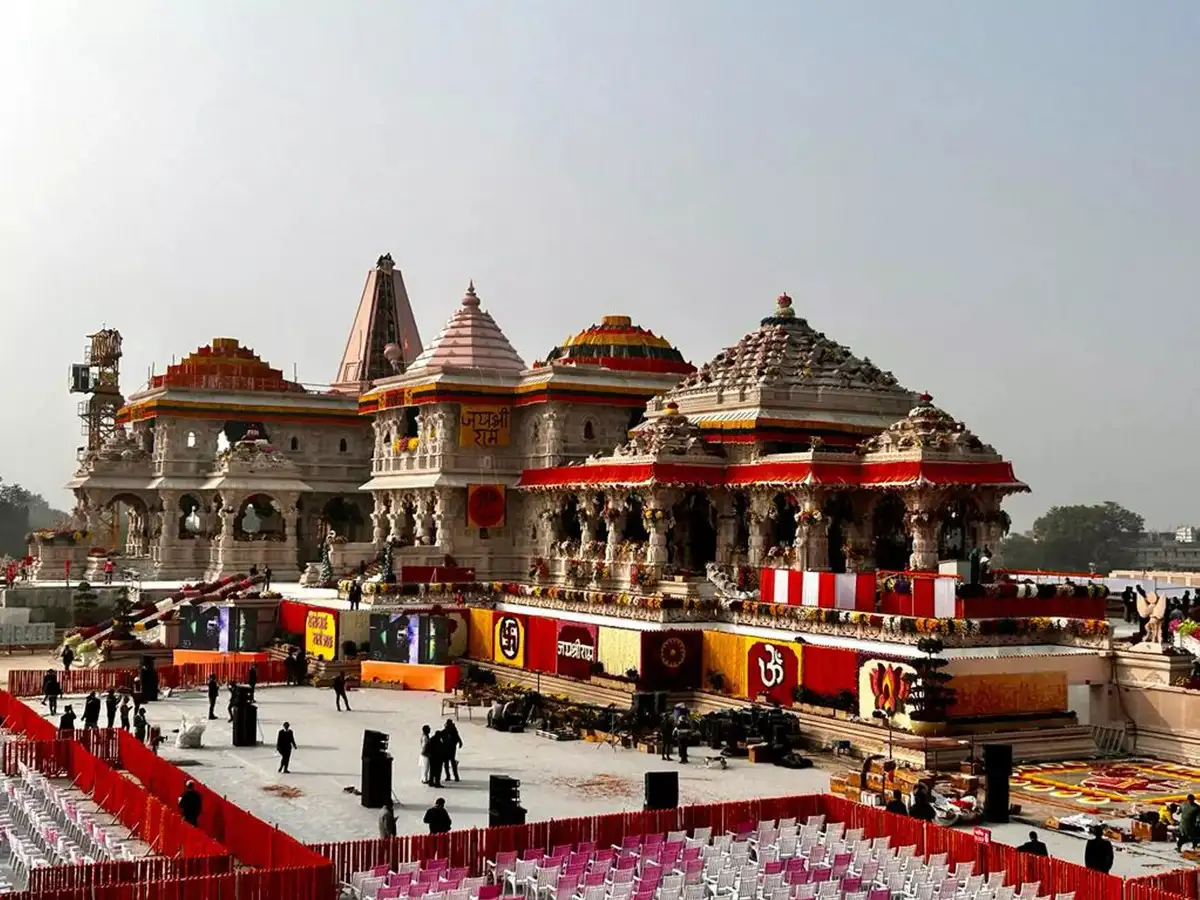
A new academic assessment by the Indian Institute of Management Lucknow indicates that the opening of the Ram Temple Ayodhya has triggered a structural shift in Ayodhya’s economy, accelerating formal business activity, boosting tax collections and prompting reverse migration. The findings suggest the temple’s inauguration in January 2024 has reshaped the city’s development trajectory, with implications for infrastructure planning and urban governance.
The study estimates that visitor numbers have multiplied dramatically since the temple opened to the public. Annual footfall that once stood in the low lakhs has expanded into crores within months, creating sustained demand for transport, accommodation, food services and retail trade. Researchers project that tourism-linked transactions could generate several thousand crore rupees annually in the near term, positioning the city as one of north India’s fastest-growing religious tourism hubs.One measurable outcome has been a sharp rise in Goods and Services Tax collections in the district, which reportedly reached around ₹400 crore. Economists attribute this to the formalisation of previously informal enterprises, expansion of registered businesses and increased digital payments. Banking penetration has also widened, with a notable increase in branch presence and financial activity, indicating deeper integration into the formal economy.
The hospitality sector offers a visible marker of change. Hotel room capacity has expanded significantly since 2020 and is projected to more than double again by the end of the decade if current growth trends continue. Alongside hotels, over a thousand registered homestays now operate in the city, reflecting a diversification of accommodation models. Restaurant numbers have multiplied several times over, signalling heightened consumption patterns linked to pilgrimage tourism.The Ayodhya economic transformation is also reflected in labour mobility. The study documents instances of reverse migration, with workers returning from metropolitan centres to participate in new opportunities across construction, transport services, retail and hospitality. Urban analysts suggest that such shifts can rebalance regional labour markets, provided employment remains stable beyond peak tourism cycles.
Infrastructure investment has followed the surge in footfall. Public authorities have allocated more than ₹2,000 crore towards road upgrades, mobility improvements and public utility enhancements to manage rising demand. The number of local transport operators, including rickshaws and taxis, has expanded sharply, underscoring the scale of daily intra-city movement.However, planners caution that the Ayodhya economic transformation must be accompanied by environmental safeguards and crowd management systems. Managing peak loads, protecting heritage assets and ensuring equitable access to services will determine whether growth remains inclusive and resilient. As Ayodhya transitions from a modest pilgrimage centre to a high-intensity tourism city, its next phase will depend on integrating infrastructure, sustainability and governance reforms into long-term urban planning.
Also Read:Mumbai Chembur Society Starts Long Delayed Tower Construction
Ayodhya Ram Temple Spurs Economic Shift
