


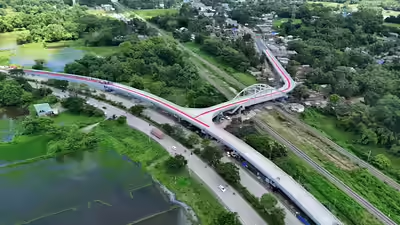
Assam has secured central approvals for infrastructure projects worth nearly Rs 55,000 crore over the past year, marking one of the largest coordinated public investment drives in the state’s recent history and signalling a decisive push to reposition the Northeast as a logistics and connectivity hub.
State officials confirmed that the sanctioned pipeline spans urban mobility, highways, tourism access and healthcare infrastructure. The scale of funding reflects a broader national strategy to deepen economic integration of the region through transport-led development. Among the headline initiatives is a proposed ropeway connecting the Kamakhya Temple to the nearby railway station. Designed to ease vehicular congestion on the Nilachal Hills, the project aims to improve last-mile access for pilgrims while reducing traffic emissions in an ecologically sensitive zone. Environmental clearances, authorities said, were based on technical assessments evaluating slope stability and biodiversity impact. Urban mobility upgrades also include a planned elevated corridor linking Lokpriya Gopinath Bordoloi International Airport to Jalukbari. Transport planners argue that seamless airport connectivity is critical as Guwahati positions itself as a gateway city for trade, tourism and regional business travel across the Northeast and neighbouring countries. On the intercity front, the proposed four-laning of the national highway stretch between Baihata Chariali and Tezpur is expected to reduce freight bottlenecks and improve access to defence installations and riverine trade routes along the Brahmaputra basin. Infrastructure economists note that road widening projects in the Northeast often generate multiplier effects, supporting warehousing, agro-processing and small manufacturing clusters.
Healthcare capacity expansion forms another component of the approved outlay. Senior officials indicated that new medical facilities and upgrades to existing institutions are being prioritised to match population growth and reduce outbound medical travel. The investment push follows a state-level investment summit held last year that sought to align private capital with public infrastructure commitments. Analysts tracking the region say predictable infrastructure rollout is crucial for attracting long-term industrial and service-sector investments. However, rapid expansion brings scrutiny. Urban planners emphasise that infrastructure in fragile ecological landscapes must incorporate climate resilience safeguards particularly flood management, slope reinforcement and sustainable drainage systems given Assam’s history of monsoon-related disruptions.If implemented within timelines, the Rs 55,000 crore programme could reshape Assam’s urban hierarchy, strengthen Guwahati’s metropolitan role and improve rural-urban linkages. The coming months will test administrative capacity, environmental compliance and project execution standards.
For residents, the implications are tangible: shorter travel times, expanded employment opportunities and improved civic services. For policymakers, the challenge lies in ensuring that infrastructure growth remains inclusive, climate-responsive and fiscally sustainable as Assam accelerates into its next development phase.
Also Read: Mumbai Micro Market Growth Shifts Buyer Focus
Assam Infrastructure Projects Gain Rs 55000 Crore Push
