


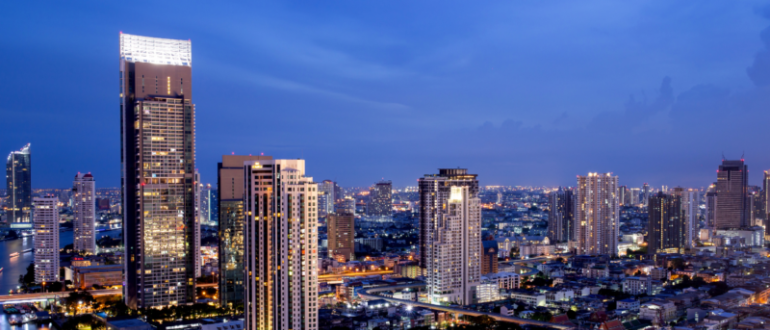
Investor confidence in Asia-Pacific real estate is showing its strongest recovery in four years, signalling a potential turning point for regional property markets in 2026 after an extended period of caution driven by high interest rates and economic uncertainty. New investor surveys indicate that buying intentions across the region are now firmly outpacing plans to divest, suggesting that capital is gradually repositioning toward long-term urban assets.
Net buying sentiment for Asia Pacific real estate has climbed to its highest level since 2022, supported by stabilising financing conditions, improving rental fundamentals, and a slowdown in new supply across several major markets. Industry analysts say this shift reflects a recalibration rather than a speculative surge, with investors prioritising income resilience and asset quality over short-term gains. One of the most notable changes in the 2026 outlook is the renewed appeal of office assets. For the first time in six years, offices have emerged as the preferred investment segment, driven by steady leasing demand in key gateway cities. Markets such as Japan, Australia, South Korea and Singapore are witnessing rental growth in prime office districts, underpinned by limited new construction and a gradual return to physical workplaces for high-value sectors. While overall investment activity in recent years was dampened by higher borrowing costs, tighter credit, and shifting workplace patterns, the current cycle appears more selective. Urban experts point out that investors are increasingly focused on well-located, energy-efficient buildings that can meet evolving occupier expectations around flexibility, sustainability and operating costs.
Geographically, Tokyo continues to anchor cross-border investment flows, benefiting from comparatively low financing costs and deep market liquidity. Sydney and Singapore remain close contenders, supported by transparent regulatory environments and strong institutional demand. Seoul’s rise reflects confidence in South Korea’s urban economy, while Hong Kong’s return to investor shortlists is linked to renewed interest in residential and hospitality assets as cross-border activity improves. China remains a complex picture. Although mainland markets continue to see net selling, investor sentiment has improved compared to last year, suggesting a cautious reassessment rather than a full withdrawal. Analysts note that domestic economic conditions and policy clarity will be critical in shaping capital flows into Chinese cities over the next cycle. Cost pressures are emerging as a key constraint for 2026. Rising construction and labour expenses have overtaken interest rates as the primary concern for investors, particularly in Australia, Japan and Singapore. This dynamic is expected to reinforce demand for existing assets and adaptive reuse projects, which align with both financial prudence and lower carbon outcomes.
For rapidly urbanising regions, the shift in Asia Pacific real estate investment patterns carries broader implications. A renewed focus on operational performance, rental stability and sustainable design could support more resilient city growth, balancing capital returns with long-term urban liveability. As investors move from defensive postures to selective expansion, the quality and environmental performance of city assets are set to define the next phase of the region’s property cycle.
Also Read: India Real Estate Accelerates Green Certification Drive
Asia Pacific Real Estate Buying Momentum Returns
