


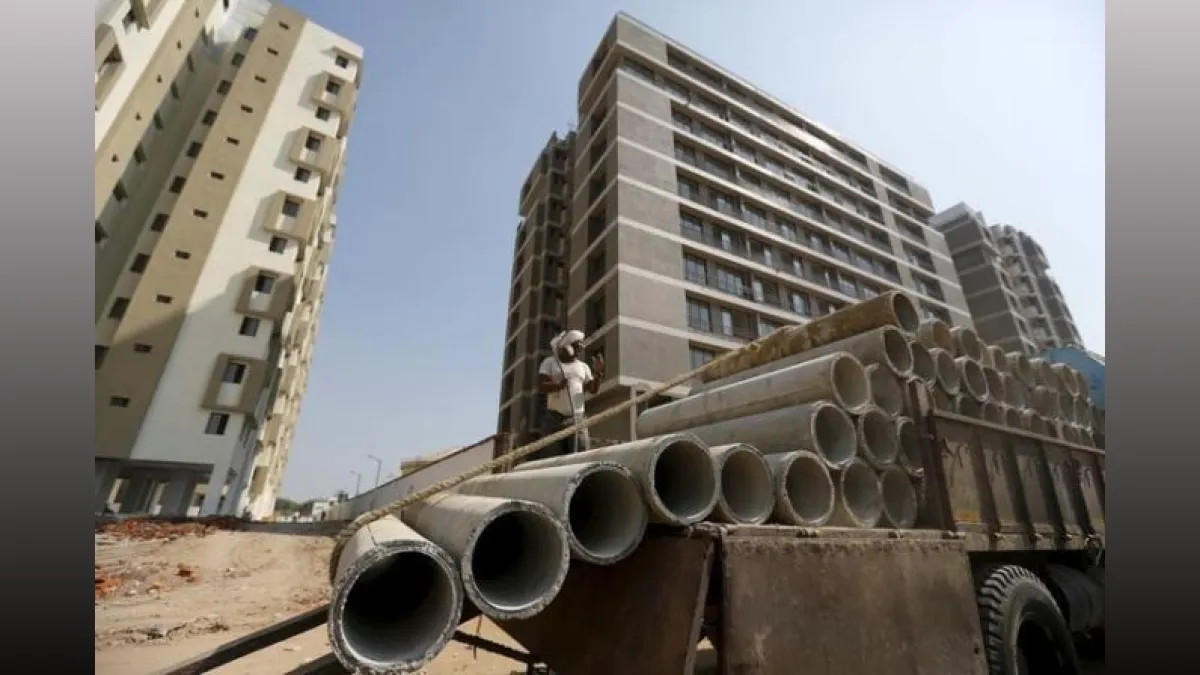
Arvind SmartSpaces reported a sharp year-on-year decline in quarterly profit even as sales bookings strengthened, highlighting the uneven revenue cycle that continues to shape India’s residential real estate sector.
For the quarter ended December, the Ahmedabad-based developer posted a 42 per cent drop in consolidated net profit to Rs 29.21 crore, compared with Rs 50.18 crore in the corresponding period last year. Total income also declined to Rs 170.50 crore from Rs 215.47 crore a year earlier, according to regulatory disclosures. Despite weaker earnings, operational momentum appeared stronger on the demand side. Sales bookings during the October–December quarter rose to Rs 331 crore, up from ₹224 crore in the same period last year. The divergence between profit and bookings reflects a familiar dynamic in the property sector: revenue recognition is tied to project milestones and handovers, while bookings capture current buyer sentiment and pipeline strength. Industry analysts note that rising bookings signal sustained end-user demand across key urban markets, even as developers navigate input cost pressures, funding costs and project execution timelines. In recent quarters, developers have increasingly focused on asset-light expansion, joint development agreements and calibrated launches to preserve balance sheet strength. The quarter also marked a leadership transition. The company’s chief executive officer and whole-time director has been redesignated as managing director and CEO. The outgoing managing director will continue on the board in a strategy and investments role, reflecting an internal succession plan rather than an external change in control.
Such transitions come at a time when mid-sized developers are repositioning themselves amid consolidation in India’s housing market. Larger listed players have expanded market share in the post-pandemic recovery, benefiting from stronger compliance frameworks and access to institutional capital. For regional developers, maintaining growth while managing cash flows remains critical. Arvind SmartSpaces, established in 2008, operates across multiple cities with a portfolio spanning residential and mixed-use developments. Like many peers, it has been navigating a market environment marked by resilient demand in premium and mid-income housing, alongside cautious sentiment in select micro-markets. Urban economists point out that quarterly volatility in profits is not uncommon in real estate, given the project-based accounting structure. What often matters more for long-term stability is booking velocity, execution capability and inventory discipline factors that influence both cash generation and customer confidence.
As India’s housing sector continues to consolidate and formalise under regulatory oversight, developers face the dual challenge of sustaining growth while delivering projects on time. The latest results underline the importance of aligning sales momentum with timely revenue realisation, particularly in a market that increasingly rewards transparency and financial prudence.
Also Read: Lutyens Delhi bungalow nears record sale
Arvind SmartSpaces profit drops 42 percent
