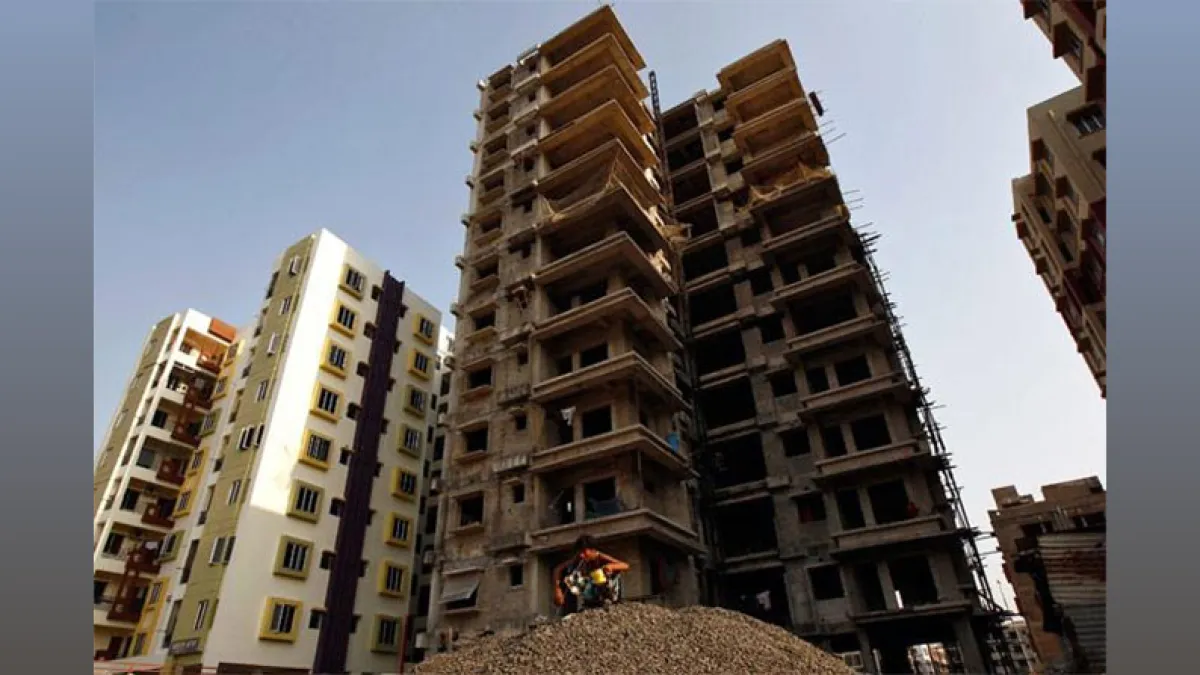
Arvind SmartSpaces has marked its entry into Mumbai’s competitive redevelopment market with a residential project in Santacruz, signalling a strategic expansion beyond its core western India footprint. The move reflects a growing trend of regional developers targeting Mumbai’s redevelopment pipeline to tap into steady housing demand and constrained land availability.
The Arvind SmartSpaces Mumbai redevelopment initiative involves the transformation of an existing housing society into a modern residential development, with an estimated revenue potential of around ₹300 crore. The project is expected to generate approximately 42,000 sq ft of saleable carpet area, positioning it within the mid-to-premium housing segment in a well-established suburban micro-market. Mumbai’s redevelopment model has increasingly attracted developers due to limited greenfield opportunities and a large inventory of ageing residential buildings. Industry experts point out that such projects offer relatively predictable demand, especially in locations like Santacruz, where connectivity, social infrastructure, and proximity to commercial hubs continue to drive buyer interest.
For Arvind SmartSpaces, the Mumbai redevelopment push represents a calculated diversification strategy. Entering a complex market like Mumbai requires navigating regulatory frameworks, society negotiations, and execution timelines that are often more intricate than conventional projects. However, successful delivery can significantly enhance brand positioning and open up a steady pipeline of similar opportunities. Urban planners highlight that redevelopment plays a crucial role in improving the quality of the built environment in Mumbai. Replacing ageing structures with newer buildings enhances safety standards, optimises land use, and can introduce more efficient layouts. However, increased density also places pressure on civic infrastructure, including water supply, waste management, and transport systems.
The Arvind SmartSpaces Mumbai redevelopment project will therefore need to align with broader infrastructure capacities in the Santacruz area. Experts emphasise that redevelopment-led growth must be supported by upgrades in local services to prevent overburdening already stretched urban systems. Sustainability is another dimension shaping redevelopment projects. While newer buildings typically incorporate improved energy efficiency and water management systems, the overall environmental impact depends on construction practices, material usage, and integration with urban ecosystems. Developers entering Mumbai are increasingly expected to align with evolving environmental norms and buyer expectations around sustainable living.
From a market perspective, Mumbai continues to be one of India’s most resilient housing destinations despite periodic fluctuations in sales. Demand for well-located residential units remains strong, supported by end-users rather than speculative investors. This stability is a key factor attracting new entrants into the redevelopment segment. As Arvind SmartSpaces strengthens its presence through the Mumbai redevelopment route, its performance in execution, delivery timelines, and stakeholder management will be closely watched. In a city where redevelopment is central to future housing supply, the ability to balance commercial viability with urban sustainability will define long-term success.
Arvind SmartSpaces Enters Mumbai Redevelopment Market