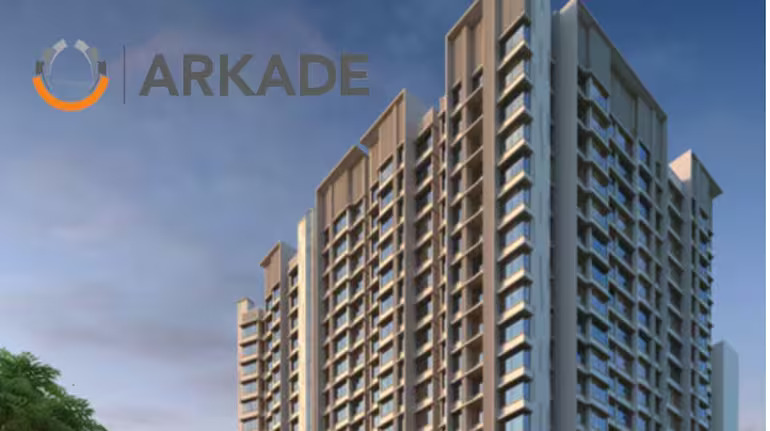
Mumbai is witnessing a significant expansion in cluster redevelopment with Arkade Developers Limited formalising a development agreement for a large-scale residential project in Malad West. The redevelopment of Shree Rani Sati Nagar Co-operative Housing Society, spanning over 6,550 square metres along SV Road, carries a projected gross development value (GDV) of approximately ₹700 crore. The project underscores the growing strategic focus on western suburbs as a hub for urban regeneration and modern housing.
Cluster redevelopment, the approach adopted here, consolidates multiple adjacent buildings or plots into a single project, allowing more efficient land utilisation, better urban planning, and upgraded social and civic infrastructure. Urban planners indicate that such schemes offer opportunities to improve housing quality, introduce green spaces, wider streets, and contemporary amenities, while ensuring rehabilitation for existing residents. The Malad project represents a continuation of Arkade Developers’ concerted push in western Mumbai, following a recent redevelopment agreement in Goregaon West valued at ₹350 crore. A senior company official noted that the Malad site’s proximity to business districts, transport corridors, and social infrastructure increases its residential appeal, potentially driving long-term economic and urban value.
For residents, cluster redevelopment offers enhanced living standards, integrating modern urban amenities while addressing structural and infrastructural inadequacies in ageing housing stock. Experts highlight that projects of this scale can catalyse microeconomic activity in surrounding neighbourhoods, create temporary employment through construction, and, upon completion, attract a more diverse demographic, boosting the local real estate market. While private redevelopment remains a key driver of urban densification, regulatory oversight by housing authorities ensures project alignment with city planning objectives. Observers point out that the lifting of prior procedural stays by MHADA on similar projects has accelerated the pace of redevelopment, creating a predictable framework for developers and homebuyers alike.
Analysts suggest that cluster redevelopment aligns with broader sustainability objectives, including optimal land use in dense cities like Mumbai, climate-sensitive design, and improved infrastructure resilience. By integrating upgraded utility networks, open spaces, and mobility corridors, such projects offer a blueprint for people-first urban growth, addressing the dual challenges of population density and housing scarcity. With Arkade Developers consolidating its redevelopment pipeline in Malad and Goregaon, Mumbai’s western suburbs are positioned to become a significant node of modern residential communities. The project signals not only urban transformation but also a calibrated investment strategy tapping into long-term market demand and infrastructure connectivity.
As redevelopment progresses, key metrics to monitor include resident rehabilitation effectiveness, project adherence to sustainability norms, and the extent of social infrastructure improvements, all of which will influence the trajectory of equitable and climate-resilient urban expansion.
Arkade Developers Signs Malad Redevelopment Deal Worth Rs 700 Crore Potential