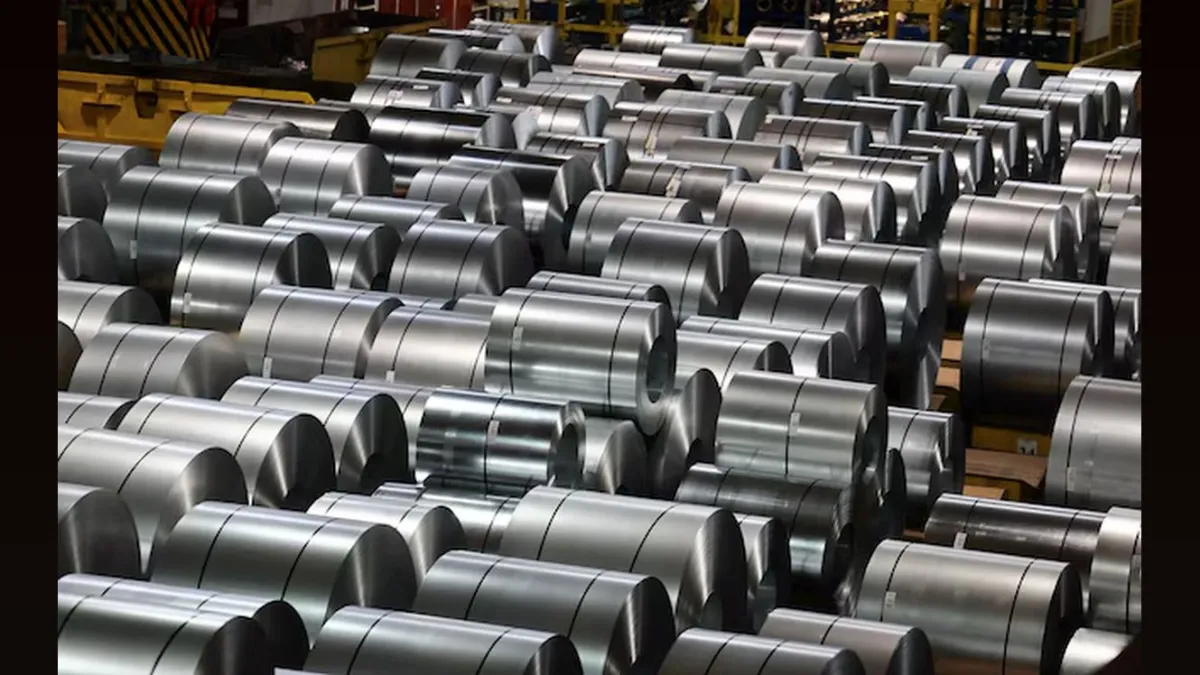
Andhra Pradesh is positioning itself as a major steel manufacturing hub with the foundation of a large integrated steel plant in Anakapalli district, marking one of the most significant industrial investments in recent years. The project, led by ArcelorMittal Nippon Steel India, is expected to reshape regional industrial capacity while strengthening India’s domestic steel ecosystem.
The greenfield facility, located in Rajayyapeta in Nakkapalli mandal, is planned with a total production capacity of around 17.8 million tonnes per annum and will be developed in phases. The first phase alone is expected to deliver over 8 million tonnes annually, signalling a substantial addition to India’s steel output. At its core, the project reflects India’s long-term push to scale steel production in line with infrastructure and urban growth. Steel demand is closely tied to sectors such as housing, transport, and industrial construction, all of which are expanding rapidly across the country. Large integrated plants—combining raw material processing, steelmaking, and finishing—are seen as critical to improving efficiency, reducing costs, and ensuring supply stability.The Andhra Pradesh project also highlights the strategic importance of coastal locations in steel manufacturing. With plans for a captive port and connectivity to national highways, the facility is designed to streamline logistics for both raw materials and finished products. This integration is expected to reduce transportation costs and enhance export competitiveness, particularly as India aims to strengthen its position in global steel markets.
The Andhra Pradesh integrated steel plant is expected to generate significant economic impact beyond production capacity. Estimates suggest employment generation of nearly one lakh jobs, including direct and indirect roles, alongside additional opportunities linked to logistics and ancillary industries. This aligns with the state’s broader strategy to attract large-scale manufacturing investments and create industrial clusters.From a technology standpoint, integrated steel plants are increasingly incorporating advanced and lower-emission processes. While coal-based production remains dominant, there is growing emphasis on improving energy efficiency and gradually transitioning towards greener steelmaking methods. Industry experts note that such large-scale facilities provide an opportunity to embed cleaner technologies from the outset.The project also reflects a wider structural shift in India’s steel sector. As demand rises, capacity expansion is moving towards fewer but larger, technologically advanced plants rather than fragmented production units. This approach enables economies of scale, better quality control, and stronger integration with global supply chains.
For urban development, the implications are significant. Steel remains a foundational material for infrastructure—from metro rail systems and highways to residential construction. Expanding domestic capacity helps reduce reliance on imports, stabilise prices, and ensure timely delivery of large-scale projects.At the same time, the scale of investment underscores the need to balance industrial growth with environmental and social considerations. Land use, resource consumption, and emissions management will remain key factors as the project progresses.
Looking ahead, the Andhra Pradesh facility signals a deeper consolidation of India’s steel ambitions—where capacity, logistics, and technology converge to support the country’s infrastructure-driven growth. The success of such projects will play a crucial role in determining how efficiently India meets its rising steel demand while advancing towards more sustainable industrial practices.