


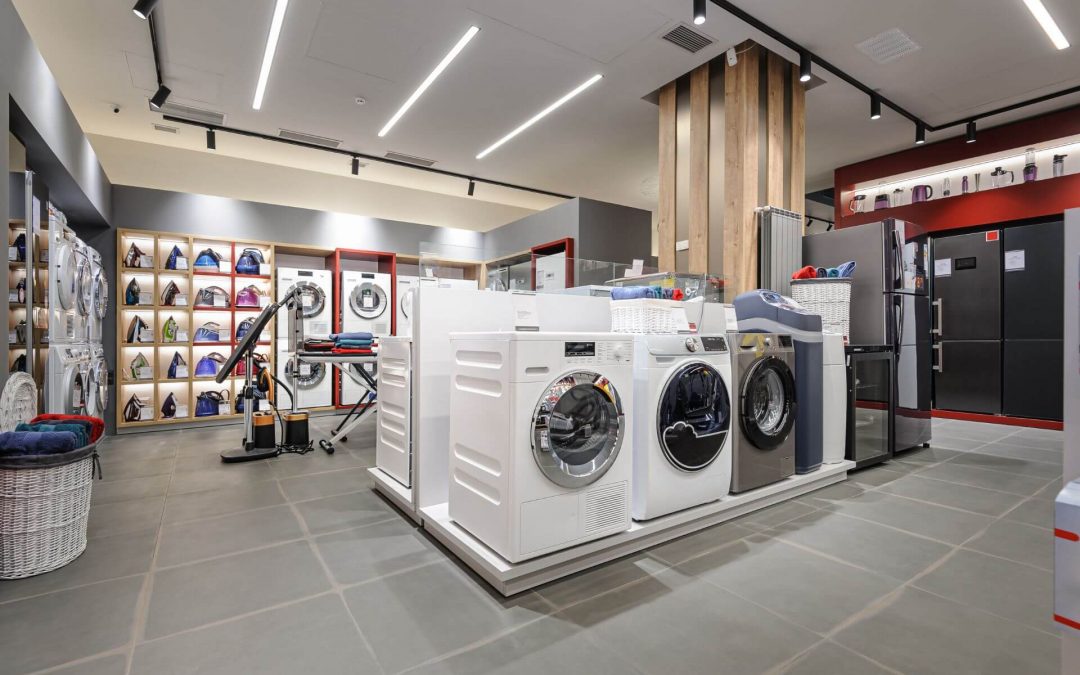
A large-scale electronics manufacturing project taking shape in Sri City, Andhra Pradesh, is emerging as a significant marker of how Indian states are competing to attract global production while accelerating local employment and supply-chain depth. A ₹5,000 crore consumer durables facility by a multinational electronics manufacturer has moved swiftly from land allocation to advanced construction, highlighting changing dynamics in India’s industrial development landscape.
The greenfield site, handed over in mid-2025, has progressed into visible on-ground execution within months. Spread across nearly 250 acres, the facility is designed to manufacture a range of household appliances and critical components, strengthening domestic production capacity in a sector that has historically relied on imports. Industry analysts say such projects reduce logistics costs, shorten supply chains, and support resilience amid global trade disruptions. For Andhra Pradesh, the project reinforces Sri City’s positioning as a manufacturing cluster that combines industrial zoning with proximity to ports, highways, and urban labour markets. State officials involved in industrial development point to faster approvals, coordinated clearances, and continuous investor engagement as factors enabling quicker project execution. This approach is increasingly important as states seek to convert investment announcements into operational assets rather than stalled proposals.
The facility is expected to be the company’s third major manufacturing base in India and is aligned with its broader strategy of expanding local sourcing and assembly. Commercial production is scheduled to begin by the end of 2026, with capacity additions planned in phases until 2029. This staggered expansion model allows output to grow in line with market demand while steadily scaling employment opportunities. Urban economists note that beyond direct jobs, such plants typically generate multiplier effects through ancillary units, logistics providers, and service firms. The development of a local vendor ecosystem around Sri City is anticipated, creating opportunities for small and medium enterprises supplying components, packaging, maintenance, and transport. This integration can anchor long-term industrial activity rather than isolated factory-led growth.
From a sustainability perspective, electronics manufacturing hubs are increasingly under scrutiny for energy use, water management, and waste handling. Experts say future competitiveness will depend not only on speed and cost efficiency but also on how facilities adopt energy-efficient processes, responsible resource use, and climate-resilient infrastructure. Industrial clusters that embed these considerations early are better positioned to meet evolving global standards and buyer expectations. The project also reflects a broader shift in India’s manufacturing geography, with southern states attracting high-value electronics and appliance production. Improved logistics corridors, skilled workforce availability, and urban-industrial planning have made such regions attractive for long-term investment.
As the Sri City facility moves closer to commissioning, attention will turn to execution consistency, workforce readiness, and supplier integration. If delivered as planned, the project could serve as a template for how large manufacturing investments translate into durable urban-industrial growth rather than short-term construction activity.
Also Read: NTPC Advances Coal Transition With Synthetic Gas Facility
Andhra Pradesh Manufacturing Push Gains LG Electronics Plant
