


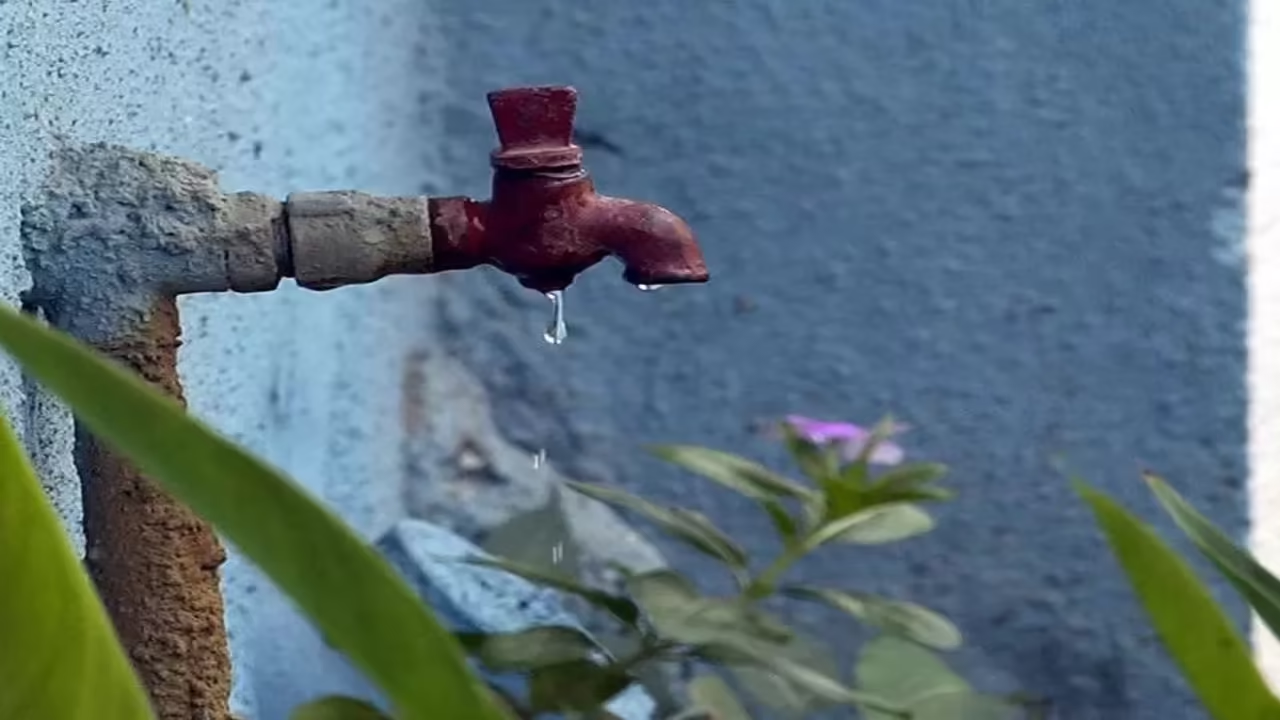
Andheri (East) and surrounding neighbourhoods are bracing for reduced water supply between June 22 and June 28, as the Mumbai Metropolitan Region Development Authority (MMRDA) undertakes critical tunnelling work for the Metro-7A project near the Veravali Reservoir. The activity will impact the city’s core water infrastructure, leading to low water pressure across key parts of the K-East Ward during specific hours each day.
The Metro-7A corridor, a vital connector between Gundavali and the Chhatrapati Shivaji Maharaj International Airport, has reached an execution phase that involves tunnelling beneath an 1800-mm diameter water main—a crucial pipeline for municipal water distribution in the eastern suburbs. The MMRDA has scheduled the tunnelling in two shifts daily: from 7:30 am to 3:30 pm and 9:30 pm to 3:30 am, spanning the entire week.
As a direct consequence, several localities in Andheri East—including Old Nagardas Road, New Nagardas Road, Mogarapada, and Andheri-Kurla Road—will experience a noticeable drop in water pressure between 8 pm and 9:30 pm. Additionally, parts of Vile Parle (East) are expected to face supply disruptions during evening hours, particularly from 5 pm to 8 pm.
Civic authorities have advised residents in the affected areas to store adequate water in advance to mitigate the inconvenience. Officials from the Brihanmumbai Municipal Corporation (BMC) and MMRDA have coordinated to ensure that the tunnelling operation is executed without causing long-term impact on the pipeline’s integrity. However, short-term disruptions remain unavoidable due to the scale and sensitivity of the engineering work involved.
The Veravali Reservoir, located in Andheri East, is one of the major water supply nodes in Mumbai’s suburban network. Tunnelling in its vicinity carries considerable risk, and the MMRDA has reportedly conducted detailed risk mapping and obtained clearances before moving ahead with the excavation plan. The operation reflects Mumbai’s ongoing efforts to expand mass transit infrastructure while maintaining essential civic services.
The Metro-7A project itself is seen as a long-term mobility solution that aims to reduce congestion, especially between western suburbs and the airport, by offering a reliable, eco-friendly transit alternative. Once operational, it is expected to significantly reduce travel time and vehicular emissions, aligning with the city’s broader sustainability goals.However, the week-long water pressure drop brings into sharp focus the cost of infrastructure development in dense urban ecosystems like Mumbai. With monsoon season underway, many residents are particularly concerned about access to water during peak demand periods. Several housing societies in Andheri East have already issued advisories and water usage guidelines in anticipation of the shortfall.
While the authorities maintain that the impact will be contained and time-bound, the situation underscores the need for more resilient utility planning as the city undergoes simultaneous infrastructure expansion. Ensuring that such projects proceed with minimal disruption to basic services remains one of Mumbai’s most pressing urban governance challenges.
Also Read : Noida Clears Urban Redevelopment Inspired by Mumbai
Andheri Faces Low Water Flow Due to Metro
