Ancient Ecosystem Uncovered In Jharkhand Coal Mine
A remarkable paleontological discovery in an active coal mine in eastern India has unveiled fossilised remnants of a long-extinct ecosystem that predates human evolution, offering new insights into Earth’s deep past and the environmental transformations that shaped the subcontinent’s geological history. The find underscores the scientific value of coal seams not just as energy resources but as archives of biodiversity from prehistoric eras.
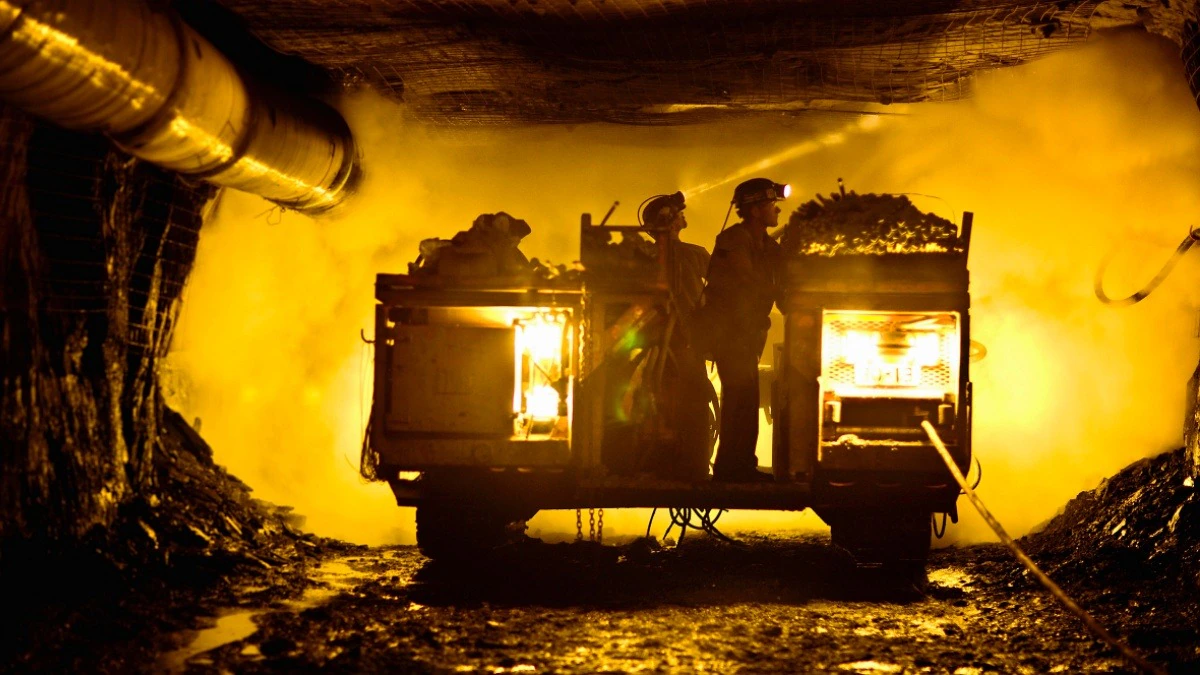
Workers unearthing coal strata in Jharkhand’s mineral belt — a region already vital to India’s energy and industrial supply chains — encountered a layer of fossilised plants and animal remains embedded within sedimentary rock formations. Preliminary analysis by geologists and paleobotanists identifies the assemblage as belonging to species that thrived millions of years ago, well before the emergence of early hominids. The preserved remains include impressions of wooded vegetation, leaf fragments and possible vertebrate traces, offering a window into a “lost world” ecosystem long buried by geological processes.Coal deposits form over extended geological timescales as plant material accumulates, compacts and transforms under heat and pressure. In many coal-bearing basins worldwide, such deposits have preserved fossil records that allow scientists to reconstruct long-lost environments — from lush carboniferous forests to subtropical wetlands. The Jharkhand find adds to this legacy, pointing to a dynamic prehistoric landscape that once flourished in regions now dominated by industrial mining.
Researchers say the fossil composition may help refine understanding of palaeoclimates — the climates that prevailed on Earth before the advent of modern ecosystems and human influence. Such data provide critical context for how vegetation patterns, atmospheric compositions and ecological networks evolved over geological epochs. In turn, palaeoclimate research informs models used today to assess long-term climate shifts and anticipate future environmental change.Urban and environmental scholars note that discoveries like this have implications beyond academia. As India’s rapid urbanisation and infrastructure expansion place increasing demand on land, mining and construction activities, preserving and studying geological archives becomes a matter of cultural and scientific importance. Balancing resource extraction with archaeological and palaeontological stewardship ensures that valuable scientific records are not lost amid development.
The Jharkhand department of mining and geology has authorised a collaborative investigation with regional universities and national research institutions to document and analyse the fossils systematically. Field teams are conducting stratigraphic surveys, radiometric dating and taxonomic classification to determine the age and biological significance of the finds with precision. These efforts may yield new species records and broaden understanding of prehistoric biodiversity on the Indian subcontinent.However, scientists caution that extracting significant fossil material in an active mining zone requires careful coordination. Mine operators, researchers and regulatory agencies must collaborate to protect sensitive strata while maintaining operational safety and economic viability. Protocols are being drafted to allow temporary excavation pauses and carefully supervised sampling as part of the study.
Conservationists emphasise that such discoveries highlight the non-renewable nature of deep geological records. Once a fossil layer is disturbed without proper documentation, the opportunity to reconstruct that segment of Earth’s history is lost forever. Integrating scientific assessment into mining planning — particularly in fossil-rich regions — could serve both heritage and industrial interests.
The Jharkhand coal find invites a broader conversation about how nations manage geological resources that simultaneously generate economic value and preserve scientific knowledge. As research continues, this glimpse into a prehistoric “lost world” may reshape our understanding of ancient ecosystems and deepen appreciation for the Earth’s evolving story.