


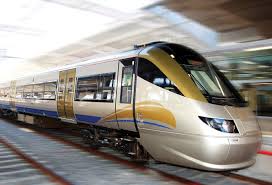
Indian Railways’ ambitious rollout of the new Amrit Bharat trains, envisioned as a low-cost, high-speed solution for the masses, has sparked a notable critique from an unexpected quarter: Sudhanshu Mani, the esteemed engineer credited with designing the flagship Vande Bharat Express. As Prime Minister Narendra Modi recently flagged off four more of these non-AC ‘push-pull’ trains, Mani voiced his strong reservations, arguing that the inclusion of non-air-conditioned sleeper and general coaches fundamentally contradicts the vision of a “Developed India” and the pursuit of equitable, sustainable urban transit solutions.
The Indian Railways plans to deploy 100 Amrit Bharat trains on key routes, each comprising 12 sleeper and 8 general class coaches. While the Ministry of Railways champions these as cost-effective, high-tech alternatives, Mani, the former General Manager of Integral Coach Factory (ICF), Chennai, expressed dismay, contending that such non-AC trains no longer align with the nation’s progressive aspirations. According to him, a “Developed India” should aspire to provide air-conditioned travel for all citizens, irrespective of their economic strata. He suggested that the concept of ‘Garib Rath’ — affordable AC travel for the economically weaker sections — should be the guiding principle, with fare adjustments possible as the country’s prosperity grows.
Also Watch: “Mumbai will rock, shine and always be India’s best city to live.” In an exclusive, MHADA CEO Sanjeev Jaiswal (IAS) talks about Mumbai’s enduring charm, livability, and the government’s focus on making it affordable for all
Mani’s critique extends beyond mere comfort, touching upon the broader philosophy of public transport in an emerging global economy. He passionately advocates for the right of every Indian, including the most marginalised, to experience dignified and comfortable travel. For Mani, continuing to operate non-AC trains, particularly beyond the target of a “Vikasit Bharat” by 2047, would be a regrettable step backwards. He posited that any perceived financial losses from offering affordable AC travel could be offset by increased revenue from premium services like the Vande Bharat Express, which caters to a segment willing to pay higher fares for speed and superior amenities.
The veteran railway official also highlighted the untapped potential of the Vande Bharat Express, suggesting that its average speed, currently ranging from 70-90 kmph, could be significantly enhanced to 100-150 kmph. Such an improvement would not only cut down travel times but also justify higher fares, thereby creating a sustainable financial model that supports the overall upgrade of the railway network. The Amrit Bharat trains, with their ‘push-pull’ configuration (engines at both ends for faster acceleration and deceleration), are designed for efficiency, yet Mani’s stance challenges the very premise of their non-AC composition in a climate-conscious and equitably developing nation.
This debate brings to the fore a critical discussion on Indian Railways’ strategic direction: balancing accessibility with modern standards, and affordability with environmental responsibility. As India strives towards creating zero net carbon, eco-friendly, and equitable cities, the choice of rolling stock plays a pivotal role. The argument for universal AC access in a tropical climate like India’s also aligns with principles of sustainability, as enclosed, climate-controlled coaches can potentially offer better energy efficiency and reduced carbon footprint per passenger compared to open coaches during peak seasons. Mani’s intervention serves as a compelling reminder that as the nation progresses, its public services must evolve to offer not just connectivity, but also comfort, dignity, and a greener travel experience for all.
Also Read: Air India Flight AI 2744 Skids Off Mumbai Runway Amid Rain Today
