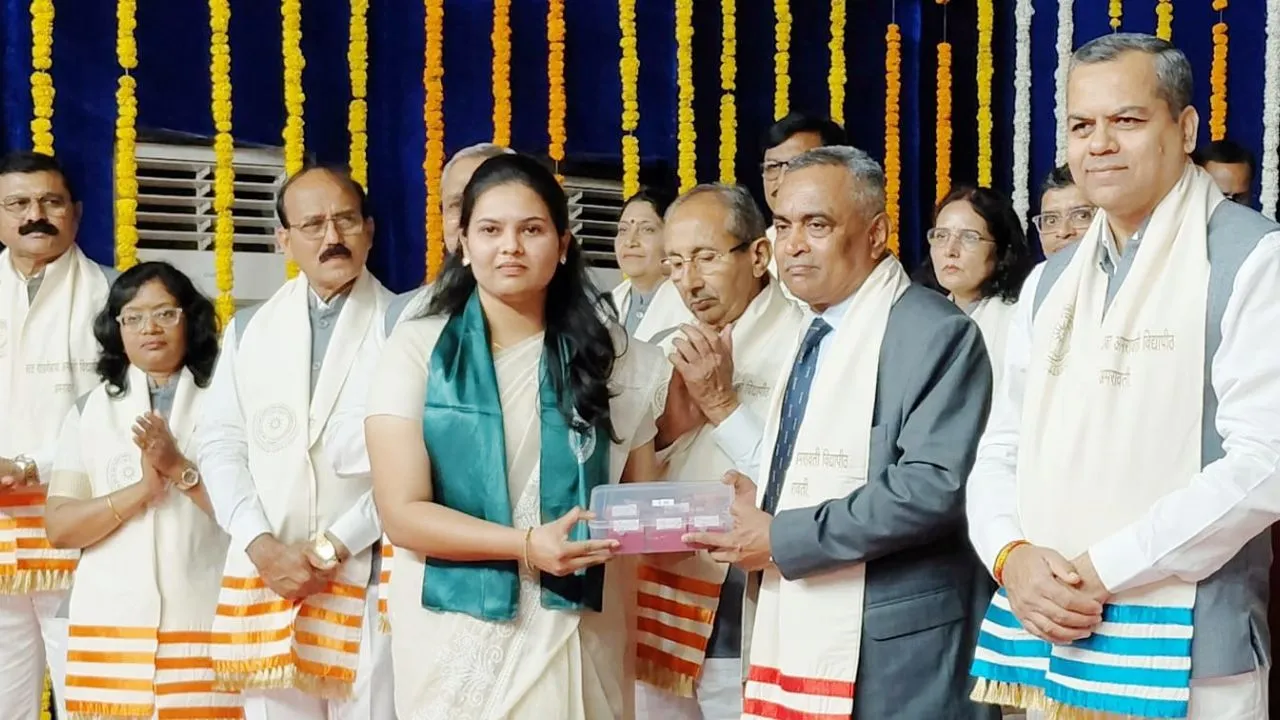
Academic outcomes at Sant Gadge Baba Amravati University are reflecting a marked gender shift, with women securing the majority of top honours at this year’s convocation ceremony in Amravati. Of the 85 students set to receive medals and major distinctions, 67 are women — a trend administrators say underscores changing patterns in higher education participation across semi-urban and rural Maharashtra.
The annual convocation, scheduled this week, will see more than 120 gold medals, along with silver medals and cash awards, conferred across disciplines. University officials indicated that women not only dominate the total medal count but also occupy the top three overall academic ranks this year.Education analysts note that the growing presence of women at the top tier of university rankings mirrors broader enrolment trends in state universities, particularly in arts, science and commerce streams. Increased access to secondary education in districts such as Washim, Buldhana and Akola has steadily expanded the pipeline of women entering undergraduate and postgraduate programmes in the Vidarbha region.
University authorities confirmed that the highest-ranking candidates have secured multiple gold medals across subjects, reflecting cumulative academic performance rather than single-course distinction. A small cluster of top composite awards, however, remained unclaimed this year as no candidate met the eligibility criteria.The convocation ceremony will be presided over by the university leadership, with the honours to be conferred by a former chief of the Indian Army, lending ceremonial stature to the event. In addition to student recognitions, the university’s highest honorary literary degree will be awarded to a distinguished public figure for contributions to literature and social thought.
Higher education experts suggest the gender distribution of awards is significant beyond symbolism. In districts where women’s workforce participation remains below national averages, academic excellence can translate into long-term economic mobility, particularly in public sector employment, research, teaching and professional services.However, they caution that medal counts alone do not address structural challenges such as employability, research funding and industry linkages. Universities in tier-two regions increasingly face pressure to align curricula with emerging sectors including renewable energy, agri-technology, data services and climate adaptation — areas critical to regional resilience.
For Amravati and neighbouring districts, the strong showing by women students signals progress in educational attainment. The next measure of impact, observers say, will depend on how effectively institutions convert academic achievement into inclusive economic opportunity, entrepreneurship and leadership within Maharashtra’s evolving urban–rural landscape.