


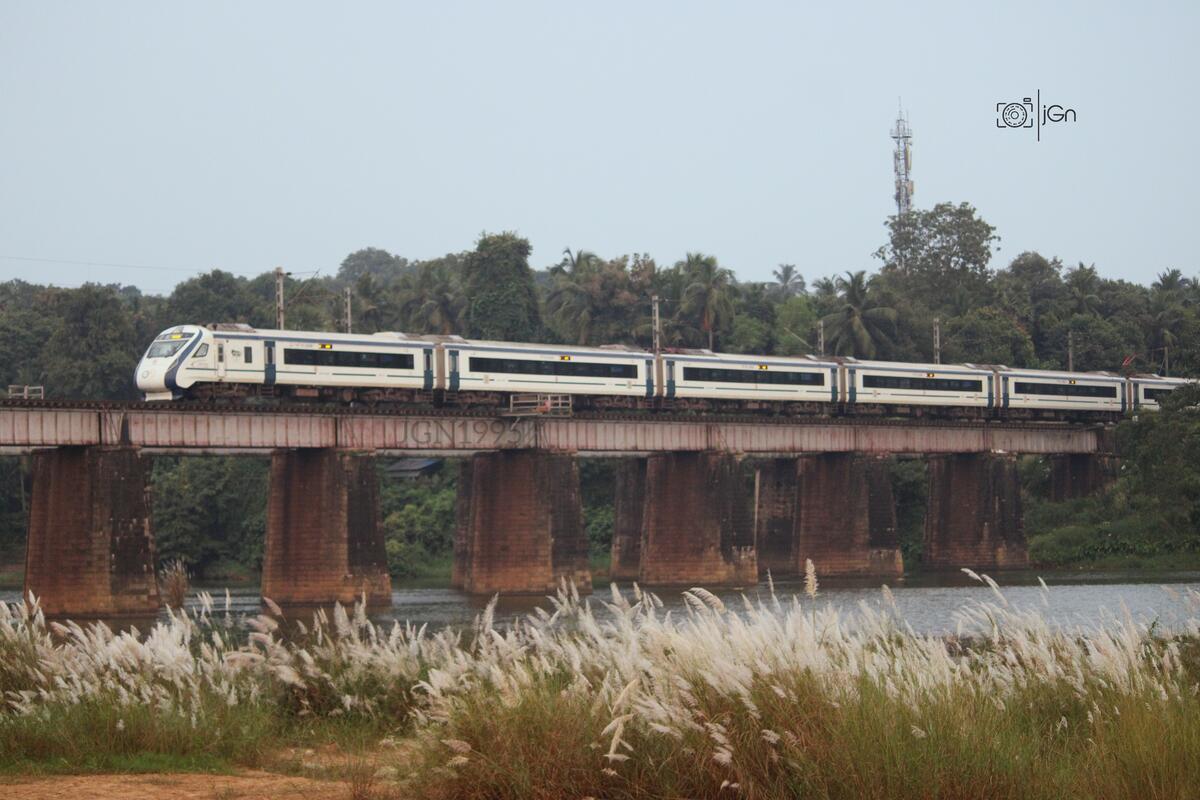
Mumbai witnessed early August bridge repairs in Aluva trigger significant disruptions across key train services, including the cancellation of MEMU trains and delays to Vande Bharat and express services. Southern Railway confirmed maintenance on Bridge No. 176, prompting comprehensive service adjustments to safeguard infrastructure and passenger safety. The Palakkad–Ernakulam South MEMU (Train 66609) and its return service (Train 66610) were cancelled, affecting daily commuters who rely on these suburban connections. Principal express services—including the Indore–Thiruvananthapuram Ahalya Nagari Express (Train 22645), Kannur–Alappuzha Executive Express (16308), and Secunderabad–Thiruvananthapuram Sabari Express (17230)—faced delays between 30 minutes to 90 minutes.
The fast‑paced Thiruvananthapuram–Mangaluru Vande Bharat Express (20632) saw schedule shifts: departing at 16:50 on August 9 (instead of 16:05) and at 16:15 on August 10. In a bid to maintain connectivity, the Guruvayur–Chennai Egmore Express (16128) was diverted via Kottayam on selected dates (August 6, 8, 10, 12, 15, 17, 19), bypassing Ernakulam Junction, Cherthala and Alappuzha, instead stopping at Chengannur. Officials emphasise that the maintenance is essential to preserve track safety and infrastructure integrity. Surface-level signs and public announcements across stations and railway apps have guided affected travellers. Experts underline that transparency and real-time alerts are vital to mitigating commuter distress during disruptions.
Urban mobility analysts observe that while monsoon infrastructure repairs are inevitable, advanced communication systems and alternate scheduling can reduce commuter inconvenience. Social media voices from Kerala underscore frustration, particularly among daily travellers who often must seek alternate arrangements at short notice. From an eco‑urban lens, such disruptions spotlight the importance of resilient, climate-adaptive infrastructure. Maintaining tracks and bridges during monsoon seasons benefits long-term sustainability and safety. Railway authorities are prioritising maintenance during off-peak hours and allocating resources to ensure minimal operational impact, an approach aligned with equitable urban resilience frameworks.
Transportation experts advocate integrating such maintenance schedules with multimodal transport planning. Supplementary options—such as shuttle buses or rerouted regional rail—would reduce commuter hardship and align with inclusive, gender-neutral mobility strategies. Southern Railway confirms that this maintenance forms part of broader safety upgrades across Kerala’s rail network ahead of heavy monsoon movements. Officials have pledged to evaluate service schedules continually and publish real-time updates through NTES and mobile apps.
While the current round of delays and cancellations marks a short-term disruption, the long-term benefits include stronger track resilience and improved passenger safety standards. Inclusive communication and coordinated logistics remain central to minimising public inconvenience. Ultimately, this incident reflects the balance Indian Railways must maintain between infrastructure integrity and uninterrupted mobility—especially vital in densely populated corridors. As rail modernisation continues, integrating proactive disruption management into everyday operations will prove crucial for sustainable urban travel in India’s metropolitan regions.
Also Read :Nagpur‑Pune Vande Bharat Sleeper Express to Launch Soon
