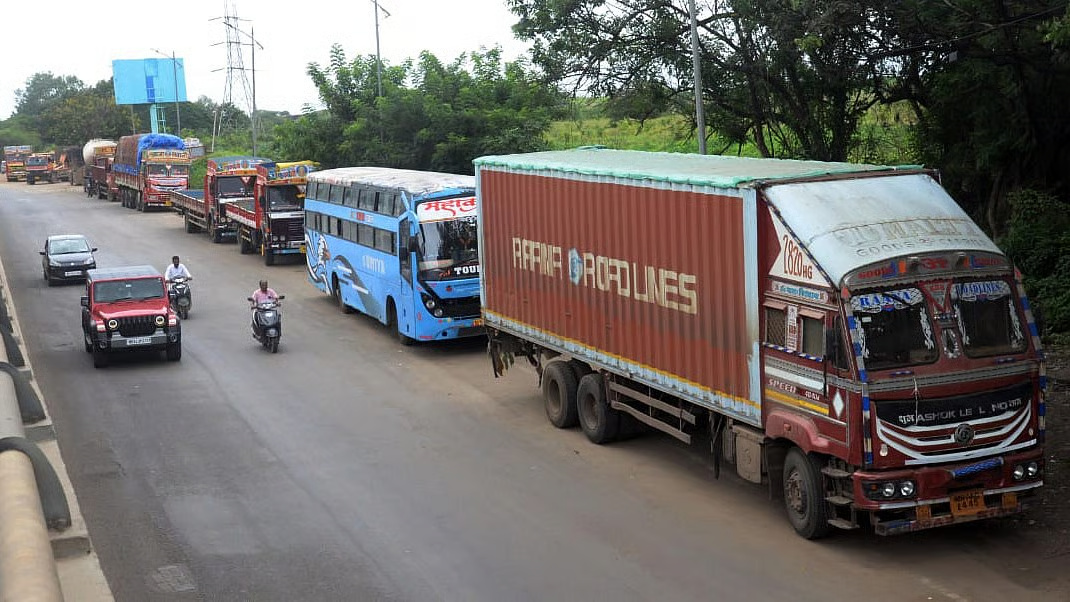
Alibag has introduced strict time-bound restrictions on heavy vehicles along the Mandwa Jetty–Alibag corridor in an effort to curb rising accidents and improve safety for tourists, students, and local commuters. The move, announced by district authorities this week, aims to ease overwhelming congestion on one of the region’s busiest coastal routes and create a more orderly and safer travel experience during peak hours.
The corridor, which serves as a gateway for travellers arriving via Ro-Ro and passenger ferries from Mumbai, routinely experiences traffic surges, especially on weekends and holidays. Officials noted that the mix of tourist vehicles, school transport, and construction-linked heavy trucks has created a persistent safety risk. The new restrictions prohibit heavy vehicles from 8 am to 12 pm and 4 pm to 8 pm daily, with essential services exempted to ensure continuity of basic supplies. According to district officials, the decision follows repeated incidents of both minor and serious crashes over the past year. A senior official explained that the narrow stretch struggles to handle the competing demands of tourism traffic and the steady flow of dumpers and cement mixers supporting rapid construction activity in and around Alibag. With the region witnessing a development boom, authorities say such interventions are necessary to prevent the road network from becoming dangerously overburdened.
Local planners observe that the Mandwa Jetty–Alibag route plays a crucial role in the wider mobility landscape, linking coastal villages, emerging real estate clusters, and hospitality projects. They argue that prioritising pedestrian and commuter safety aligns with the broader goal of fostering sustainable and inclusive coastal development. “Managing the corridor effectively is essential for protecting vulnerable road users, from schoolchildren to ferry passengers,” a transport expert noted, adding that safer streets contribute directly to healthier, more liveable urban environments. Weekend congestion remains a particular challenge, with long queues extending from jetty terminals and delaying emergency services. Officials from the district information office highlighted that the restrictions should help reduce response times for ambulances and improve the reliability of daily travel. By removing heavy vehicles during critical hours, the administration hopes to create a more balanced flow of movement that supports both tourism and local life.
Transport analysts suggest that Alibag’s decision reflects a growing trend across Indian coastal and peri-urban regions to introduce climate- and safety-conscious mobility reforms. As visitor numbers rise and infrastructure undergoes rapid change, cities are increasingly compelled to adopt traffic management strategies that protect residents while ensuring equitable access for all road users. While the move is expected to provide immediate relief, officials emphasise that long-term solutions will require improved road design, expanded public transport links, and coordinated planning with ferry operators. For now, authorities believe the restrictions mark a step towards a safer and more resilient mobility system for Alibag’s evolving urban landscape.
Alibag Stops Heavy Vehicle Movement During Peak Hours On Mandwa Stretch For Safety