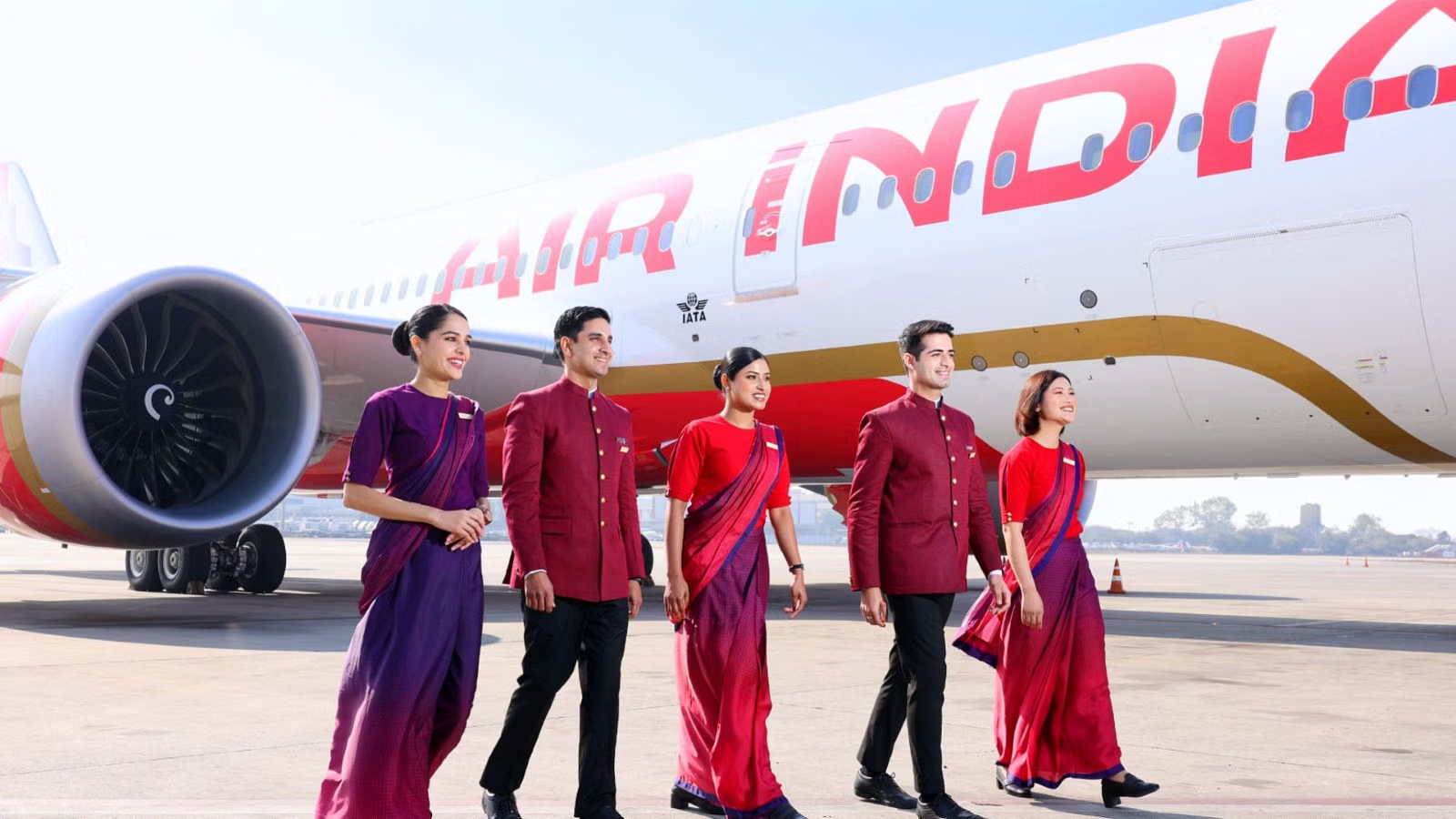
Air India is set to introduce a next-generation widebody aircraft on the Mumbai–Frankfurt corridor from February 2026, marking a notable shift in how India’s financial capital connects with one of Europe’s key economic hubs. The move is part of the carrier’s wider fleet modernisation programme and reflects growing demand for efficient, long-haul air connectivity that supports business, tourism and transcontinental mobility.
From early February, the airline will operate the Mumbai–Frankfurt service using a newly inducted Boeing 787-9 Dreamliner featuring factory-fitted cabin upgrades. The route, which currently runs five times a week, is a critical link between India and Germany, serving corporate travellers, students, exporters and the Indian diaspora. Aviation analysts note that equipment upgrades on such routes often signal long-term confidence in passenger volumes and bilateral travel demand. The deployment also means that all Air India services connecting India and Germany will now be flown using new or refurbished aircraft. Industry observers see this as a strategic repositioning for the airline, which is working to rebuild its international network competitiveness amid rising traffic through Middle Eastern and European hubs. Improved onboard efficiency, seating density and fuel performance are central to this transition.
The Boeing 787-9 is widely regarded for its lower fuel burn and reduced carbon emissions per passenger compared to older widebody jets. Aviation sustainability experts point out that newer aircraft types play a growing role in helping airlines meet emissions intensity targets, particularly on long-haul routes where operational efficiencies can have an outsized environmental impact. For cities like Mumbai, where aviation forms a key part of global economic integration, such upgrades also align with broader climate and infrastructure goals. Beyond point-to-point travel, the Mumbai–Frankfurt service functions as a connector within a larger network. Revised schedules allow passengers arriving in Mumbai to access onward flights to destinations across South and Southeast Asia, as well as parts of the Asia-Pacific region, through single-stop connections. This strengthens Mumbai’s position as a transfer hub and supports airport-led economic activity, including hospitality, logistics and allied services.
Urban mobility experts note that international air connectivity increasingly shapes how global cities compete for talent and investment. Reliable, modern long-haul services influence corporate location decisions, academic exchange and tourism flows, particularly between major financial and industrial centres such as Mumbai and Frankfurt. Over the next year, Air India is expected to induct additional widebody aircraft and complete interior retrofits across its long-haul fleet. The success of these changes will be closely watched by both passengers and policymakers, as India’s aviation sector balances rapid growth with sustainability, service quality and infrastructure readiness. For now, the upgraded Mumbai–Frankfurt link signals a recalibration of India–Europe air travel at a time when global mobility patterns are steadily rebounding.
Air India Modernises Mumbai Frankfurt Flights