


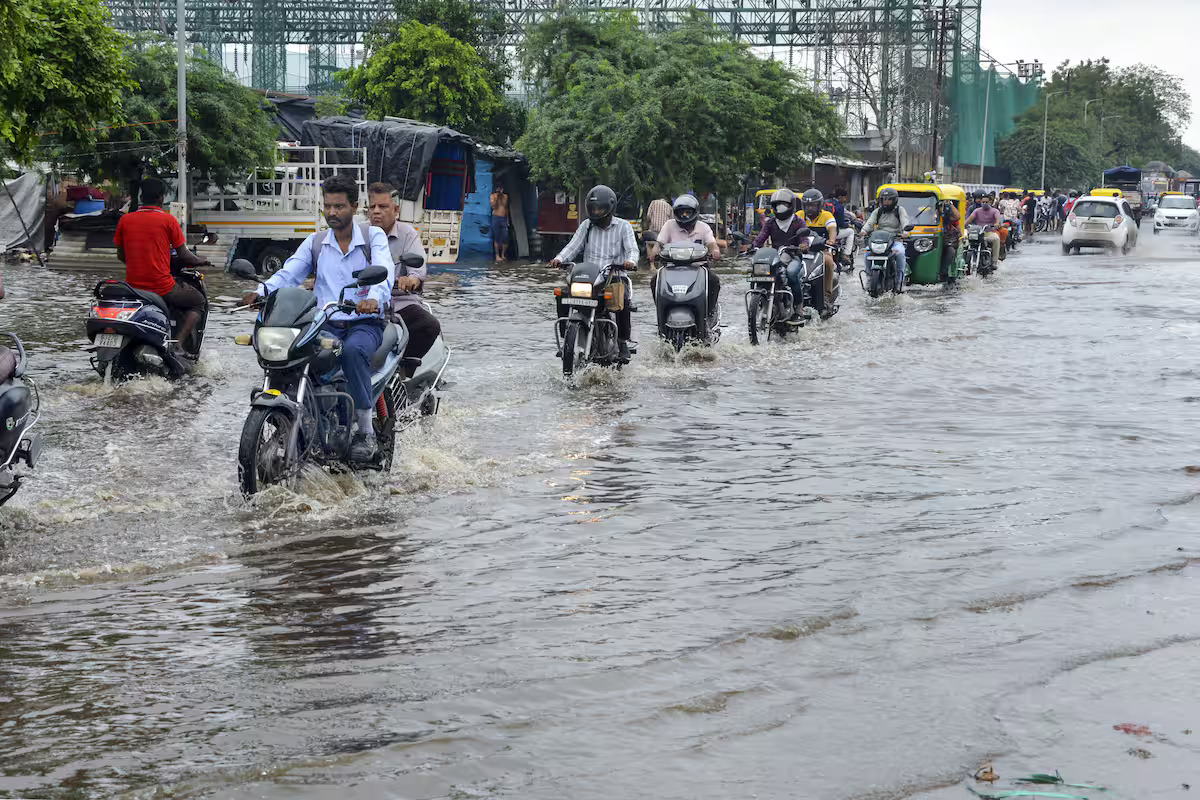
Ahmedabad grappled with sudden and intense flash flooding late on May 28, paralyzing key transport services and submerging roads across the city.
A torrential downpour, lasting just two hours, dumped nearly an inch of rain, triggering widespread waterlogging in low-lying areas. This abrupt weather event exposed glaring vulnerabilities in the city’s urban infrastructure, particularly its drainage and sewage systems, raising urgent questions about Ahmedabad’s preparedness for climate-induced extreme weather. The State Meteorological Department had forecasted rainfall across Gujarat, but the rapid accumulation and intensity overwhelmed many parts of Ahmedabad. The storm brought heavy precipitation and gusty winds, impacting both eastern and western city sectors. Western localities such as Ranip, Jagatpur, and New Ranip experienced between 0.5 and 2 inches of rainfall. Central zones including Ashram Road, Paldi, Vasna, Jamalpur, and Usmanpura recorded even heavier showers, with precipitation nearing 2.5 inches. Eastern areas such as Memco, Viratnagar, and Odhav also saw significant rain, ranging from 1 to 1.5 inches.
The immediate consequence was widespread waterlogging, particularly in vulnerable low-lying pockets. The Ashram Road and Saraspur localities were hardest hit, where water accumulation impeded traffic flow and daily commute. Despite the cessation of rainfall after two hours, floodwaters lingered for more than five hours in multiple areas, indicating inadequate drainage capacity. Saraspur’s Vora Roja area was especially affected, with floodwaters disrupting AMTS (Ahmedabad Municipal Transport Service) operations and forcing temporary suspension of bus services near the Saraspur Safe Society. Urban planners and civic officials have pointed out the city’s ageing drainage infrastructure as a critical weak link. In a disconcerting development, multiple drainage lines overflowed, with sewage backflow occurring at least thirteen times in a single evening, exacerbating the public health risks and worsening the flood impact. Roads that were already submerged became conduits for untreated sewage, complicating rescue and relief efforts.
The repercussions extended into the next day, with flash flooding remnants still evident. Areas like Ajit Mill Road remained submerged, posing navigational challenges for motorists and public transport vehicles. Reports indicated an AMTS bus becoming stranded under a bridge, underscoring the disruption to daily mobility and the urgent need for infrastructural resilience. Experts emphasise that Ahmedabad’s flash flood episode is symptomatic of broader urban challenges. Rapid urbanisation, encroachment on natural water bodies, and inadequate investment in sustainable drainage systems have collectively left the city vulnerable to such climate shocks. Climate change predictions indicate that the frequency and intensity of extreme rainfall events will increase, making current infrastructure increasingly obsolete.
The flood event highlights the critical need for Ahmedabad to adopt eco-friendly, resilient, and gender-neutral urban planning policies. Developing a zero net carbon footprint city requires integrating green infrastructure, such as permeable pavements, rain gardens, and enhanced stormwater management systems, alongside modernised sewage treatment plants. Additionally, equitable access to resilient infrastructure is vital, ensuring all socio-economic groups are protected from climate vulnerabilities. In response to the flooding crisis, city officials have announced plans to accelerate upgrades to the drainage network and implement comprehensive flood mitigation strategies. However, experts warn that piecemeal measures will not suffice unless paired with long-term urban sustainability frameworks that prioritise climate adaptation, community involvement, and smart city technologies.
As Ahmedabad continues to grow as a major economic and commercial hub, the consequences of ignoring infrastructural inadequacies could be severe. This flash flood episode serves as a stark reminder that addressing urban resilience is not merely about disaster response but requires proactive planning, robust investment, and inclusive governance. The immediate priority remains restoring normalcy to transport services and drainage systems while protecting vulnerable populations from health hazards due to sewage contamination. Moving forward, Ahmedabad must align its urban development with sustainable and climate-resilient practices to safeguard its citizens and maintain economic vitality amid increasing climate uncertainties.
Also Read : Mumbai Sees 59 Newly Flooded Areas After First Rain
