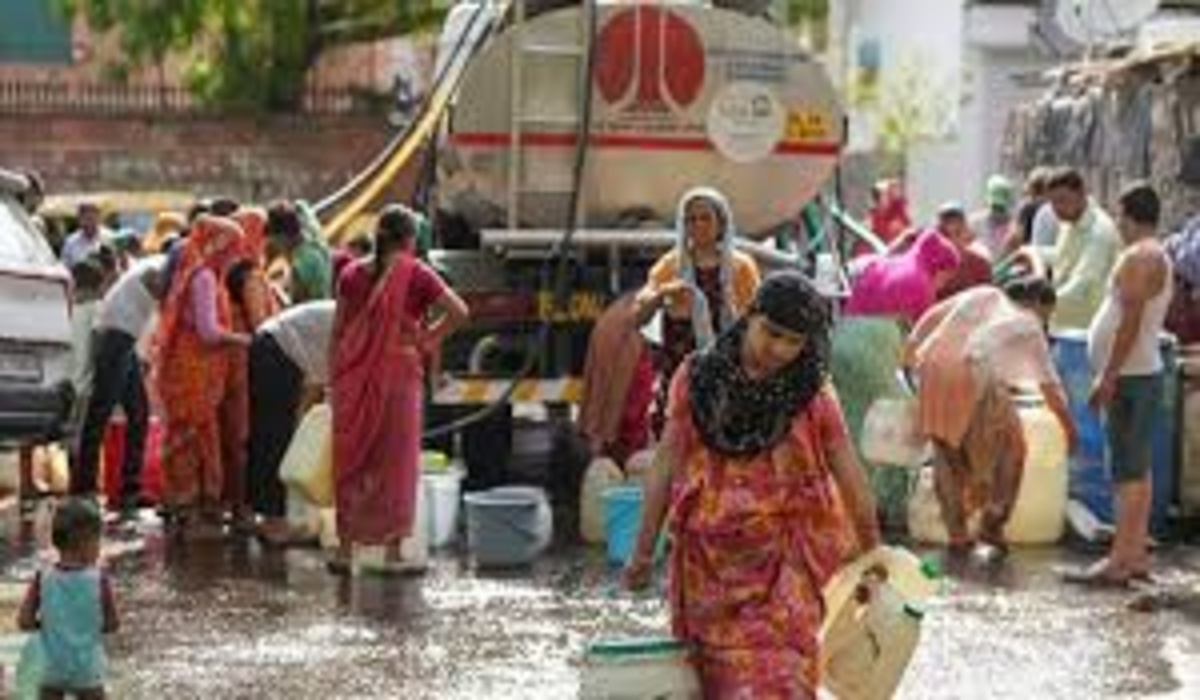
Ahmedabad is witnessing an early spike in water consumption as summer temperatures begin to climb, placing pressure on urban supply systems and raising concerns over long-term sustainability. The surge in demand, already surpassing recommended per capita usage levels in several areas, underscores the growing challenge of managing water resources in a rapidly expanding city.
Municipal data indicates that overall supply has been stepped up in recent weeks to meet rising demand, with daily distribution increasing notably since February. Despite this, per capita consumption in parts of the city has crossed standard urban planning benchmarks, pointing to inefficiencies in usage and gaps in demand management. The Ahmedabad water demand is currently being met through an extensive network of treatment and distribution infrastructure, including multiple water treatment plants and over 200 localised supply stations. While this system has enabled the city to maintain relatively stable supply, experts note that rising consumption levels during peak seasons could test its resilience.
Urban planners highlight that Ahmedabad water demand is not just a function of climate, but also of urban form and behavioural patterns. In areas with higher-income housing and better storage infrastructure, consumption tends to be significantly higher, often driven by non-essential uses such as landscaping and discretionary water use. At the same time, older parts of the city face a contrasting challenge. Densely populated neighbourhoods with limited storage capacity remain vulnerable to supply disruptions, as residents are unable to store sufficient water during distribution cycles. This creates a dual reality where excess consumption in some areas coexists with scarcity risks in others.
The financial model of water supply is also under scrutiny. While the municipal authority allocates substantial annual expenditure towards purification, treatment, and distribution, cost recovery remains limited. Revenue generated through water taxation covers only a fraction of operational expenses, raising questions about the sustainability of current pricing structures. Efforts to introduce consumption-based pricing through metering have historically encountered operational challenges, including maintenance issues and public resistance. However, infrastructure experts argue that metering remains one of the most effective tools for demand regulation, with the potential to significantly reduce wastage if implemented effectively.
From a climate resilience perspective, the situation highlights the need for a more integrated water management strategy. As heatwaves become more frequent and urban populations continue to grow, cities like Ahmedabad must move towards conservation-led models that combine efficient infrastructure with behavioural change. The rising Ahmedabad water demand also has implications for real estate and urban development. As new residential and commercial zones emerge, ensuring equitable and sustainable water access will be critical to maintaining liveability and supporting long-term growth. Looking ahead, the challenge for city authorities will be to balance immediate supply needs with structural reforms. Strengthening distribution efficiency, revisiting pricing mechanisms, and encouraging responsible consumption are likely to play a central role in shaping Ahmedabad’s water security in the years to come.