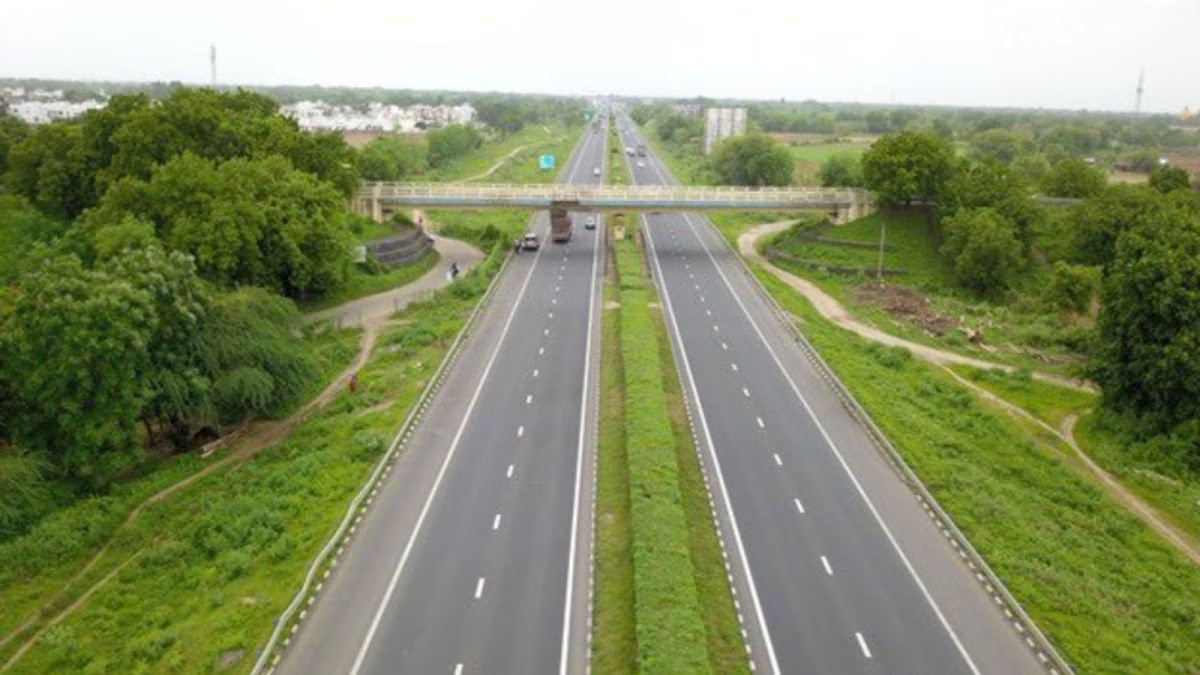
Traffic flow on one of Gujarat’s most critical intercity corridors has come under strain as maintenance activity reduces capacity on the Ahmedabad Vadodara Expressway, underscoring how ageing infrastructure and rising vehicle volumes are reshaping daily mobility across fast-growing urban regions. The slowdown affects a significant stretch on the Vadodara-bound carriageway, where resurfacing work has narrowed traffic to a single lane during daylight hours, lengthening travel times for commuters and freight operators alike.
The Ahmedabad–Vadodara Expressway, commissioned more than two decades ago, functions as a parallel spine to National Highway 48 and supports daily passenger travel, industrial logistics, and regional commerce. Officials overseeing the project indicate that the current intervention focuses on post-monsoon damage, including surface fatigue and pothole formation, with the aim of restoring long-term ride quality before the next rainy season. While such preventive maintenance is essential for safety and asset longevity, its execution has temporarily exposed the corridor’s limited redundancy. For motorists, the immediate impact is practical rather than abstract. Vehicles are being channelled through active work zones at reduced speeds, resulting in queues that can stretch for several kilometres during peak hours. Advisory notices at toll plazas recommend earlier departures and route flexibility, a reminder of how even planned infrastructure work can disrupt tightly balanced urban travel patterns.
From an urban planning perspective, the disruption highlights the growing pressure on first-generation expressways built during India’s early phase of access-controlled road development. Designed for lower traffic volumes, these corridors now carry a mix of private vehicles, buses, and heavy freight serving expanding city regions. Urban transport experts note that maintenance cycles will become more frequent unless resurfacing standards, drainage design, and traffic management are upgraded to reflect present-day usage and climate variability. The Ahmedabad Vadodara Expressway repairs also have economic implications beyond commuter inconvenience. Delays on this route ripple into industrial supply chains connecting manufacturing clusters, ports, and consumption centres. Logistics operators report that even modest travel time uncertainty can affect delivery scheduling and fuel efficiency, adding costs that ultimately surface in urban markets.
Environmental considerations are equally relevant. Prolonged idling and stop-start traffic increase emissions intensity per trip, running counter to broader goals of cleaner urban air and lower transport-related carbon output. Transport planners increasingly argue that maintenance planning should integrate night-time work, real-time traffic information, and diversion capacity to minimise both economic and environmental fallout. As work progresses towards completion, the episode serves as a case study in the importance of resilient infrastructure management. Keeping legacy expressways functional while cities grow demands not only timely repairs, but also smarter scheduling and investment in alternative mobility corridors to ensure that essential maintenance does not become a recurring bottleneck in India’s urban future.