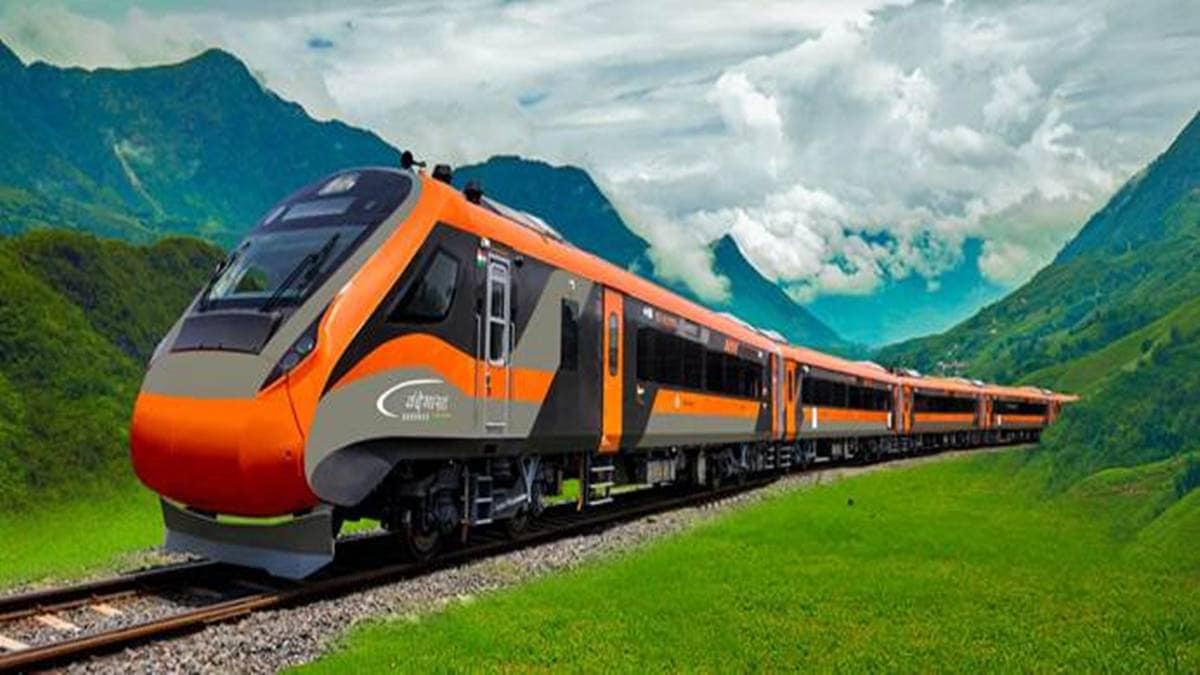
A new semi-high-speed rail connection between Ahmedabad in Gujarat and Udaipur in Rajasthan will begin commercial operations this week, marking another step in India’s regional rail modernisation drive. The Ahmedabad Udaipur Vande Bharat service is expected to reduce travel time, improve intercity access, and strengthen economic exchange between two cities whose growth trajectories are increasingly interlinked. The corridor, operating six days a week, connects Asarwa station in Ahmedabad with Udaipur City, with intermediate halts at Himmatnagar, Dungarpur and Jawar. Transport planners say the timing of departures, evening onward journeys and morning return trips is designed to serve business travellers, tourists and daily commuters alike.
For western India’s urban system, the route represents more than a transport upgrade. Ahmedabad anchors one of the country’s most diversified manufacturing ecosystems, while Udaipur’s economy is heavily influenced by tourism, hospitality and heritage-linked services. By compressing travel time between the two, the Ahmedabad Udaipur Vande Bharat service effectively integrates labour markets and business networks that previously relied on slower road links. Urban economists note that improved rail frequency and reliability often encourage decentralised growth. Tier-two cities can attract investment without losing connectivity to larger economic centres. For smaller towns along the alignment, dependable rail services can reduce migration pressures by expanding access to education, trade and employment closer to home.
The train set includes air-conditioned chair car and executive chair configurations, automated doors, bio-toilets and onboard surveillance systems features now standard across India’s emerging semi-high-speed fleet. Railway officials describe the service as part of a wider push to upgrade passenger amenities while expanding electrified routes across western India. Environmental planners view electrified intercity rail as a practical climate intervention. Compared with private vehicles or diesel buses, high-occupancy electric trains can lower per-capita transport emissions and ease highway congestion. As Indian cities grapple with deteriorating air quality and rising fuel demand, shifting medium-distance travel to rail remains central to long-term decarbonisation goals.
The Ahmedabad Udaipur Vande Bharat service also enhances access between Udaipur and Ahmedabad’s airport and commercial districts, potentially supporting conference tourism and short-stay business travel. Hospitality operators in Rajasthan expect stronger weekend inflows, while logistics and small manufacturers in Gujarat anticipate faster face-to-face market access. The expansion aligns with ongoing investments in station redevelopment, track modernisation and full-route electrification. Transport analysts argue that sustained gains will depend on integrated last-mile connectivity, multimodal planning and affordable fares that keep the service inclusive. As India’s rail network evolves, corridors such as Ahmedabad–Udaipur offer a template for linking industrial clusters with heritage cities through lower-carbon infrastructure reinforcing the idea that regional connectivity can be both economically catalytic and environmentally responsible.