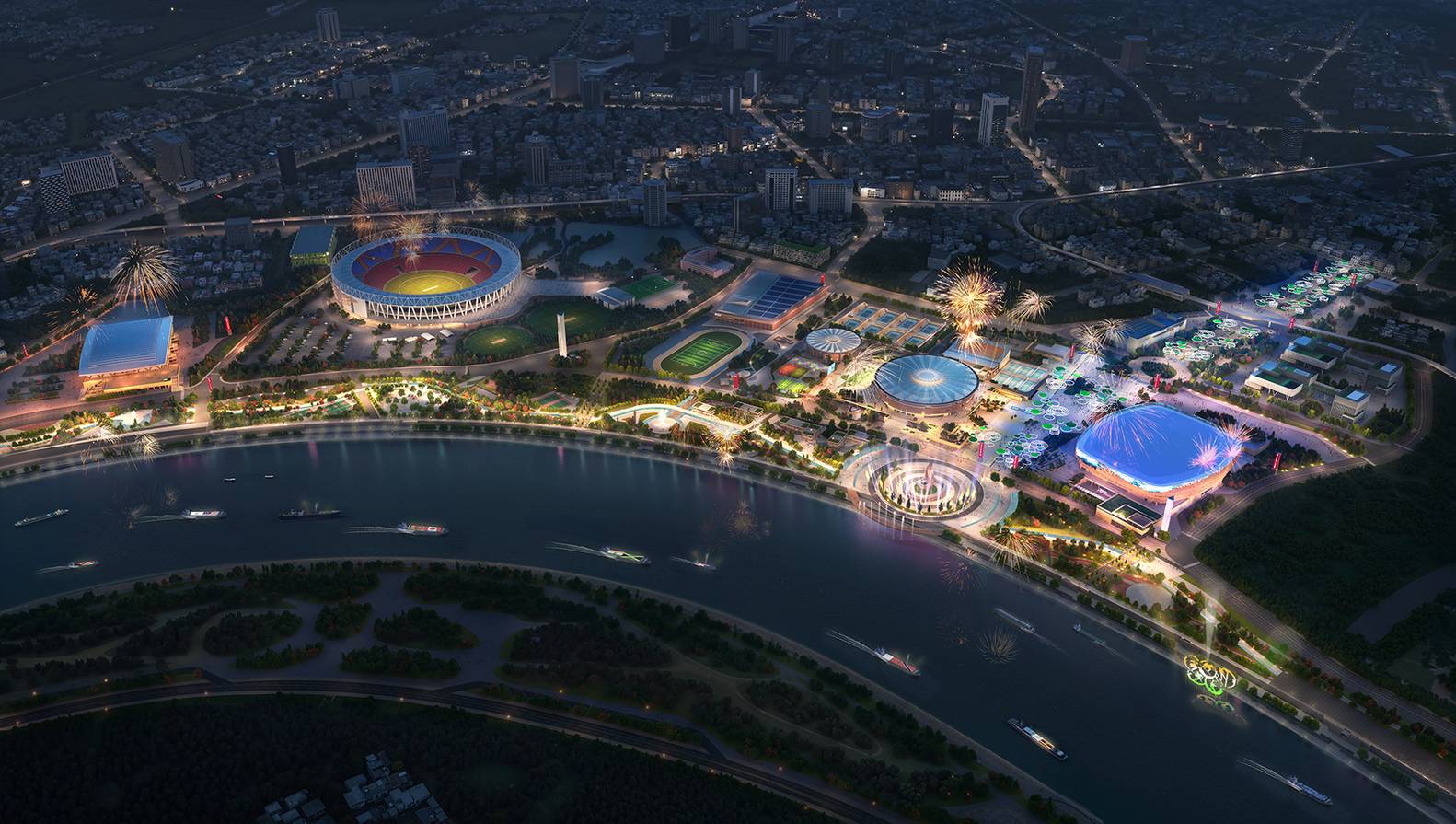
A large-scale urban sports infrastructure plan is taking shape in Ahmedabad, where a proposed 350-acre integrated precinct around the Narendra Modi Stadium aims to combine international sporting venues with public spaces and year-round recreational infrastructure. The Ahmedabad sports district is expected to play a pivotal role in preparing the city for global events while reshaping its riverfront landscape.
Located along the Sabarmati Riverfront, the development is being positioned as a multi-functional urban zone rather than a single-use event complex. Planners involved in the project indicate that the Ahmedabad sports district will integrate stadiums, training centres, green corridors, and civic spaces into a unified master plan, aligning with global trends in sports-led urban regeneration. The project gains strategic relevance as Ahmedabad prepares for the Commonwealth Games 2030, with the district expected to accommodate large-scale competitions. However, urban development experts emphasise that the long-term success of such investments depends on their usability beyond major events. In this case, the design framework prioritises adaptability, allowing venues to transition into community assets after peak usage periods.
A central organising feature of the Ahmedabad sports district is a landscaped pedestrian spine that connects key facilities across the site. This corridor is intended to improve walkability, reduce vehicular dependency, and create shaded public areas suited to the city’s climate. By linking venues such as indoor arenas, aquatic facilities, and training institutes, the plan seeks to create a cohesive urban experience rather than isolated infrastructure pockets. Planned venues include high-capacity indoor and outdoor arenas, alongside specialised training infrastructure aimed at supporting both elite athletes and grassroots sports development. The inclusion of a national-level sports training institute highlights the ambition to position Ahmedabad as a hub for sports science, performance research, and athlete rehabilitation.
Equally significant is the project’s emphasis on landscape and environmental design. Large green spaces, public plazas, and riverfront parks are being embedded into the development to improve microclimate conditions and provide accessible open areas for residents. Urban planners note that integrating such features is critical in mitigating heat stress and enhancing liveability in rapidly expanding cities. The Ahmedabad sports district also reflects a broader shift in infrastructure planning, where economic, social, and environmental objectives are addressed simultaneously. By combining event infrastructure with public amenities, the project has the potential to generate employment, stimulate local business activity, and improve urban quality of life.
However, experts caution that execution will be key. Large-scale developments of this nature require coordinated planning across transport, utilities, and environmental management systems to ensure long-term sustainability and accessibility. As the Ahmedabad sports district moves from planning to implementation, it will serve as a benchmark for how Indian cities leverage global events to create enduring urban assets—balancing growth ambitions with the need for inclusive, climate-responsive development.
Ahmedabad Sports District Drives Urban Transformation