


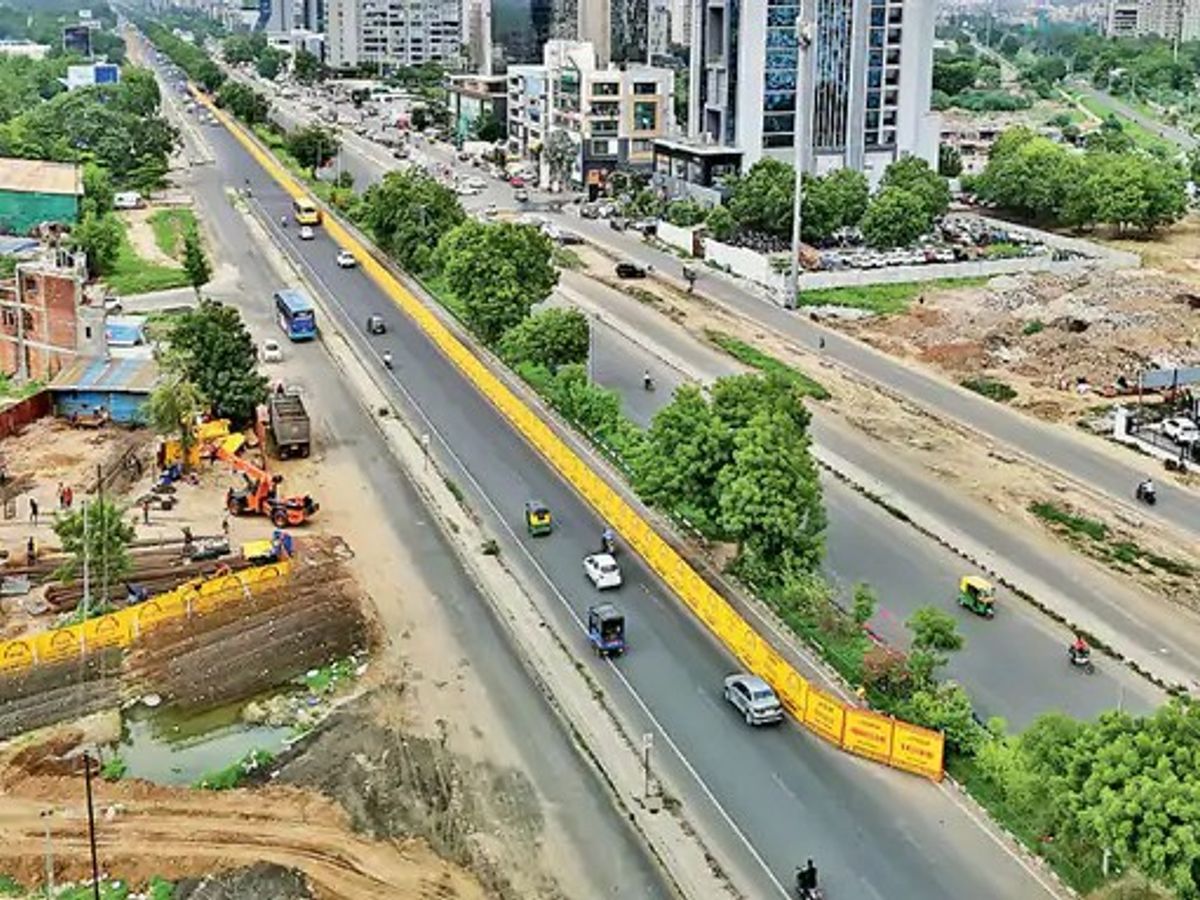
Ahmedabad witnessed paralysing traffic jams on Friday as the sudden diversion of vehicles from SG Highway near YMCA–Karnavati stretch caused gridlock stretching across adjoining roads. The 1.2-kilometre closure, announced as part of a six-month flyover construction project, forced commuters onto narrower roads ill-equipped for such volume, sparking chaos, delays, and anger.
The stretch, a vital link for vehicles moving between Sarkhej and Karnavati Club, was closed overnight, redirecting traffic through Mumatpura Road, Bhagwan Circle, and Jhaveri Circle. What is usually a five-minute commute turned into journeys lasting 20 minutes or more, while peak-hour delays extended beyond an hour. Despite earlier notifications, motorists said the lack of advance communication and inadequate signboards left thousands stranded.According to traffic division officials, the diversions were necessary to allow ramp construction for the elevated flyover. However, they acknowledged congestion worsened as alternative roads were too narrow to absorb diverted traffic. Emergency steps such as removing encroachments, closing cuts, and adjusting dividers were implemented, but commuters remained frustrated.
Also Watch: An Exclusive Interview with Sanjeev Jaiswal (IAS), CEO MHADA
The sudden shutdown also exposed the fragility of city mobility when dependent on a single arterial route. With Billionaire Street also closed, bottlenecks multiplied. School buses, auto-rickshaws, and two-wheelers faced long waits, forcing many to cancel or delay plans. Critics said that small diversion boards installed only after traffic had piled up further compounded the disorder.Urban planners and mobility experts argue that the episode reflects deeper shortcomings in transport governance. The lack of phased planning, limited use of digital traffic alerts, and absence of prior public engagement highlight how infrastructure projects, while necessary, can erode quality of life when poorly executed. For a rapidly growing city like Ahmedabad, which aspires to model sustainable and inclusive urban living, such lapses are costly not only in economic terms but also in public trust.
The traffic police urged commuters heading towards Gandhinagar and beyond to use Ring Road instead of SG Highway. Yet residents say that such advisories come too late to mitigate the real-time inconvenience. Many demanded larger hoardings, public route maps, and digital communication strategies that align with smart city commitments.With the diversion slated to last six months, transport economists caution that the cumulative loss in fuel, man-hours, and productivity could be significant unless corrective measures are adopted. A shift towards eco-friendly transport solutions, better last-mile connectivity, and zero-carbon planning is seen as essential to prevent repeat crises.As Ahmedabad continues to expand, officials face growing calls to balance development with resilience. For now, motorists are urged to plan longer travel times, explore alternative corridors, and brace for months of disruption until the flyover project reaches completion.
