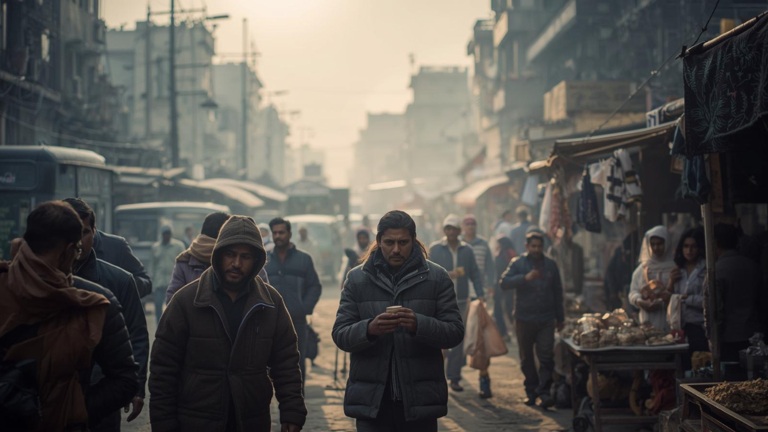
A sudden and severe winter surge swept across Gujarat in late January, triggering an abrupt fall in night-time temperatures and catching cities unprepared for the intensity of the chill. Ahmedabad recorded a drop of more than five degrees Celsius within 24 hours, while parts of Saurashtra and Kutch saw even steeper declines. The Gujarat cold wave has emerged as one of the sharpest short-term temperature fluctuations this winter, raising fresh questions about urban preparedness for extreme weather variability.
Meteorological data shows minimum temperatures falling sharply across major urban centres, including Gandhinagar, Vadodara, Surat and Rajkot. In coastal and border districts such as Naliya, mercury levels dropped close to 4°C, conditions more typical of northern plains than western India. Urban planners note that such rapid shifts place stress on housing stock, public infrastructure and informal workers, particularly in cities where buildings are designed primarily to combat heat rather than cold. The immediate social impact was visible across city streets. Commercial hubs that usually remain active late into the night emptied earlier than usual as cold winds intensified. Street vendors, delivery workers and night-shift employees were among the most affected, with limited access to insulated shelters or weather-protective infrastructure. Public health experts warn that sudden cold exposure increases risks for elderly residents and those living in poorly insulated homes.
Weather officials attribute the Gujarat cold wave to the movement of cold air masses following a western disturbance that had earlier brought cloud cover and light rainfall to parts of the state. While forecasts had indicated a gradual cooling trend, the speed and depth of the temperature drop exceeded expectations. Climate scientists say such volatility is increasingly consistent with changing regional climate patterns, where warmer baseline temperatures coexist with sharper extremes. From an urban development perspective, the episode underscores the need for climate-responsive design beyond heat resilience alone. Experts point out that affordable housing, rental stock and older buildings often lack insulation, wind buffering and thermal efficiency, making residents vulnerable during both heatwaves and cold spells. Energy demand patterns are also affected, with increased electricity use for heating in cities unaccustomed to winter peaks.
Municipal authorities are monitoring conditions, though no large-scale emergency measures have been announced. Urban policy specialists suggest that local governments may need to integrate cold-wave protocols into disaster management plans, particularly for homeless populations and informal settlements. Early-warning systems, night shelters and climate-adaptive building standards are increasingly seen as essential components of resilient city planning. As weather variability intensifies, episodes like this cold wave serve as reminders that Indian cities must prepare for a broader range of climate stresses. The challenge ahead lies not only in managing immediate disruptions, but in reshaping urban infrastructure to protect livelihoods, health and economic continuity in an era of unpredictable extremes.