


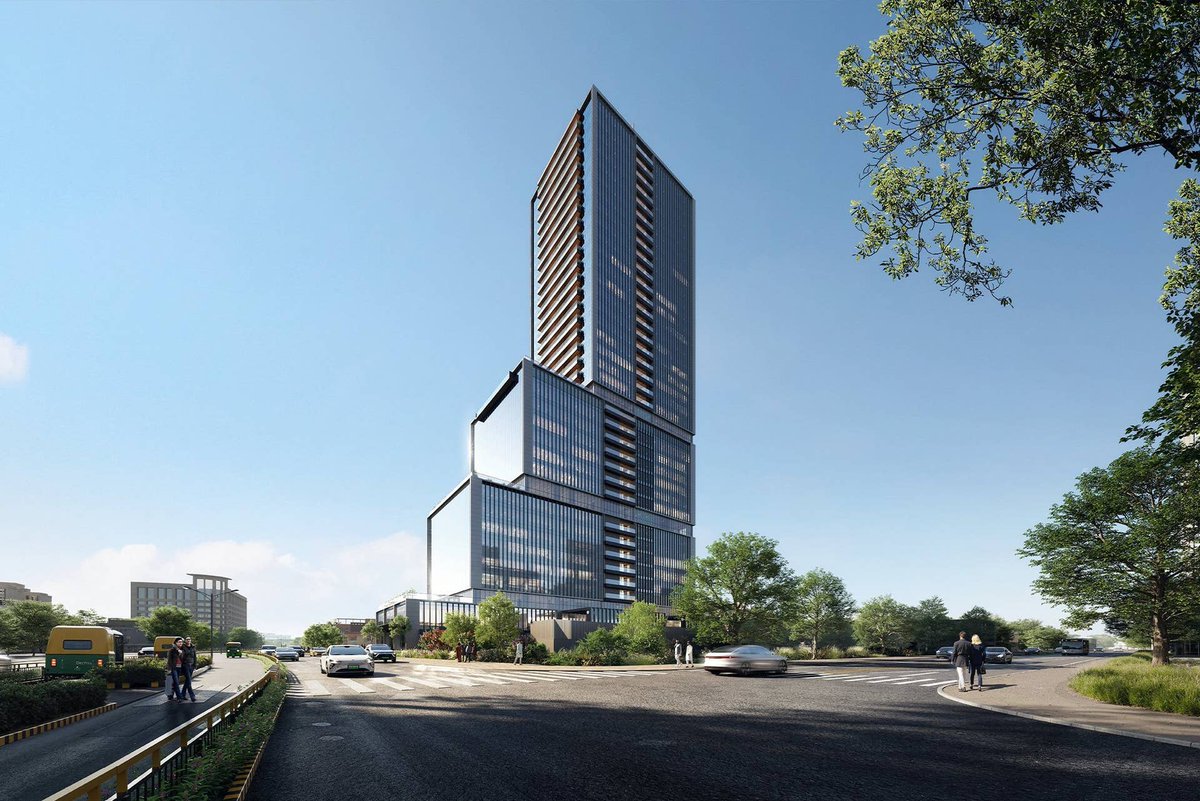
Ahmedabad is set for a significant shift in its skyline as a new mixed-use tower, rising to around 162 metres, takes shape as part of the Navratna Gulmohar Park development. While considerably smaller than global supertall structures, the project represents one of the tallest buildings proposed in Gujarat and reflects the city’s accelerated move toward vertical development amid rising land costs and changing urban lifestyles.
Developers involved in the project say the tower will combine retail, commercial and residential spaces within a single structure a format increasingly adopted in global cities seeking efficient land use. An official associated with the project explained that as land values rise across western Ahmedabad, developers are turning to taller structures to optimise space while creating new urban landmarks. Industry experts note that demand for high-rise living is expanding, particularly among younger homebuyers who are familiar with international standards and prefer well-ventilated, light-filled homes at height. A senior real estate consultant said that residents increasingly see upper-level living as offering better air quality and reduced noise, aligning with broader preferences for healthier, more liveable urban environments.
Building such towers, however, involves a stringent approval process. Structural safety clearances, followed by permissions from local authorities such as the Ahmedabad Municipal Corporation or the urban development authority, are mandatory before any sales can begin. Officials say this multi-layered process has become even more critical as the city encourages taller buildings in seismic-sensitive zones, requiring measures like wind-tunnel testing and enhanced façade engineering. Several clusters across western Ahmedabad including Sindhubhavan Road, Ambli, Bopal, Thaltej and Shilaj are emerging as hotspots for vertical growth. Projects exceeding 150 metres are planned or under construction, alongside notable developments like the 145-metre Titanium World Centre on SG Highway. Municipal data indicates that at least 31 towers above 100 metres have been approved since 2021, with more proposals awaiting state-level scrutiny.
This heightened construction activity coincides with strong housing demand. More than 2,600 homes were sold during the last Navratri period, contributing significantly to stamp duty and registration revenues. Analysts say this growth reflects a wider sentiment that Ahmedabad is increasingly positioning itself alongside larger metros, including Mumbai, in terms of ambition and urban scale. Developers also point to policy incentives driving the trend. Under Gujarat’s tall-building framework, projects rising above 70 metres qualify for higher Floor Space Index (FSI), making high-rise construction more financially viable despite higher upfront and maintenance costs. Real estate planners argue that while vertical growth is inevitable in expanding cities, it must be accompanied by sustainable mobility planning, adequate public spaces and resilient infrastructure.
As Ahmedabad’s skyline grows denser and taller, the challenge will be ensuring that vertical expansion supports an inclusive and climate-responsive urban future one that balances aspiration with environmental responsibility and long-term liveability.
Also Read: Mumbai Launch Of Mountain Monk Signals Firm’s Commitment To Shaping Indias Big Four
Ahmedabad Sanctions Thirty-One Mega Towers Surpassing Hundred Metres Transforming Western Development Zones
