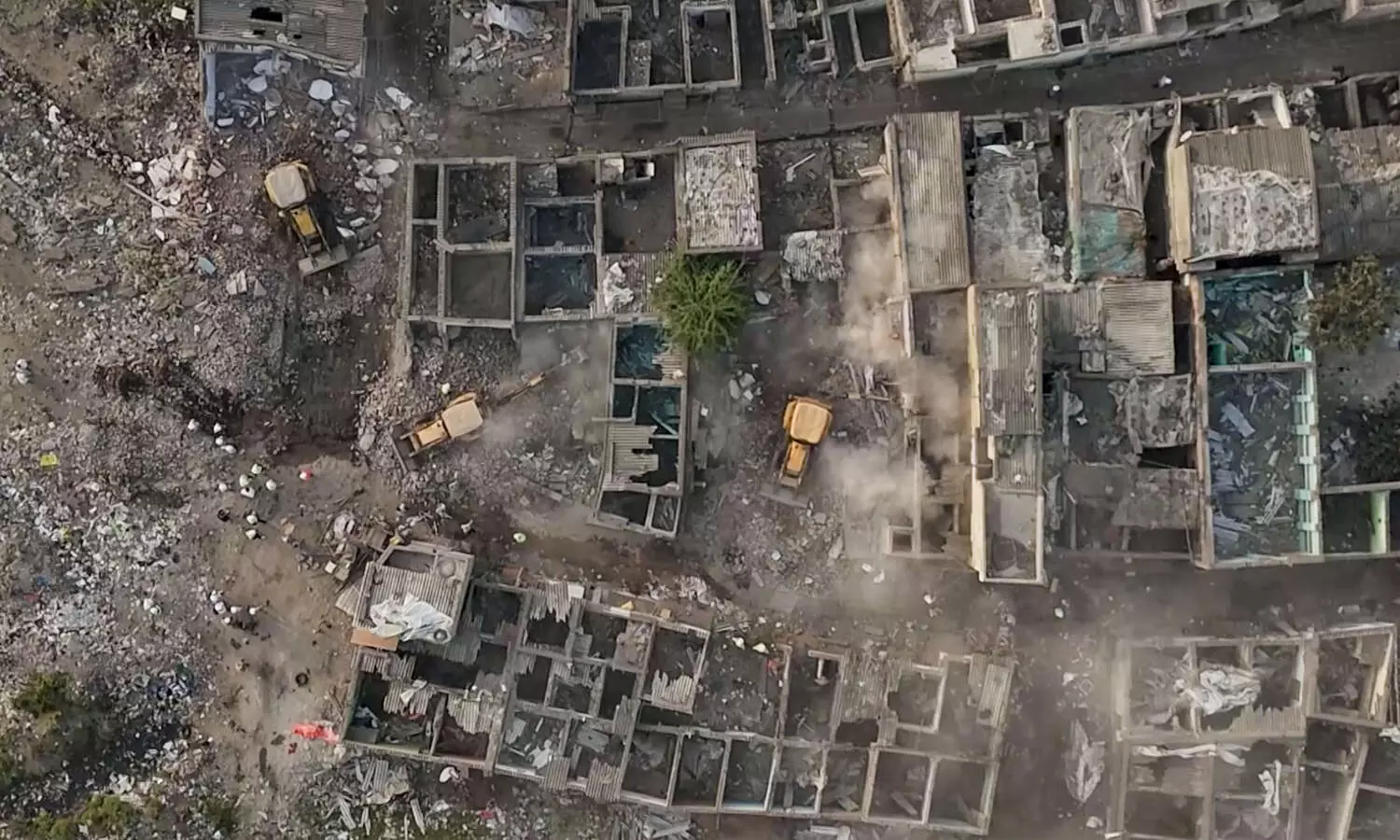
Ahmedabad has intensified clearance operations along sections of the Sabarmati riverbed and adjoining stretches earmarked for infrastructure upgrades, as civic authorities move to reclaim public land and strengthen flood management measures ahead of the monsoon season. The drive, carried out under police supervision, has resulted in the removal of hundreds of informal structures, reshaping parts of the city’s river corridor.
Municipal officials state that the Ahmedabad Sabarmati riverfront encroachment drive is aimed at restoring hydraulic capacity along vulnerable stretches of the river. Encroachments, they argue, have narrowed sections of the floodplain and obstructed stormwater outflows, increasing the risk of waterlogging during intense rainfall events. Ahmedabad’s riverfront transformation over the past decade has been widely recognised as a flagship urban renewal initiative. Yet planners acknowledge that maintaining the integrity of the floodplain remains critical. Climate scientists warn that western India is experiencing more erratic precipitation patterns, with short bursts of high-intensity rainfall placing pressure on urban drainage systems.
Civic engineers say the current action covers both the riverbed and portions of land designated under town planning schemes for road widening and embankment strengthening. The reclaimed land is expected to be used for improved access roads, flood buffers and public spaces aligned with the broader Sabarmati riverfront framework. However, the Ahmedabad Sabarmati riverfront encroachment drive has also spotlighted the social cost of such interventions. Several affected households claim they have resided in the area for years and face uncertainty over relocation timelines. Municipal authorities have indicated that eligible families can apply for housing under existing affordable housing schemes, though eligibility verification is ongoing.
Urban policy experts note that river restoration projects in Indian cities often intersect with informal housing patterns. While flood mitigation and public safety are legitimate objectives, they stress the need for structured rehabilitation strategies that prevent displaced residents from moving to other high-risk zones. Real estate observers say the clearance may unlock additional development potential along regulated riverfront parcels, potentially enhancing property values in adjacent neighbourhoods. At the same time, infrastructure economists caution that environmental safeguards must guide any future construction to avoid repeating past encroachment cycles.
Ahmedabad’s experience reflects a broader urban dilemma: how to reconcile environmental resilience with inclusive growth. As the city expands, land pressures along natural waterways are likely to intensify. For now, officials are prioritising debris removal and site stabilisation before the onset of the next rainy season. Whether the Ahmedabad Sabarmati riverfront encroachment drive becomes a template for balanced river management or a flashpoint over urban displacement will depend on how effectively flood control, housing provision and long-term land governance are aligned.
Ahmedabad Riverfront Push Reshapes Urban Edge