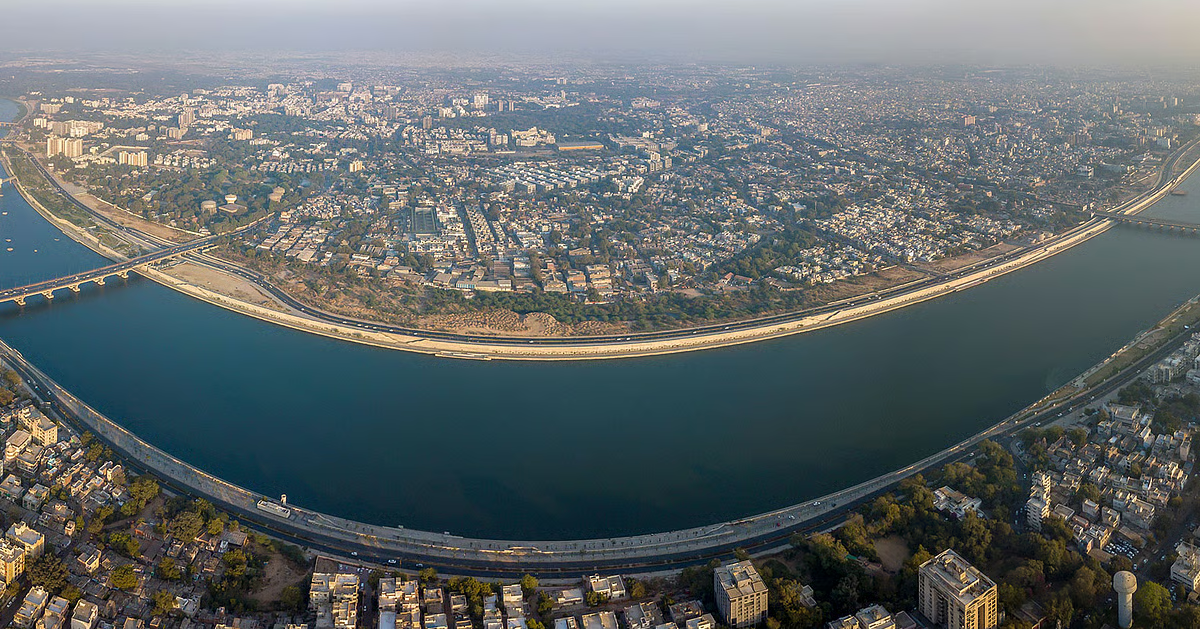
Ahmedabad’s transformation over the past two decades has been closely tied to the redevelopment of its central river corridor, with the Sabarmati riverfront emerging as a defining example of how cities can reconfigure natural assets into structured urban infrastructure. The project has not only altered the city’s physical landscape but also influenced planning models across India.
Conceived as a multi-dimensional intervention, the Sabarmati Riverfront Development Project integrates flood control, environmental management, and land optimisation within a single urban framework. By constructing embankments along both sides of the river, authorities have been able to stabilise water flow, reduce erosion risks, and reclaim substantial tracts of land that were previously prone to seasonal flooding.
The Sabarmati Riverfront Development Project also addresses a critical urban challenge—wastewater management. Interceptor systems installed along the river’s edge divert untreated sewage away from the water body towards treatment facilities, improving water quality and reducing environmental degradation. Urban infrastructure experts note that such interventions are essential for cities grappling with pollution in river ecosystems.
A distinctive aspect of the project lies in its approach to land use. Reclaimed areas have been opened up for public access through continuous promenades, green spaces, and civic amenities. This has significantly expanded Ahmedabad’s public realm, offering pedestrian-friendly environments in a city historically dominated by road-based mobility. At the same time, a portion of the reclaimed land has been earmarked for commercial and residential development, creating a revenue model that supports project financing. This hybrid approach—combining public infrastructure with market-driven development—has attracted attention from policymakers seeking financially viable urban renewal strategies.
However, the project has also raised important questions around inclusivity and resettlement. Communities previously residing along the riverbanks have been relocated to formal housing, marking a shift from informal settlements to structured urban living. While this has improved access to basic services for many, urban planners emphasise that long-term success depends on integrating such communities into the broader economic and social fabric of the city. The Sabarmati Riverfront Development Project further reflects Ahmedabad’s attempt to align urban growth with climate resilience. By controlling flood levels and enhancing green cover, the project contributes to mitigating climate-related risks, particularly in the face of increasingly erratic rainfall patterns.
For the real estate sector, the riverfront has become a high-value corridor, influencing property markets and investment trends in surrounding areas. Improved accessibility, enhanced public spaces, and proximity to cultural and recreational facilities have driven demand, reshaping the city’s development trajectory.
As Indian cities continue to explore large-scale urban renewal, Ahmedabad’s experience offers both a model and a caution. While the riverfront demonstrates the potential of integrated planning, it also highlights the need for balanced development that prioritises environmental sustainability, social equity, and long-term urban resilience.
Ahmedabad Riverfront Project Reshapes Urban Landscape