


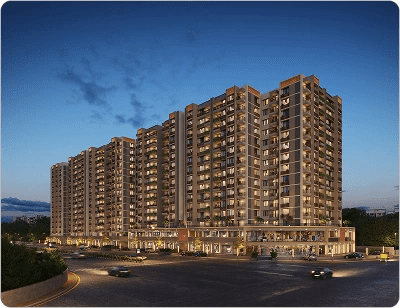
Ahmedabad’s evolving skyline offers a window into how local entrepreneurship, regulatory reform, and strategic urban planning have reshaped one of western India’s fastest-growing cities. Over the past two decades, the rise of the Shilp Group has closely tracked this transformation, particularly across western Ahmedabad and the GIFT City corridor, where high-density commercial and residential projects are redefining land use, employment patterns, and infrastructure demand.
The developer’s journey began in the early 2000s, when its founder, now the group’s managing director, transitioned from supplying building materials to developing property. Industry observers note that this shift coincided with a period of regulatory tightening following the Gujarat earthquake, when stricter construction norms improved structural safety and gradually restored buyer confidence. Early projects focused on emerging micro-markets rather than established neighbourhoods, a strategy that allowed the company to enter growth corridors ahead of broader price escalation. Urban planners point out that this approach mirrors Ahmedabad’s outward expansion. Areas such as Sindhu Bhavan Road, Shilaj and Vaishnodevi, once peripheral, have since become premium zones anchored by office clusters, retail streets, and mid-to-high-rise housing. The Shilp Group’s early presence in these locations reflects a broader trend in Indian cities, where developers increasingly rely on long-term infrastructure signals rather than short-term demand cycles. In recent years, the company’s portfolio has tilted decisively towards GIFT City, now accounting for roughly half of its active development pipeline. With multiple commercial and residential projects under construction, the group is positioning itself within a planned financial district designed for high employment density and global capital flows. Senior urban economists note that GIFT City’s controlled supply, uniform high-rise form, and tax-linked incentives have created a distinct sub-market that differs sharply from organic urban sprawl elsewhere.
At present, the developer is executing more than ten ongoing projects covering close to 10 million square feet. This includes commercial towers, premium housing, plotted developments, and industrial assets. Such scale has implications beyond real estate balance sheets. Construction activity supports regional employment, while completed projects influence commuting patterns, energy demand, and water use. Experts emphasise that future success will depend on integrating climate-resilient design, efficient building systems, and public transport connectivity into large-format developments. The Ahmedabad housing market itself has shifted structurally. Rising land values and higher permissible floor space have reduced the viability of standalone homes, accelerating demand for premium apartments with shared amenities. While this has supported steady price appreciation, it has also intensified debates around affordability and inclusive access, particularly for middle-income households. Looking ahead, the city’s trajectory will be shaped by major infrastructure investments across GIFT City, Sanand and Dholera, alongside preparations for global events and expanding industrial capacity.
For developers like the Shilp Group, the challenge will be aligning commercial ambition with responsible urban growth ensuring that Ahmedabad’s vertical expansion translates into liveable, resource-efficient neighbourhoods rather than isolated towers.
Also Read: Prestige Estates Development Reflects Whitefield Urban Growth
Ahmedabad Real Estate Growth Mirrors Shilp Group Expansion
