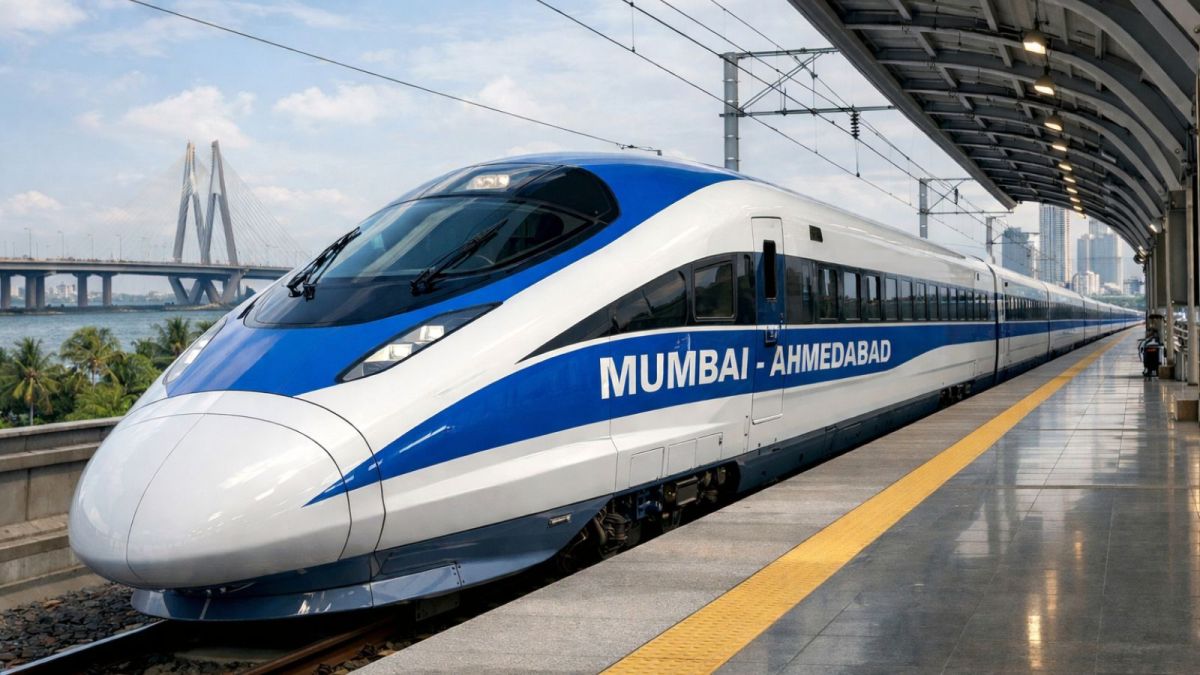
A new operational stop has been introduced on the Ahmedabad–Udaipur semi-high-speed rail corridor, with trains now pausing briefly at Shamlaji Road station, a move expected to reshape regional access patterns without extending overall journey time. The addition reflects a broader shift in Indian Railways’ strategy to balance speed with inclusivity across emerging mobility corridors.
The halt, currently under an evaluation phase, allows passengers in north Gujarat to access a premium intercity service that previously bypassed smaller nodes. Railway officials indicate that the stop has been incorporated into existing schedules with minimal disruption, suggesting improved timetable optimisation and operational flexibility on high-speed routes.
For regional economies, even short-duration halts can significantly alter mobility dynamics. Shamlaji, known as a key pilgrimage destination, sees fluctuating seasonal demand. Improved rail access is likely to support local tourism, small-scale hospitality businesses, and ancillary services, while reducing reliance on road-based travel. Urban planners note that such incremental connectivity upgrades often trigger micro-level economic clustering around stations, particularly in semi-urban areas.
The introduction of this stop also highlights an evolving approach to infrastructure planning—one that prioritises network accessibility alongside efficiency. While Vande Bharat services are designed for speed and comfort, their integration with smaller towns is increasingly being seen as critical for equitable development. Transport economists suggest that selective halts can improve passenger load factors and enhance revenue potential without undermining the service’s premium positioning. Importantly, the unchanged end-to-end travel duration underscores advancements in rail operations, including reduced dwell times and better route scheduling. Experts say such adjustments are essential if India is to scale semi-high-speed rail while maintaining reliability. “The challenge is not just building fast trains, but ensuring they serve wider geographies without compromising performance,” said a senior transport analyst.
From a sustainability perspective, expanding access to electrified rail corridors supports a gradual modal shift away from private vehicles and long-distance buses. This aligns with national efforts to lower transport emissions while improving intercity connectivity. Enhanced rail access to pilgrimage and tourism circuits could also help manage traffic congestion and environmental stress in sensitive regions. The development comes amid a broader push to strengthen rail-led growth corridors linking Gujarat and Rajasthan.
As infrastructure investments extend beyond metropolitan centres, the focus is increasingly on connecting tier-two and tier-three regions to high-quality transit systems.
Whether the Shamlaji Road halt becomes permanent will likely depend on passenger uptake and operational assessments in the coming months. However, its introduction signals a wider recalibration of how speed, accessibility, and regional equity are being balanced in India’s next phase of rail modernisation.
Ahmedabad Rail Link Gains New Passenger Halt