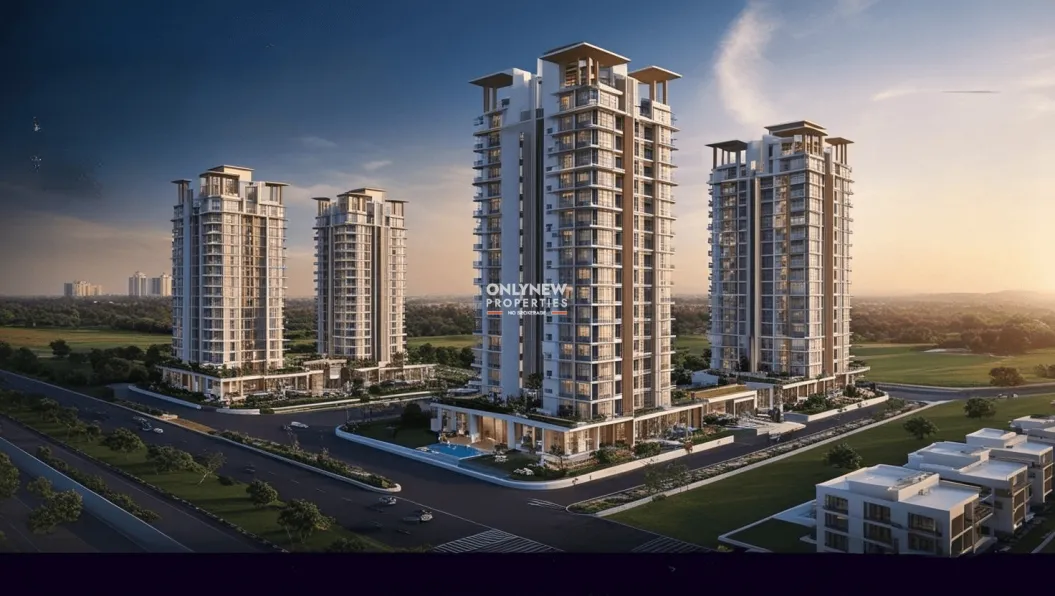
Ahmedabad’s residential market posted modest overall growth in 2025, but a sharp rise in higher-ticket transactions suggests a structural shift in buyer demand. While total housing sales increased only marginally year on year, the premium housing segment recorded double-digit growth, underlining changing aspirations and income patterns in the city’s expanding urban footprint.
According to the latest residential market data, annual unit sales in Ahmedabad inched up from 18,462 in 2024 to 18,752 in 2025 a rise of about 1%. However, homes priced between ₹50 lakh and ₹1 crore saw volumes climb from 7,759 units to 8,535 units, marking a 10% increase. Properties priced above ₹1 crore rose from 3,926 to 4,525 units, a 15% jump. The premium housing segment gathered further momentum in the second half of 2025. Compared with the corresponding period a year earlier, sales in the ₹50 lakh to ₹1 crore range rose 9%, while transactions above ₹1 crore expanded 16%. Market observers say this pattern indicates stronger end-user confidence rather than speculative activity.
Demand is concentrated along emerging growth corridors such as the Vaishnodevi Circle–Gandhinagar stretch, Gota, Jundal, Science City, Shilaj, Shela, South Bopal and Godhavi. These micro-markets offer larger apartment formats, improved road connectivity and proximity to employment hubs. Developers report that homes ranging from 1,700 to 2,500 square feet are increasingly preferred, with even expansive two-bedroom units now positioned within the premium housing segment. Industry representatives attribute the shift to rising disposable incomes, formalised transaction structures and relatively stable home loan rates. Financial discipline, including fully accounted transactions, has also strengthened buyer confidence. Analysts add that macroeconomic stability and monetary easing have supported mid-to-high-end purchases.
However, the divergence between premium and affordable categories raises broader planning questions. Affordable housing has seen a slowdown in both new launches and demand, as developers allocate capital to higher-margin projects. Urban economists caution that sustained imbalance could widen access gaps, particularly for first-time buyers and lower-income households.
From a city-building perspective, the premium housing segment brings both opportunities and responsibilities. Larger homes often translate into greater land consumption and infrastructure load.
Urban planners emphasise the need for energy-efficient design, transit-linked development and water-sensitive planning to ensure that upscale growth does not intensify environmental stress. Ahmedabad’s evolving demand profile reflects a maturing metropolitan economy. The challenge ahead lies in aligning premium housing expansion with inclusive planning frameworks so that growth corridors remain liveable, climate-resilient and accessible across income brackets.
Ahmedabad Premium Housing Sales Accelerate