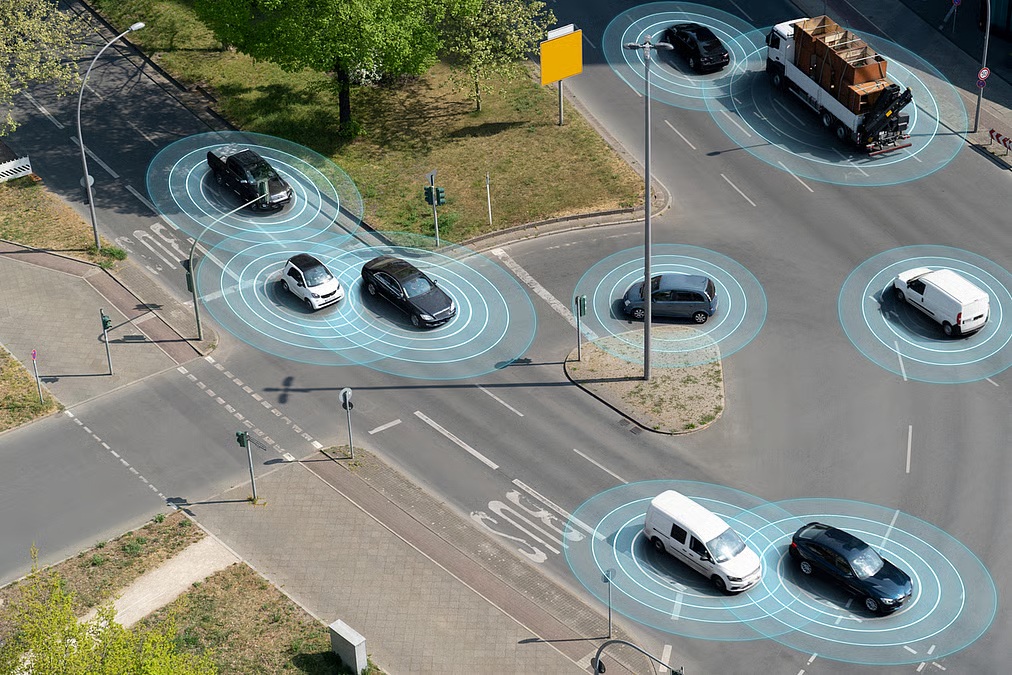
Ahmedabad is preparing one of India’s most ambitious urban mobility upgrades, with the municipal corporation proposing an ₹899 crore investment to introduce an Adaptive Traffic Control System (ATCS) across 373 signalised junctions. The initiative aims to replace fixed-timer traffic lights with AI-driven signal coordination, in a bid to reduce congestion, cut fuel waste and improve road safety ahead of major global sporting events expected later this decade. The proposed Adaptive Traffic Control System will rely on vehicle detection sensors, intelligent controllers and a city-wide fibre-optic communication backbone linked to a central command server. By analysing real-time traffic density, the system will dynamically adjust signal cycles rather than following pre-set timers. Officials indicate that synchronised corridors will allow vehicles to encounter consecutive green lights where traffic flow permits, reducing idle time and emissions.
The project represents a significant capital commitment in a city grappling with rising vehicle ownership, expanding suburban growth and increasing pressure on arterial roads. Urban mobility analysts note that congestion costs extend beyond commuter inconvenience. Longer signal waits translate into higher fuel consumption, greater particulate emissions and lost economic productivity factors that directly affect public health and climate resilience. Civic officials suggest the rollout will begin with extensive fibre installation, a process expected to take over a year, followed by phased commissioning. Full operationalisation could take up to three years. The system is also expected to prioritise emergency vehicles through automated green corridors and enable improved enforcement of traffic violations through integrated monitoring.
However, infrastructure specialists caution that intelligent signalling alone cannot resolve structural urban challenges. Several junctions across Ahmedabad face recurring waterlogging, informal encroachments and inconsistent lane discipline. Without parallel improvements in road engineering, drainage and enforcement, the performance of the Adaptive Traffic Control System may fall short of expectations. Commuters, particularly two-wheeler riders and delivery workers, have long cited extended red-light cycles during peak summer as a source of discomfort and productivity loss. An adaptive system could reduce stationary wait times during low-traffic intervals, but transport planners emphasise that public behaviour will remain a critical variable. Lane cutting, signal jumping and helmet non-compliance continue to undermine orderly flow during peak evening hours.
From a sustainability standpoint, the shift toward AI-based traffic management aligns with broader efforts to build low-carbon urban systems. Smarter intersections can reduce vehicle idling and associated emissions, contributing to cleaner air and improved liveability. Yet experts argue that signal optimisation should complement and not replace investments in public transport, non-motorised mobility and transit-oriented development. As Ahmedabad expands, the effectiveness of this large-scale digital intervention will depend on execution, inter-agency coordination and behavioural compliance. If implemented effectively, the Adaptive Traffic Control System could mark a decisive step toward data-driven, climate-conscious urban governance but its success will ultimately be measured at the city’s busiest intersections.