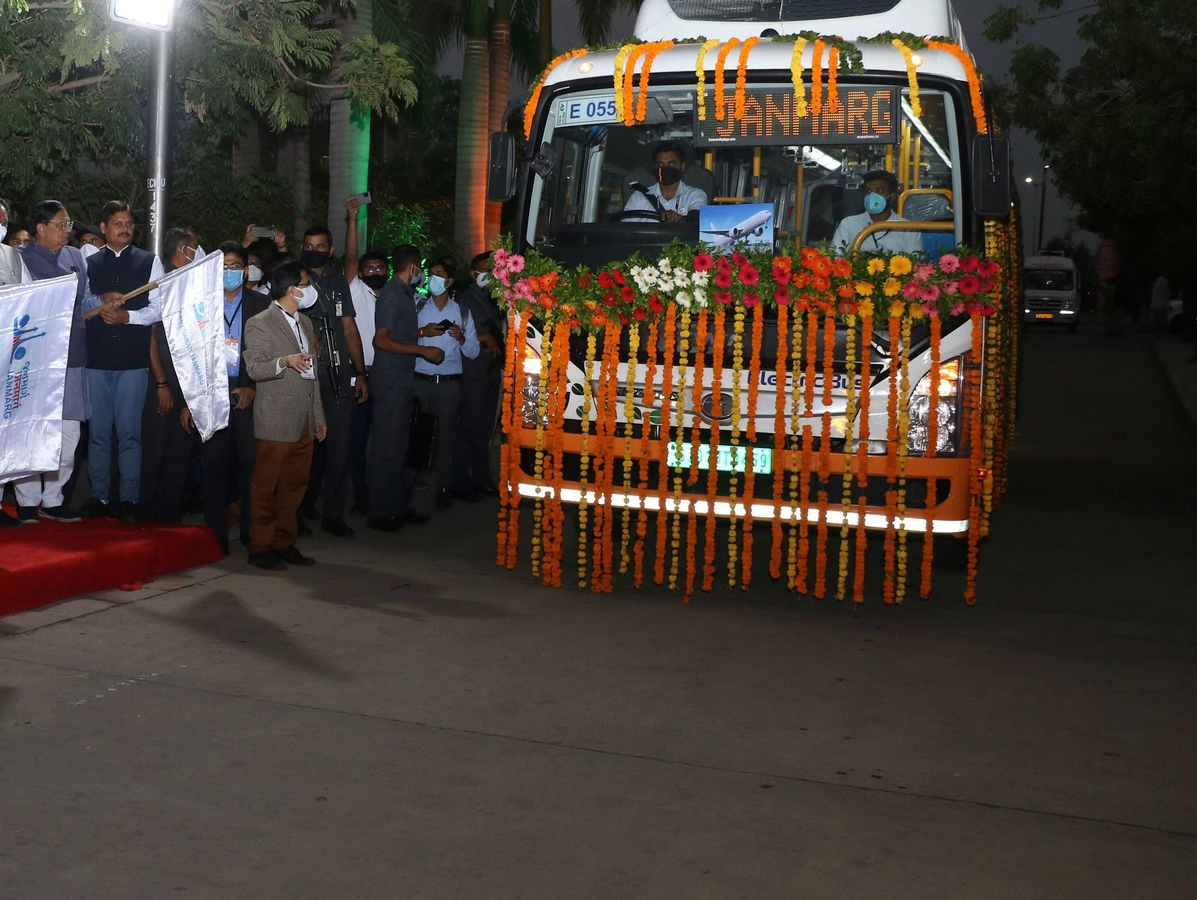
Ahmedabad has unveiled an ambitious mobility blueprint centred on deploying more than 3,000 EV buses, expanding metro rail lines and developing a Regional Rapid Transit System, as the city aligns its long-term infrastructure planning with a potential bid to host the 2036 Olympic Games. The strategy signals a decisive shift towards low-emission, high-capacity public transport in one of India’s fastest-growing urban economies.
The announcement was made at a city mobility exhibition organised by the municipal corporation in partnership with transport industry stakeholders. Senior state and civic officials outlined a 25- to 50-year roadmap designed to integrate buses, metro corridors and regional rail links into a cohesive network capable of handling projected population growth and event-led demand. At the core of the plan is the large-scale induction of EV buses to modernise the existing fleet and reduce tailpipe emissions. Urban transport analysts note that Ahmedabad’s transition from conventional diesel buses to electric mobility could significantly improve air quality, particularly along dense corridors where public transport demand remains high. Incentives, including tax exemptions for electric vehicles, are being positioned as tools to accelerate adoption.
Metro expansion also forms a key pillar of the strategy. Additional corridors connecting the airport and GIFT City have been proposed to improve regional accessibility and support commercial growth nodes. Officials confirmed that viability gap funding provisions are under consideration to ensure financial sustainability of the new lines, particularly in early years of operation. The proposed Regional Rapid Transit System is expected to link Ahmedabad with emerging satellite towns such as Kalol and Sanand. By compressing travel times to under an hour, planners believe the RRTS could rebalance development pressures, stimulate peripheral housing markets and reduce daily road congestion within the city core.
Urban economists observe that major sporting events often act as catalysts for infrastructure acceleration. However, they caution that investments must remain anchored in long-term civic needs rather than short-term event timelines. In Ahmedabad’s case, integrating EV buses, metro and RRTS into a unified ticketing and last-mile connectivity framework will determine whether the system delivers equitable access across income groups. Civic authorities have also linked the transport roadmap to India’s broader net zero commitments for 2070.
By prioritising electrified public transport and traffic management technologies, Ahmedabad is attempting to embed climate resilience into its urban growth model.
As the Olympic bid process gathers momentum, the success of Ahmedabad’s mobility overhaul will hinge on execution discipline, financial structuring and sustained political commitment. If implemented effectively, the EV buses-led expansion could redefine daily commuting patterns while positioning the city as a benchmark for low-carbon urban transport in western India.
Ahmedabad Plans 3000 EV Buses Push