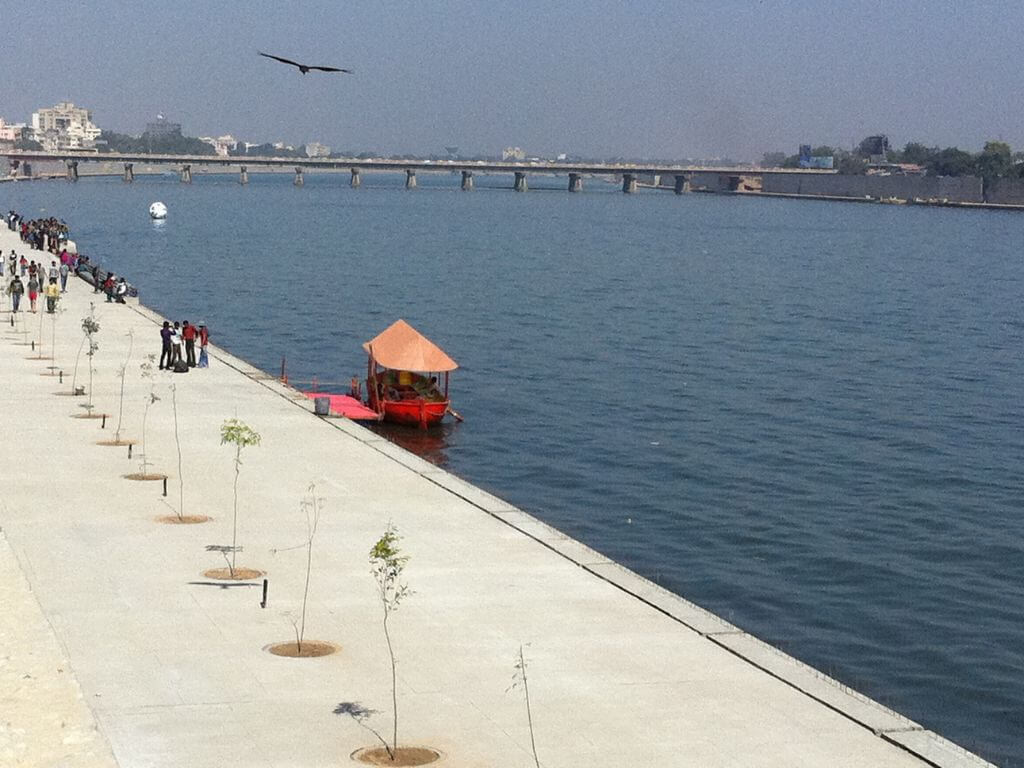
Ahmedabad Narmada Water Expansion Supports Urban Growth
Ahmedabad is preparing for a major rise in its municipal water availability as authorities approve a fresh allocation from the Narmada basin to serve rapidly expanding western neighbourhoods. The move is expected to ease supply pressure in newly urbanised corridors while strengthening long-term planning for population growth, commercial development and climate-resilient infrastructure across the city’s outer zones.
Municipal officials confirmed that the additional inflow will be directed to the Jaspur treatment complex, a key node in the western distribution network. The facility already processes large volumes of river water before sending it to multiple pumping stations, but surging residential projects, office clusters and logistics parks along arterial highways have begun to stretch existing capacity. The Ahmedabad Narmada water enhancement is therefore being positioned as both a service upgrade and a strategic urban investment.Urban planners note that western Ahmedabad has transformed over the past decade from peripheral land parcels into mixed-use districts with high-rise housing, educational institutions and technology parks. Such land-use shifts typically intensify daily water demand far beyond earlier projections. By linking new supply to treatment plant expansion rather than ad-hoc tanker dependence, the city is attempting to align infrastructure growth with sustainable resource management principles.
Parallel proposals to enlarge purification capacity at Jaspur including two new treatment modules indicate that the civic body is planning for future rather than immediate needs alone. Once operational, the combined facilities are expected to significantly raise the total processing potential, allowing distribution networks to extend into emerging suburbs without destabilising older pipelines. Experts say that scaling purification capacity alongside raw water allocation is critical to prevent transmission losses and ensure equitable access across income groups. Another structural change involves shifting the intake source from a branch canal to the main Narmada canal, a step expected to improve reliability and reduce seasonal fluctuations. Water security specialists suggest that diversifying intake routes can reduce vulnerability during drought cycles or maintenance shutdowns, an increasingly important consideration as climate variability affects reservoir levels across western India.
Currently, Ahmedabad draws a substantial daily volume from multiple sources, but uneven distribution often affects fringe settlements. The Ahmedabad Narmada water increase is anticipated to stabilise supply for high-density residential belts and commercial strips near ring roads and express corridors, areas that frequently experience peak-hour shortages. In the longer term, urban development analysts emphasise that water planning must move in tandem with energy-efficient treatment technologies, leakage control and recycled water reuse. As cities expand outward, infrastructure decisions taken today will shape affordability, liveability and environmental resilience for decades to come.