


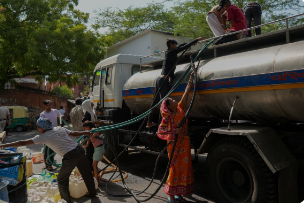
In a recent development, the Ahmedabad Mega Clean Association (AMCA) has issued a formal apology to the Ahmedabad Municipal Commissioner (AMC) after mistakenly identifying the water discharged by an AMC tanker into a mega line manhole as untreated wastewater. This clarification comes after a mix-up that had previously led to significant legal and administrative repercussions.
Two days ago, during a court hearing, an amicus curiae reported to the Gujarat High Court that AMC tankers were observed discharging what was alleged to be untreated wastewater into a mega pipeline designed to carry treated effluent to the river. This assertion was supported by a video presented to the court, which purportedly captured the incident. The High Court responded by criticising the civic administration for this apparent oversight.
However, subsequent statements from the Deputy Municipal Commissioner (North Zone) refuted these claims, asserting that the water in question was not untreated wastewater but a case of misidentification. The confusion was attributed to an error by AMCA staff during their inspection. In response to the court’s directive, which included a special bench being set up to address the issue, the AMCA formally retracted their earlier statement. On Thursday, the association tendered a public apology, acknowledging the error in their initial claims. The joint CEO of the AMCA took full responsibility for the misjudgement and pledged to implement measures to prevent such incidents in the future.
This incident highlights the critical importance of accurate reporting and verification in environmental monitoring. As the AMCA reassesses its procedures, the focus now shifts to ensuring that future inspections are conducted with greater precision to uphold public trust and maintain the integrity of environmental reporting. The apology marks a significant step in resolving the issue and restoring the relationship between the civic authorities and the monitoring bodies. Moving forward, both the AMC and AMCA are expected to collaborate more closely to enhance oversight and ensure that such misunderstandings do not recur.
