


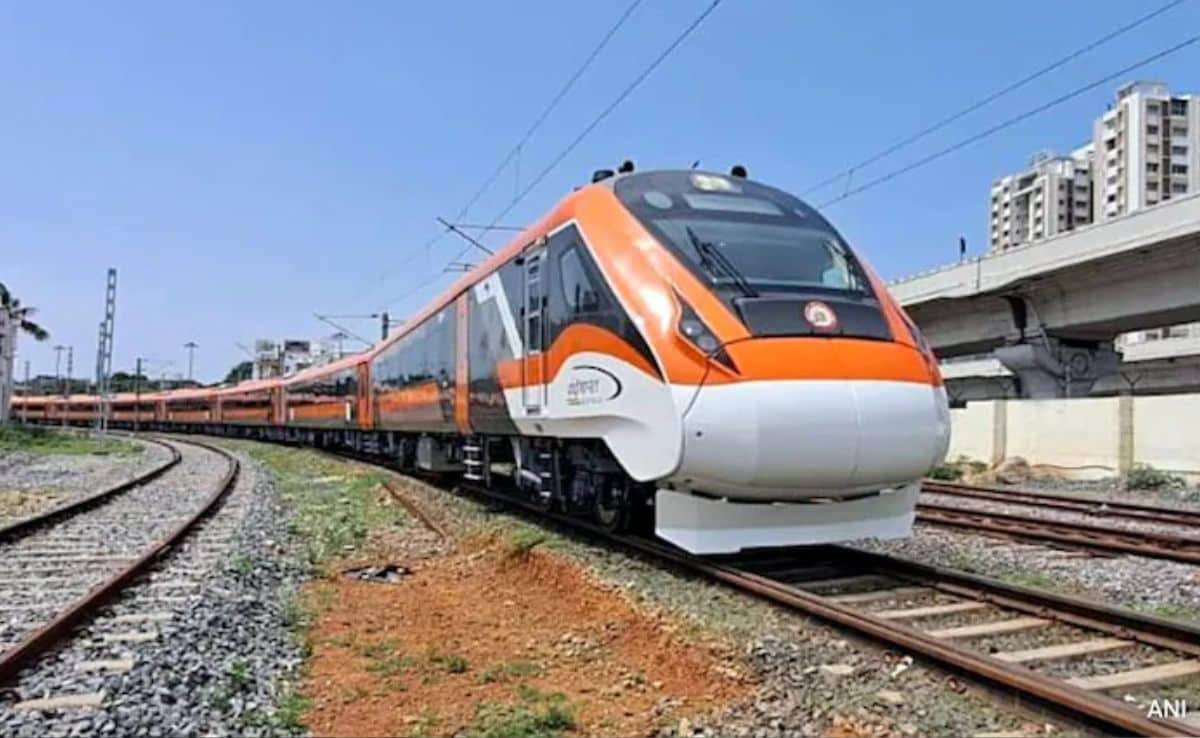
The Ahmedabad–Mumbai travel corridor is set to become faster and more convenient as Western Railway increases the capacity of its Vande Bharat Express. From today, the high-speed service between Mumbai Central and Ahmedabad will operate with 20 coaches, up from the previous 16, allowing for an additional 278 passengers per journey. The adjustment reflects rising demand along one of western India’s busiest intercity routes, where time efficiency and comfort have become critical for business and leisure commuters alike.
The upgraded train, originally launched in March 2024, connects two major economic hubs across Gujarat and Maharashtra. By adding four extra AC Chair Car coaches, authorities aim to relieve seating shortages during peak travel periods while maintaining the train’s schedule of six days a week. The 491-kilometre journey, designed for efficiency, now takes approximately 5 hours and 40 minutes, offering a competitive alternative to road and conventional rail options. Senior railway officials note that the coach expansion is part of a broader strategy to optimise high-speed rail services across the country. “Capacity enhancements are being prioritised on routes where demand consistently exceeds availability,” said a Western Railway spokesperson. “This not only improves passenger convenience but also maximises utilisation of our high-speed fleet while maintaining punctuality.”
The Vande Bharat Express halts at key nodes along the route—Vadodara Junction, Surat, Vapi, and Borivali—ensuring connectivity to industrial, commercial, and residential centres. Experts suggest that these stops balance journey speed with accessibility, reflecting an integrated transport planning approach that considers commuter patterns, economic corridors, and regional mobility needs. Urban planners highlight that faster intercity travel has broader implications for regional development. “Reducing travel time between Ahmedabad and Mumbai strengthens economic linkages, facilitates business travel, and enhances labour mobility,” said a transport analyst. “This has cascading benefits for city planning, residential real estate, and sustainable urban growth as more people can realistically commute or conduct day trips between cities.”
From an environmental perspective, high-capacity electric trains like the Vande Bharat contribute to reducing road congestion and lowering carbon emissions compared with private vehicle travel. Authorities are also focusing on operational reliability, ensuring that additional coaches are integrated without affecting train acceleration, braking performance, or energy efficiency. With these enhancements, the Ahmedabad–Mumbai Vande Bharat Express is expected to set a new benchmark for intercity rail travel in western India. While the short-term gain is increased passenger capacity, the long-term effect reinforces the role of high-speed rail in fostering sustainable mobility, strengthening regional connectivity, and supporting economic corridors between major metropolitan centres.
Also Read: Western Railway Deploys Next Gen Signalling at Borivali
