Ahmedabad Mumbai Corridor Sees Massive Capital Push
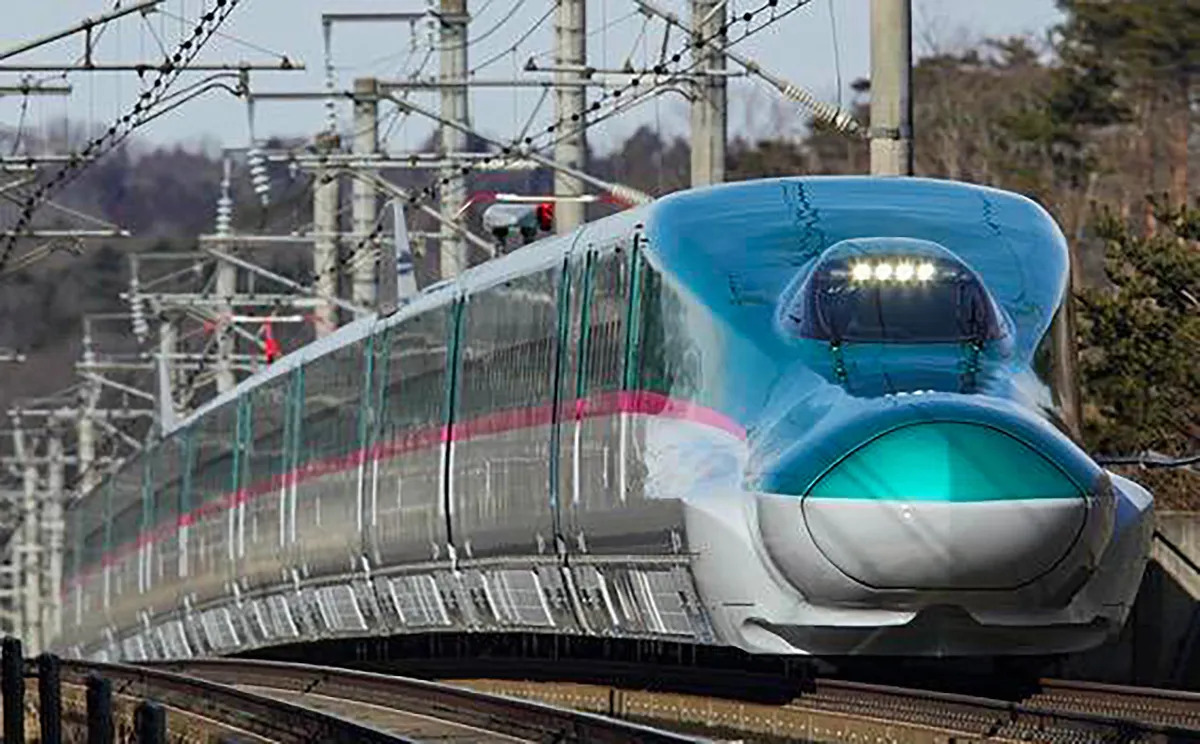
India’s most ambitious rail modernisation effort has crossed a major financial milestone, with nearly ₹87,000 crore spent on the Mumbai Ahmedabad Bullet Train project as of December 2025. The update, shared in Parliament this week, signals the scale and pace of capital deployment in a corridor expected to reshape intercity mobility, land values and regional economic integration between Maharashtra and Gujarat. The 508-kilometre Mumbai Ahmedabad Bullet Train project remains the country’s only high-speed rail initiative under execution. Backed by technical and financial collaboration with Japan, the corridor is being built to operate at speeds significantly higher than conventional rail, with dedicated infrastructure, specialised track systems, advanced signalling and high-capacity electric traction.
Officials indicated that expenditure has reached ₹86,939 crore so far, though the final outlay will depend on the completion of civil works, systems integration and rolling stock procurement. Large-scale viaduct construction, station development and tunnelling activities are progressing across multiple stretches, making it one of the most capital-intensive transport projects currently underway in India. Parallel to the high-speed rail build-out, the Ministry of Railways reported near completion of the Western Dedicated Freight Corridor (WDFC) and full commissioning of the Eastern Dedicated Freight Corridor (EDFC). Together, the freight corridors have enabled the diversion of cargo traffic from conventional lines, freeing up passenger capacity and improving logistics efficiency. Over 400 freight trains are now running daily across these dedicated routes, reflecting a structural shift in how goods move across northern and western India.
Urban economists note that the Mumbai Ahmedabad Bullet Train project is not merely a transport upgrade but a catalyst for transit-oriented development. Station precincts are expected to attract commercial clusters, mixed-use real estate and industrial growth, particularly in secondary cities along the corridor. Improved connectivity between financial and manufacturing hubs could reduce travel time drastically, influencing business travel patterns and potentially easing aviation congestion. At the same time, infrastructure specialists caution that cost visibility will only become clearer once track laying, electrification, signalling, telecommunications and trainset supply are fully integrated. High-speed systems demand rigorous safety protocols, advanced maintenance regimes and climate-adapted engineering standards, particularly in coastal and high-temperature zones.
Ticket pricing, officials suggested, is being structured to remain competitive with premium rail and air travel. If balanced carefully, this could widen accessibility while ensuring financial sustainability a critical factor for long-term viability. For India’s urban future, the Mumbai Ahmedabad Bullet Train project represents more than speed. It tests the country’s ability to execute complex, technology-intensive infrastructure while aligning mobility expansion with economic growth, lower-emission transport and corridor-based urban planning. As construction advances, attention will increasingly shift to integration with city transport networks, station area planning and equitable access elements that will ultimately determine how transformative the corridor becomes.