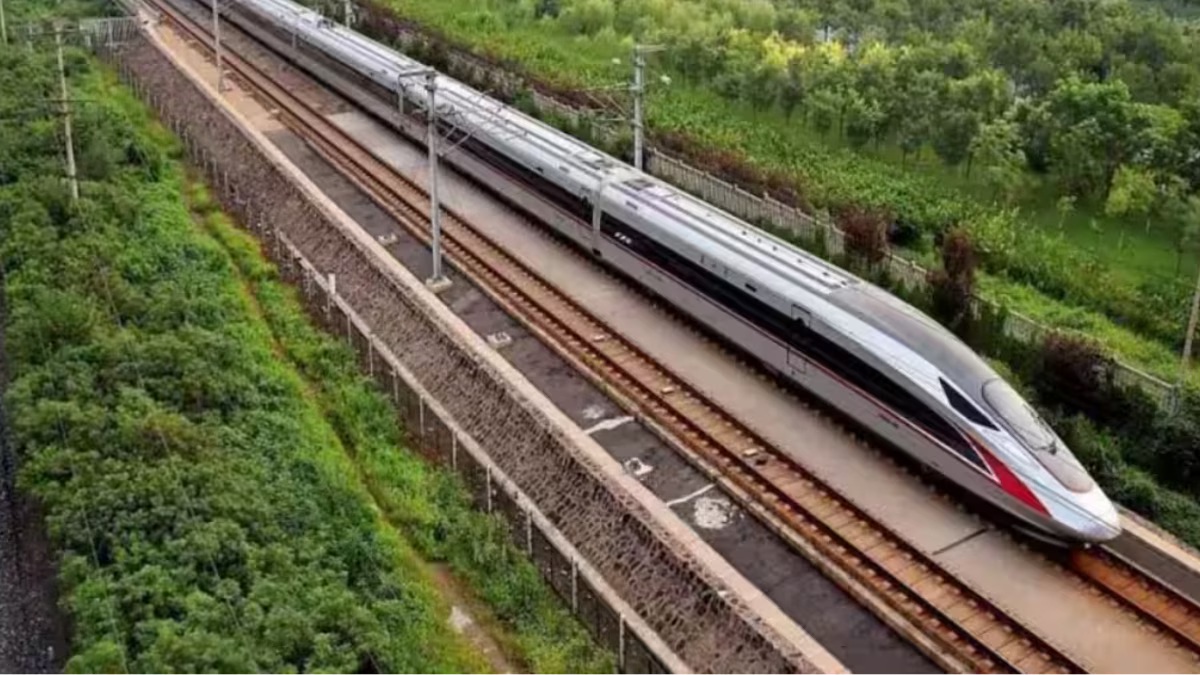
India’s first high-speed rail corridor between Mumbai and Ahmedabad has crossed key construction milestones, bringing the country closer to a two-hour intercity journey that could significantly reshape travel, business mobility and regional development across western India. The 508-kilometre Mumbai Ahmedabad High Speed Rail corridor is under active construction across Maharashtra and Gujarat, with land acquisition completed and major structural works progressing on bridges, stations and underground sections. Once operational, the service is expected to reduce travel time between the two financial and industrial hubs to just over two hours, less than half the duration of most existing rail services.
Twelve stations are planned along the route, including major nodes such as Mumbai, Thane, Surat, Vadodara and Sabarmati. Urban planners say the alignment has the potential to influence real estate patterns and business clustering, particularly around emerging transit hubs. High-speed connectivity is expected to support decentralised growth by strengthening satellite cities and industrial corridors rather than concentrating economic activity in a single metropolitan core. A significant portion of the route is elevated, reducing level crossings and improving safety. Dedicated noise barriers and vibration-control systems are being installed to limit the impact on residential neighbourhoods. According to project officials, safety systems will include controlled station access, baggage screening and continuous surveillance, similar to airport protocols.
One of the technically complex components is the underground stretch in Mumbai, which includes a deep station in the Bandra Kurla Complex business district and a subsea tunnel section in the metropolitan region. Engineers involved in the works indicate that foundation systems have been designed to support future vertical development above the station, reflecting integrated urban planning considerations. Financially supported by Japan through long-term concessional funding, the Mumbai Ahmedabad High Speed Rail project has so far incurred expenditure exceeding ₹86,000 crore. Industry observers note that beyond mobility gains, the initiative is intended to catalyse domestic manufacturing capabilities. Specialised track systems, steel girders and heavy equipment are increasingly being produced within India, while local engineers have undergone training in high-speed rail technologies.
Transport economists argue that ticket pricing will determine the extent to which the corridor shifts travellers from air and premium rail services. If positioned competitively, the service could reduce short-haul aviation demand, lowering per-capita emissions on the busy Mumbai–Ahmedabad sector. At the same time, improved rail capacity on existing lines partly enabled by Dedicated Freight Corridors may benefit conventional passenger services. For commuters, the Mumbai Ahmedabad High Speed Rail promises predictable schedules, reduced journey stress and seamless interchange with urban transport systems. For cities, it presents an opportunity to align transit-oriented development with climate resilience goals. The long-term impact will depend on how effectively surrounding land use, housing and commercial growth are managed as the corridor moves closer to completion.