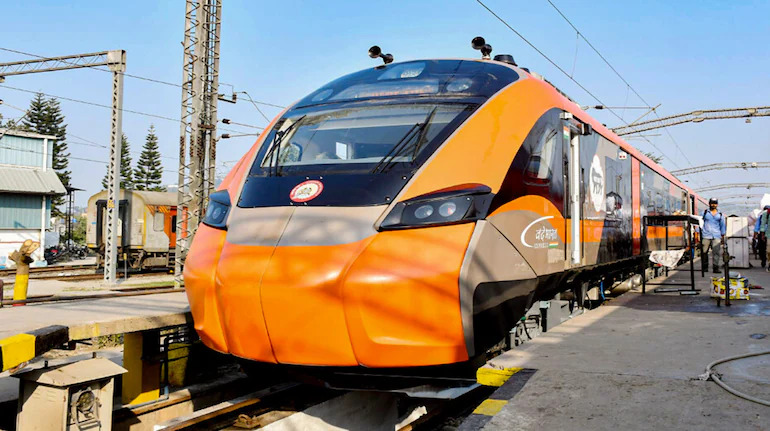
Ahmedabad has formally entered a new phase of regional rail connectivity with the launch of the Udaipur–Asarva Vande Bharat Express, signalling a step towards faster, more sustainable travel in western India. The inaugural run took place from Udaipur City railway station, with the service set to commence regular operations from February 18, operating six days a week. The new service covers approximately 4 hours and 15 minutes between Udaipur and Asarva, with scheduled halts at Zawar, Dungarpur, and Himmatnagar. The train will include seven AC Chair Car coaches and one Executive AC Chair Car coach, providing both standard and premium seating options. Ticket pricing varies by direction, with chair car fares ranging from ₹900 to ₹1,065 and executive fares including meals priced between ₹1,680 and ₹1,875.
Urban mobility experts suggest the Vande Bharat corridor could reduce road congestion along the Udaipur–Ahmedabad route while offering a lower-carbon alternative to conventional buses and private vehicles. By cutting travel time and offering modern amenities, the service also encourages intercity economic activity, including tourism, commerce, and regional business exchanges. Improved connectivity may further bolster investment in peripheral towns like Himmatnagar and Dungarpur, aligning with regional planning objectives for equitable infrastructure growth.
From an environmental perspective, high-speed electric trains are increasingly positioned as climate-resilient alternatives to fossil-fuel-dependent road transport. Industry officials note that expansion of such services supports India’s broader targets for carbon reduction in transportation while promoting energy-efficient infrastructure. Additionally, the rail route’s integration into urban planning frameworks could facilitate more people-first approaches to mobility, particularly for smaller urban centres along the corridor that often face limited transit options.
Social and economic analysts highlight the inclusivity potential of this rail expansion. By connecting smaller towns to major commercial hubs, the service can enable wider access to employment, education, and healthcare opportunities. City planners emphasise that transport accessibility directly influences the economic resilience of mid-sized towns, helping them integrate into larger metropolitan economies without accelerating unchecked urban sprawl. As the Udaipur–Asarva Vande Bharat Express enters regular service, attention will focus on operational efficiency, passenger uptake, and the replicability of this model for other regional corridors. Continuous monitoring of travel patterns and integration with local transit networks will be critical to ensure the service maximises urban and economic benefits while supporting India’s transition to sustainable, climate-conscious transportation systems.