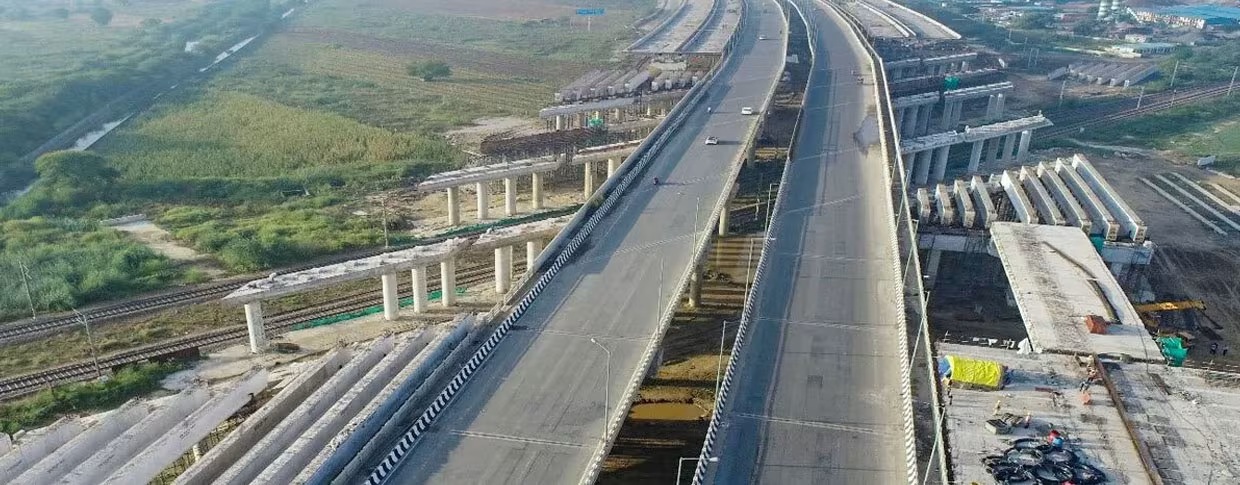
India’s national highway expansion programme moved into a decisive new phase as the highways authority invited bids for the first segment of a proposed high-speed road linking north Gujarat’s border districts with Ahmedabad. The initial tender, covering over 100 kilometres, signals a strategic effort to unclog existing routes, strengthen freight efficiency, and integrate western India more tightly into national logistics networks.
The Ahmedabad-bound expressway is planned as a six-lane, access-controlled corridor designed to carry long-haul freight and intercity traffic away from saturated state highways. Officials familiar with the project say the stretch under tender will be developed through a toll-based public–private partnership, transferring construction and operational responsibility to private concessionaires for a fixed period. The full corridor, once built, is expected to span more than 200 kilometres and represent a multi-thousand-crore investment in Gujarat’s transport backbone. Urban planners view the project as more than a road-building exercise. By directly linking the Amritsar–Jamnagar Economic Corridor with the Delhi–Mumbai Expressway, the Ahmedabad expressway is positioned to act as a missing logistics link between northern manufacturing clusters, western ports, and consumption centres. This alignment is expected to shorten freight routes, lower fuel consumption per trip, and reduce pressure on urban roads passing through towns and villages.
Industry experts note that the expressway could alter land-use patterns along its alignment. Faster connectivity often attracts warehousing, agro-processing, and light manufacturing, particularly in districts that have so far remained outside large industrial belts. However, they caution that unmanaged roadside development could increase carbon intensity and strain local water and energy systems if zoning and environmental safeguards are not enforced early. From a commuter perspective, the project promises measurable time savings. Transport analysts estimate that the new alignment could cut the Ahmedabad–Tharad journey distance by roughly one-fifth, improving reliability for daily travellers and long-distance bus services. Reduced congestion on existing highways may also improve road safety, an ongoing concern on mixed-traffic routes across western India.
Environmental planners say the challenge will lie in balancing speed with sustainability. Large expressways carry risks of habitat fragmentation and increased vehicular emissions if traffic volumes rise unchecked. They argue that integrating green buffers, efficient drainage, and provisions for future electric freight corridors could help align the project with India’s climate commitments while supporting economic growth. As bids are set to close later this month, attention will turn to execution timelines and regulatory clearances. For cities, logistics operators, and regional economies, the Ahmedabad expressway represents a test of whether India’s next generation of highways can deliver growth while remaining resilient, inclusive, and environmentally responsible.