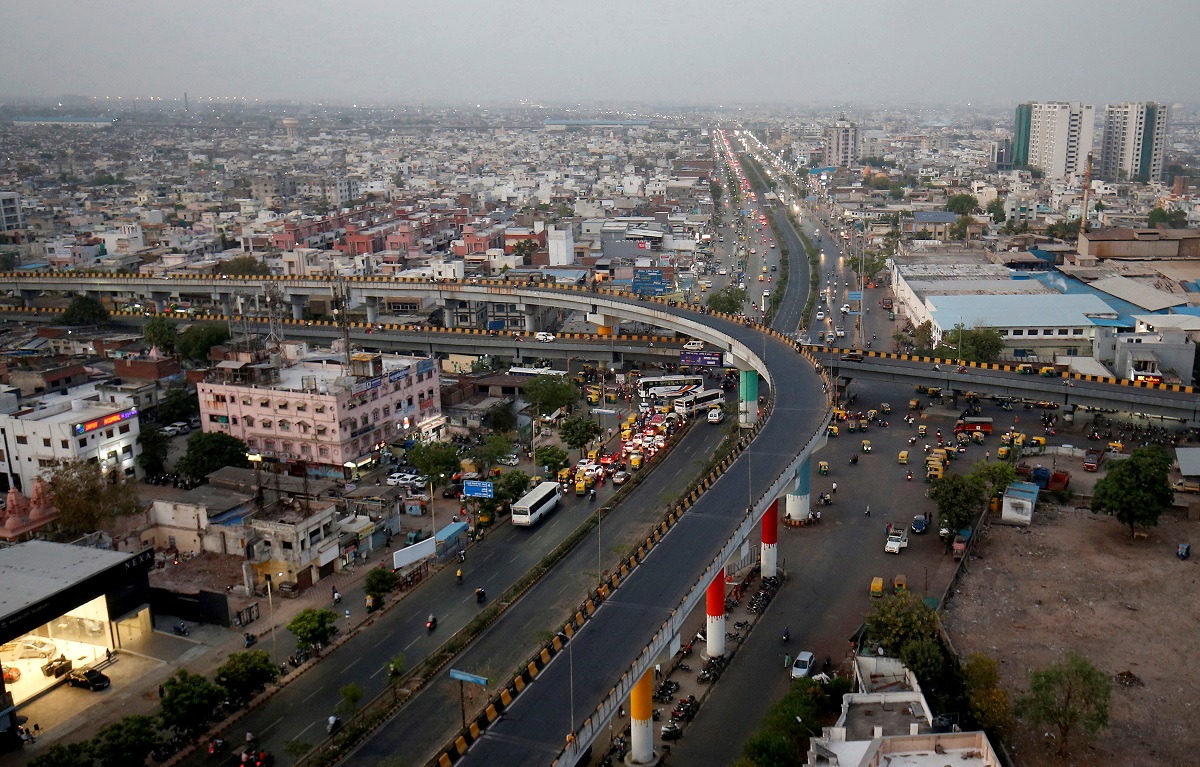
Ahmedabad’s municipal administration has cleared the removal of nearly 700 young trees to enable construction of a new underground water reservoir in the city’s southern Isanpur zone, a decision that has reignited questions around urban green cover and infrastructure planning in fast-growing neighbourhoods. The project is intended to expand potable water capacity for a population that has risen sharply due to redevelopment and vertical housing growth, placing additional pressure on ageing civic systems.
The proposed reservoir will add over two million litres of storage to an existing distribution station that already operates two underground tanks serving multiple residential clusters. Municipal officials indicated that the expansion is necessary to stabilise supply across densely built areas where new high-rise developments and the reconstruction of older housing societies have accelerated demand. Urban planners note that Ahmedabad water tank tree decisions often emerge where land availability is limited and public infrastructure must compete with environmental priorities.
While the project addresses a basic service requirement, the felling of recently planted trees has drawn attention to the long-term ecological trade-offs cities face when infrastructure is expanded without integrated landscape planning. Environmental analysts argue that younger plantations represent future carbon sinks and urban heat mitigation assets, particularly in western Indian cities that are increasingly vulnerable to heatwaves and erratic rainfall. The Ahmedabad water tank trees clearance highlights the absence of binding urban canopy protection frameworks that balance water security with climate resilience. In a separate but related development, the civic body has also approved the disposal of a multi-level parking and commercial complex built at significant public cost only two years ago. After multiple unsuccessful attempts to auction individual commercial units, authorities now intend to sell the entire structure and its underlying land parcel to a single buyer. The prospective purchaser may alter or discontinue its parking function, reflecting broader shifts in urban mobility patterns and the uncertain commercial viability of large parking assets in evolving city centres.
Urban economists observe that such asset monetisation decisions reveal fiscal pressures within municipal governance, where underperforming infrastructure must be repurposed to release capital for essential services. However, experts caution that short-term financial recovery should be aligned with long-term planning objectives, including transit-oriented development, gender-safe public spaces, and reduced private vehicle dependence. Taken together, the dual approvals underscore the complexity of managing growth in expanding Indian cities where water security, financial sustainability, and environmental stewardship increasingly intersect. The coming months will test whether compensatory plantation measures, land-use safeguards, and transparent public communication can bridge the gap between urgent civic needs and the broader vision of climate-resilient, people-first urban development.