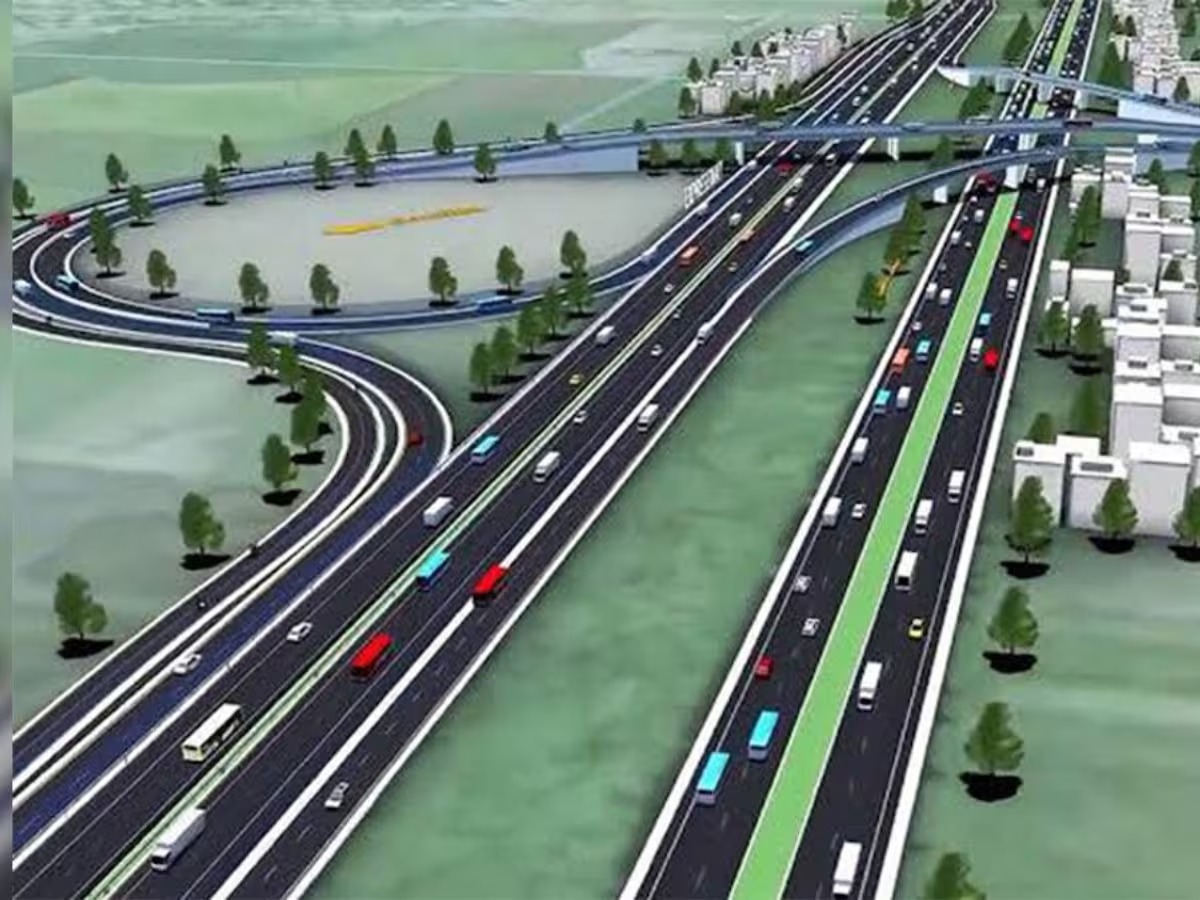
Ahmedabad and its surrounding growth belt are set to undergo a significant transport transformation after the Gujarat government cleared two major road programmes with a combined investment of ₹5,230 crore, signalling a renewed push to align mobility infrastructure with rising urbanisation, regional equity, and long-term economic demand. At the core of the decision is the expansion of the Ahmedabad–Mehsana corridor, a critical north Gujarat artery linking industrial clusters, logistics hubs, and fast-growing residential zones. The 51-kilometre stretch, which has long outgrown its four-lane capacity, will be rebuilt as an eight-lane highway. Urban transport planners note that daily traffic volumes exceeding one lakh vehicles have strained safety, freight efficiency, and commuter reliability, turning what was once a regional connector into a bottleneck.
The redesign goes beyond simply adding lanes. Dedicated seven-metre service roads on both sides are planned to separate local movement from long-distance traffic. This segregation, commonly adopted in high-capacity urban highways, is expected to reduce accident risks, improve pedestrian access in adjoining settlements, and create more predictable travel times for freight and intercity commuters. Within Kalol town, a six-kilometre elevated corridor linking multiple overbridges will form part of the same investment package. For residents, the structure is expected to reduce surface congestion and shorten cross-town travel, while planners see it as an attempt to balance through-traffic needs with liveability in dense urban centres a recurring challenge across expanding Indian cities.
Beyond metropolitan Ahmedabad, the cabinet approval places equal emphasis on rural and tribal connectivity. Under a large-scale programme aligned with national rural road initiatives, more than 2,000 kilometres of new roads will be built across tribal regions of Gujarat. These roads will provide all-weather access to over 1,600 hamlets that have historically remained disconnected from markets, healthcare, and education networks. Infrastructure economists point out that such investments in Gujarat road infrastructure have multiplier effects that extend well beyond transport. Improved connectivity tends to stabilise land values, enable decentralised economic activity, and reduce distress migration by bringing services closer to communities. For tribal regions, first-time paved access also lowers climate vulnerability by ensuring emergency mobility during extreme weather events.
However, experts caution that the scale of highway expansion also raises questions around land use, emissions, and long-term sustainability. Integrating green buffers, efficient drainage, and future-ready public transport corridors will be critical to ensure that Gujarat road infrastructure growth supports climate-resilient urbanisation rather than car-dependent sprawl. As execution timelines take shape, attention will shift to how effectively these projects are coordinated with public transport planning, regional development strategies, and environmental safeguards factors that will ultimately determine whether the investment delivers inclusive and durable urban growth.