


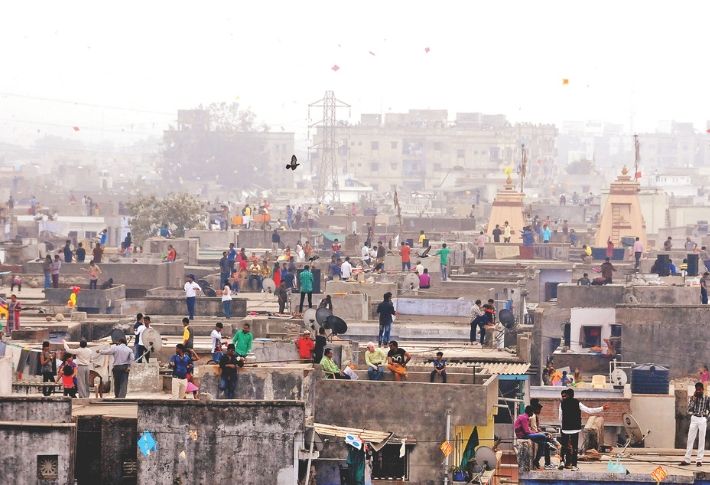
Ahmedabad’s historic old city transforms each January during Uttarayan, the annual kite-flying festival, into a dense, elevated network of activity where tightly clustered rooftops become temporary commercial venues. This phenomenon, increasingly dubbed “terrace tourism,” has turned traditional residential terraces into lucrative short-term rental assets, with peak-day rates reaching up to Rs 1 lakh in heritage neighbourhoods such as Khadia, Raipur, Sarangpur, Manekchowk, and Astodia. Analysts note that this seasonal adaptation highlights the intersection of cultural tradition, urban form, and economic opportunity.
The old city’s low-rise, closely spaced homes create an interconnected rooftop landscape that is nearly impossible to replicate in modern high-rise developments. Urban planners observe that this architectural intimacy facilitates communal kite-flying events, creating a shared sky experience that draws both domestic and international visitors. Real estate experts point out that the phenomenon demonstrates how heritage urban patterns can generate tangible economic value while preserving cultural identity. The surge in rooftop rentals reflects broader trends in Ahmedabad’s heritage economy. Non-resident Indians (NRIs) returning for winter holidays represent a significant proportion of visitors, alongside domestic tourists from Surat, Vadodara, and Mumbai. Many heritage hotels now bundle rooftop access with accommodation packages, while independent terraces operate through organised rental networks, illustrating the formalisation of a previously informal activity. Industry sources suggest that the resulting revenue streams provide additional income for property owners, encouraging maintenance and upkeep of ageing structures. Economists and urban observers highlight that terrace tourism exemplifies micro-scale urban monetisation that aligns with cultural preservation.
Unlike conventional commercialisation, these rooftop ventures leverage existing infrastructure and historical patterns without requiring new construction or large-scale urban interventions. The activity also fosters social cohesion by enabling residents to participate in festival operations, whether through food stalls, seating arrangements, or event coordination. At the same time, this seasonal peak in activity underscores pressures on urban heritage districts. Experts caution that sustained interest in terrace tourism may require municipal oversight to manage safety, waste, and crowd control. Integrating these seasonal activities into heritage management plans can enhance visitor experiences while mitigating risks to structural integrity and public safety. Urban analysts suggest that Ahmedabad’s terrace economy could serve as a model for other historic cities seeking to balance cultural preservation with economic viability. By leveraging existing built forms for experiential tourism, cities can diversify income sources, support local residents, and celebrate intangible cultural heritage.
As Uttarayan continues to attract global attention, Ahmedabad’s old-city terraces illustrate the potential for heritage urbanism to create high-value, low-impact economic opportunities. Careful planning, safety regulation, and inclusive engagement with local communities will be key to ensuring that such seasonal enterprises remain sustainable and equitable for both residents and visitors.
Also Read: Navratna Group Constructs Landmark High Rise Ahmedabad
Ahmedabad Heritage Terraces See Surge In Rental Demand
