


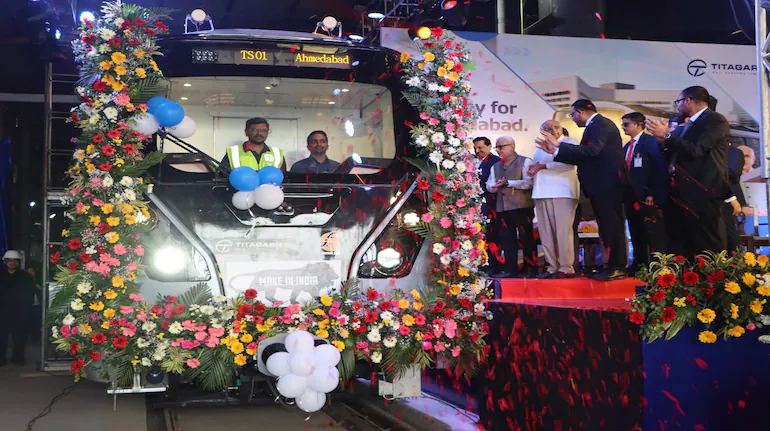
Ahmedabad is set to enter a new phase of urban mobility with the introduction of its first indigenously built, fully automated metro train, reinforcing India’s push towards self-reliant, sustainable public transport systems. The new metro train, manufactured under the Make in India initiative, was unveiled at a rail manufacturing facility near Kolkata and will soon begin operations in the city following regulatory approvals.
Urban transport officials described the development as a strategic milestone for Ahmedabad’s rapidly expanding metro network, which currently serves over 1.6 lakh passengers daily. With ridership growing annually by 30 to 40 per cent, capacity augmentation has become critical to maintaining service reliability and commuter convenience. The induction of new-generation trains is expected to support this demand while improving operational efficiency. Manufactured at the Titagarh Rail Systems facility, the metro coaches have been built to international standards and reflect a broader shift towards domestic production of advanced transit systems. Industry experts noted that indigenous manufacturing not only strengthens supply chains but also reduces lifecycle costs and carbon emissions associated with imports. Workers from across India are involved in the production process, underscoring the inclusive economic impact of large-scale transport manufacturing.
Technologically, the Ahmedabad Metro train is designed to operate under Grade of Automation 4, enabling fully driverless operations once deployed. Engineers involved in the project said the train incorporates advanced safety systems, including modern fire detection, emergency response mechanisms and high-grade stainless steel construction for durability. Design elements draw inspiration from Ahmedabad’s cultural identity, blending functionality with local context.
The train order forms part of a broader capacity expansion programme linked to the completion of the 21-kilometre Phase-2 extension of the Ahmedabad Metro. The state-run metro corporation has placed orders for 10 such trains, with deliveries scheduled over the next five to six months. Transport planners said this phased rollout will ensure seamless integration with the existing network and minimise service disruptions.
From a national perspective, the project aligns with India’s rapid metro expansion, which has grown from under 250 kilometres in 2014 to over 1,000 kilometres in 2025. Urban mobility specialists argue that metro rail systems are increasingly central to reducing road congestion, lowering emissions and improving access to jobs and education in fast-growing cities. As Ahmedabad continues to expand its metro footprint and prepares for future inter-city connectivity, the deployment of indigenous, automated trains signals a shift towards cleaner, smarter and more resilient urban transport. For cities balancing growth with sustainability, such investments are becoming essential to building inclusive, low-carbon urban futures.
