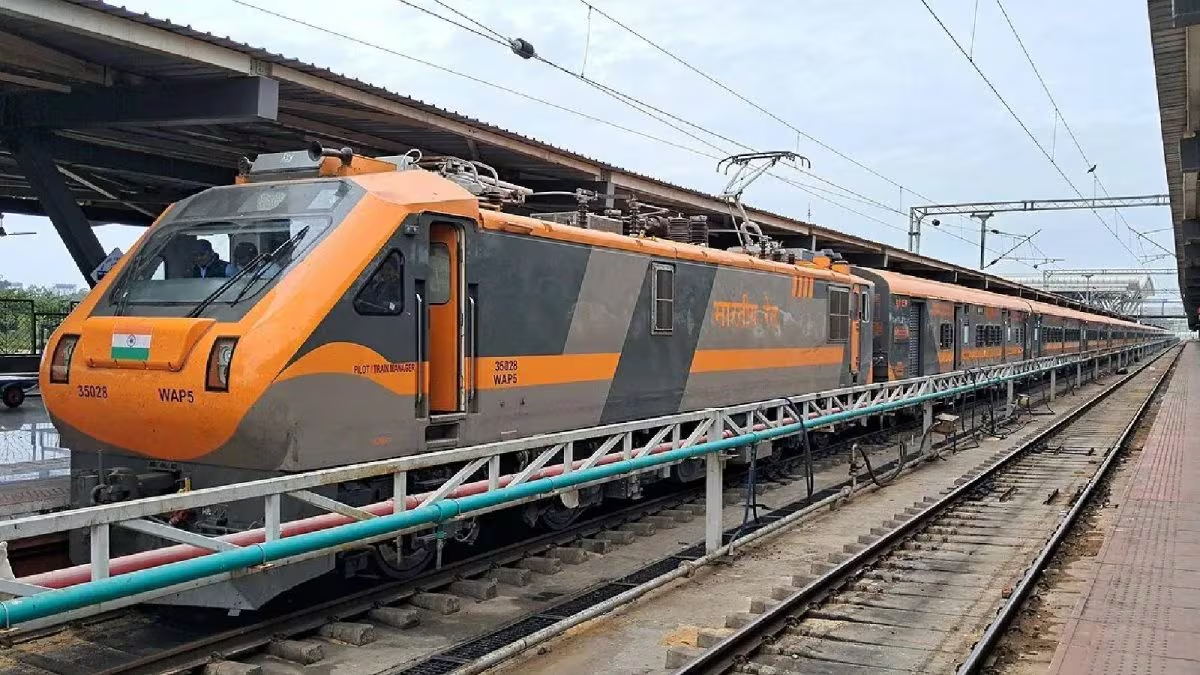
Ahmedabad is set to be integrated into India’s expanding network of upgraded long-distance trains, with railway authorities approving a weekly Amrit Bharat service linking the city to Patna. The move formalises an existing special train into a scheduled operation, marking a shift towards more structured and reliable intercity rail connectivity between western and eastern India.
The introduction of the Ahmedabad Patna Amrit Bharat Express positions the Gujarat city within a new category of trains designed to enhance passenger capacity while maintaining cost efficiency. Operating on a weekly timetable, the service is expected to cater to sustained travel demand across a corridor that connects industrial regions, agricultural belts, and densely populated urban centres. Transport planners view this development as part of a broader recalibration of India’s rail network, where temporary or seasonal services are gradually being converted into regular operations. This transition improves predictability for passengers and supports long-term mobility planning—an important factor for cities like Ahmedabad that are witnessing steady economic and demographic growth.
The Ahmedabad Patna Amrit Bharat Express will pass through multiple intermediate cities across Gujarat, Madhya Pradesh, Rajasthan, Uttar Pradesh, and Bihar, effectively linking diverse regional economies. These stopovers are not merely logistical points but critical nodes that facilitate labour mobility, small-scale trade, and access to urban services across states. Urban policy experts note that strengthening east-west rail corridors can help balance regional development by improving access between high-growth industrial zones and labour-sending regions. For Ahmedabad, which continues to attract investment in manufacturing and real estate, such connectivity can ease workforce movement and support inclusive growth patterns.
Operationally, Ahmedabad has been designated as the maintenance base for the train, reinforcing its role as a key railway hub in western India. Supporting infrastructure such as water replenishment and servicing facilities along the route also highlights the logistical complexity involved in sustaining long-distance rail operations across varied geographies.
From a sustainability standpoint, the expansion of long-haul rail services offers a lower-emission alternative to road and air travel. Experts argue that increasing the share of rail in intercity transport is essential for reducing carbon intensity in India’s mobility sector. In this context, the Ahmedabad Patna Amrit Bharat Express represents a step towards more climate-aligned transport systems, particularly on routes with high passenger volumes.
However, the weekly frequency also points to capacity constraints and the need for further scaling. As demand continues to grow, railway planners may need to assess increasing frequency or deploying additional rakes to meet passenger needs without compromising service quality.
For now, the formalisation of this service provides a more stable travel option for thousands of passengers moving between western and eastern India. Looking ahead, sustained investments in rail infrastructure, coupled with service upgrades, will be crucial in ensuring that cities like Ahmedabad remain well-connected while advancing towards more resilient and sustainable urban mobility systems.
Ahmedabad gets Amrit Bharat Express to Patna