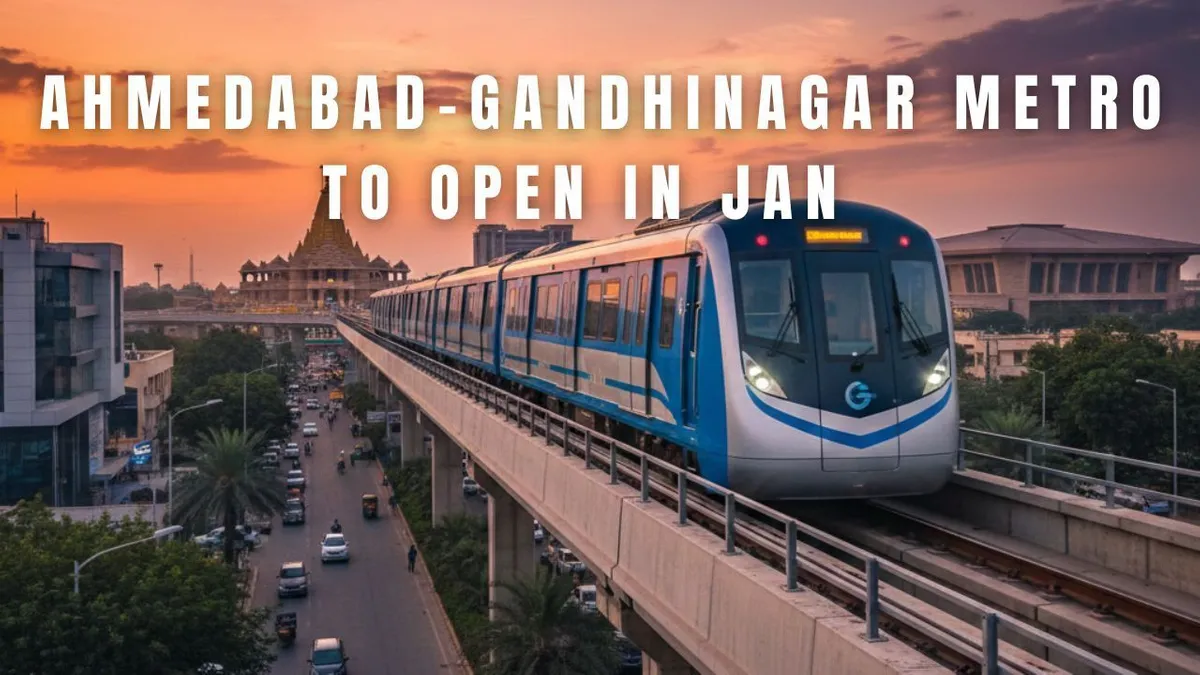
The Ahmedabad-Gandhinagar Metro network is set to receive a strategic boost with the upcoming inauguration of a 5.36-kilometre extension connecting the Secretariat area in Gandhinagar to Mahatma Mandir. The final section of the metro, which includes five new stations—Akshardham, Old Secretariat, Sector-16, Sector-24, and Mahatma Mandir—is scheduled to open on January 12, 2026, marking a significant enhancement in urban mobility between Gujarat’s largest city and its administrative capital.
Urban planners and transport officials note that this extension is expected to improve daily commuting for residents and professionals, providing faster, more affordable, and environmentally conscious travel options. The new stretch will also offer better access to key cultural and civic landmarks, including the Akshardham Temple and Dandi Kutir, integrating urban transit with regional development and tourism. Before the official launch, the metro line underwent multiple trial runs, including operational testing during the festive season in October, and received safety approval from the Commissioner of Metro Rail Safety (CMRS). Authorities have confirmed that all passenger facilities, signalling systems, and emergency protocols have been rigorously inspected, ensuring operational readiness for high-volume commuter traffic.
The completion of this extension brings the Ahmedabad-Gandhinagar Metro network to approximately 68 kilometres in length, encompassing 54 stations. Analysts emphasise that expanding metro coverage in high-density corridors reduces dependency on private vehicles, eases road congestion, and supports the city’s long-term climate goals by lowering emissions. “Metro expansions like this are not just transport upgrades; they shape sustainable urban growth patterns and equitable access to mobility,” said a senior transport planner familiar with the project. From an economic perspective, the extended connectivity is likely to influence commercial and residential activity along the corridor. Property analysts suggest that improved metro accessibility can drive demand for residential housing and retail developments near the new stations, potentially increasing land values and incentivising mixed-use urban growth. Planners also see potential benefits for workforce mobility, particularly for employees commuting between Ahmedabad and Gandhinagar, enhancing regional productivity.
Operational preparations for the launch include station enhancements, crowd management protocols, and last-mile connectivity measures. Officials are coordinating public safety, signage, and passenger guidance systems to manage expected ridership surges during the initial days of operation. Once fully operational, the new line is expected to serve residents across Gandhinagar’s sectors and surrounding villages, integrating them into a seamless, high-capacity urban transport network. Looking forward, the Ahmedabad-Gandhinagar Metro extension represents a model for combining transit expansion with sustainable city planning, providing both environmental and social benefits. Continued focus on accessibility, intermodal integration, and commuter safety will determine the long-term impact of this project on regional mobility and urban development.
Ahmedabad – Gandhinagar Metro Adds Five New Stations