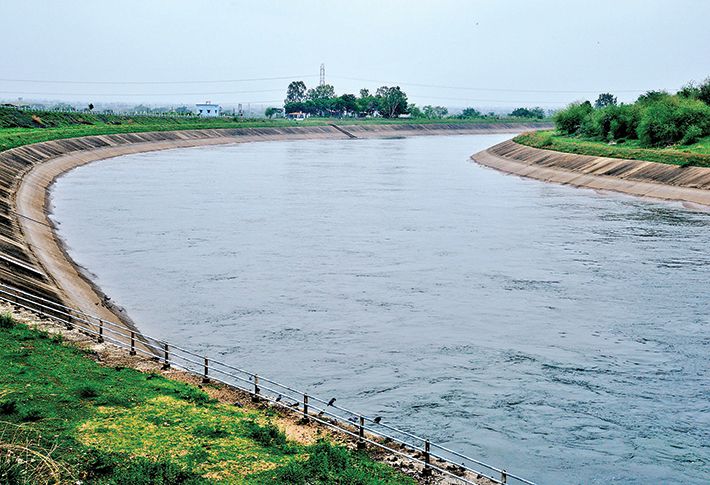
Ahmedabad’s western growth corridor is set to receive a significant increase in bulk water availability after state authorities cleared an additional draw from the Narmada canal network, a move aimed at securing long-term drinking water needs amid accelerating real estate and commercial expansion. The decision reflects rising pressure on civic infrastructure as new residential clusters and business districts continue to reshape the city’s urban footprint.
Urban planners note that western Ahmedabad has emerged as one of the fastest-developing micro-markets in Gujarat, with higher-density housing projects, gated communities, and mixed-use developments intensifying demand for reliable municipal services. The augmentation of Ahmedabad Narmada water supply is expected to stabilise distribution in neighbourhoods that have witnessed population inflows linked to employment hubs, transit connectivity, and peri-urban land conversions.
Raw water routed through branch canals currently feeds a major treatment facility on the city’s outskirts, which processes and distributes potable water across multiple western and north-western zones. Civic officials indicate that an ongoing upgrade to the treatment plant’s processing capacity will further enhance daily output, aligning infrastructure capacity with projected demographic and construction trends. Such upgrades are increasingly viewed as essential to prevent seasonal shortages and reduce dependence on groundwater extraction, which carries long-term environmental risks. Infrastructure analysts observe that expanding the Ahmedabad Narmada water supply is not only a utility decision but also an economic signal. Reliable water access underpins real estate valuation, commercial leasing confidence, and industrial siting decisions. At the same time, experts caution that supply expansion must be accompanied by efficiency reforms including leak detection, smart metering, and wastewater recycling to ensure equitable distribution and climate resilience in a semi-arid region vulnerable to rainfall variability.
Environmental specialists highlight that canal-based surface water, when managed responsibly, can reduce aquifer stress and support more sustainable urban growth compared to unregulated borewell usage. However, they emphasise the importance of integrated planning that links water infrastructure with green building norms, rainwater harvesting mandates, and decentralised reuse systems within large housing projects and commercial campuses. For residents, the immediate impact is expected to be improved consistency in household water availability, particularly during summer peaks. For the city, the broader implication lies in balancing expansion with responsible resource management. As Ahmedabad continues to evolve into a larger metropolitan economy, aligning infrastructure investment with inclusive and climate-aware planning will determine whether growth translates into long-term urban liveability rather than short-term capacity gains.