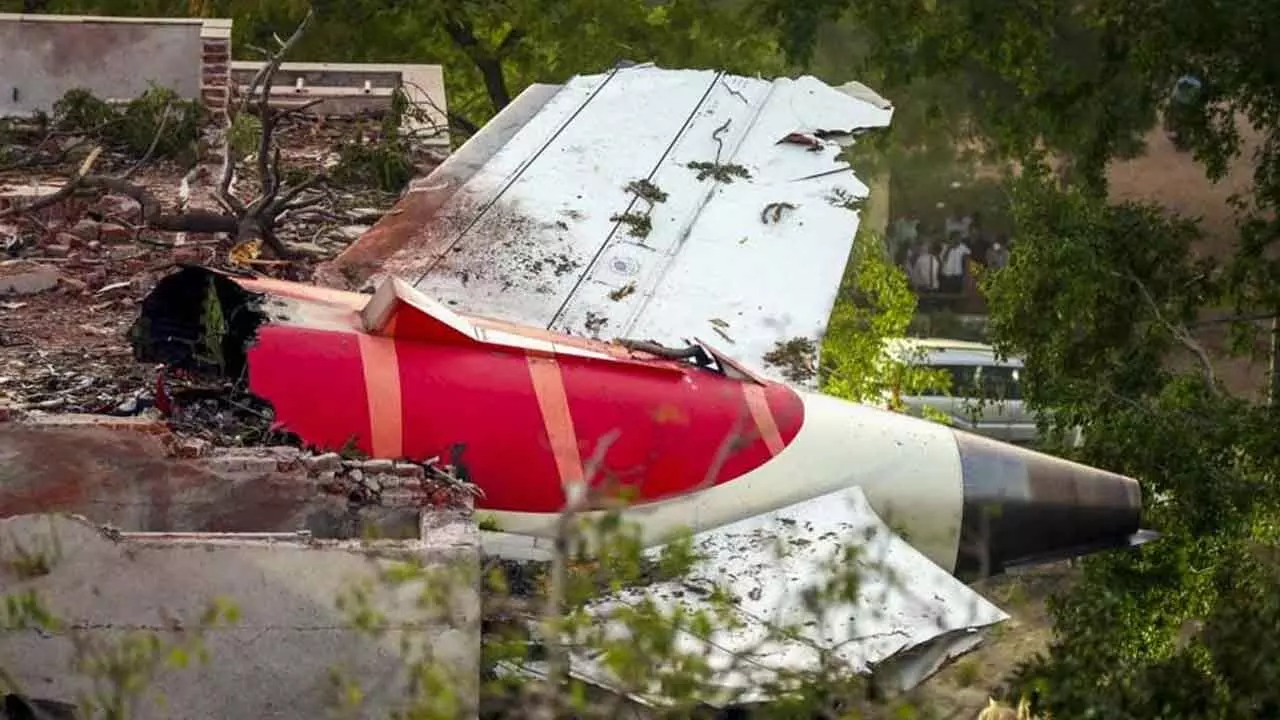
Ahmedabad Crash Sparks Fresh Concerns Over Boeing 787 Fuel Software Glitch
The preliminary findings of the aircraft accident investigation into the tragic crash of a passenger flight departing Ahmedabad have reignited safety concerns surrounding the Boeing 787 Dreamliner’s fuel management systems. Investigators revealed that a crucial engine fuel switch moved from “Run” to “Cutoff” shortly before the crash — a transition that has occurred in past incidents involving the same aircraft model. Experts now urge a deeper probe into potential software flaws, as questions mount over the manufacturer’s system integrity.
The crash, which occurred shortly after take-off, has led officials to examine similarities with a previous incident in Japan, where a Boeing 787 suffered a similar automatic fuel shutoff during final approach. In that case, a software glitch reportedly caused the aircraft to misread its position, triggering a sequence that cut fuel to the engines without pilot input. The Ahmedabad crash, tragically, unfolded more rapidly — both engines lost power within moments, giving the pilots no window to recover or restart them. Such events have highlighted the dangers of system-dependent automation failing under real-time stress. Aviation analysts caution that over-reliance on complex software systems in new-generation aircraft must come with rigorous accountability. The dual engine failure in Ahmedabad, combined with cockpit audio suggesting the crew did not manually trigger the shutoff, points to a potential systemic issue.
While the aircraft is designed to function on one engine, simultaneous loss of power left no margin for recovery. The emergency deployment of backup systems like the Ram Air Turbine proved insufficient to stabilise the aircraft, which lost altitude rapidly and impacted within the city perimeter. The report has yet to recommend action against the manufacturer, but independent experts say this lack of immediate regulatory response should not be interpreted as clearance. Many aircraft of the same model are still operational globally, including several in Indian fleets. Aviation safety watchdogs are now being urged to assess whether these jets have been updated with patches for known software faults. Without timely intervention, similar events may remain a threat, especially during critical flight phases such as take-off and landing, where every second counts.
In the absence of clear mechanical failure or pilot error, the focus now shifts to transparency. Experts advocate the release of full cockpit voice transcripts to prevent misinformation and promote public trust. While investigations are still ongoing, the tragedy has intensified the call for stronger oversight of aircraft software systems. It also raises important questions about whether current aviation technology adequately prioritises safety in high-risk urban air corridors, where failures can have devastating consequences for those both on board and on the ground.